智能驾驶普惠

Search documents
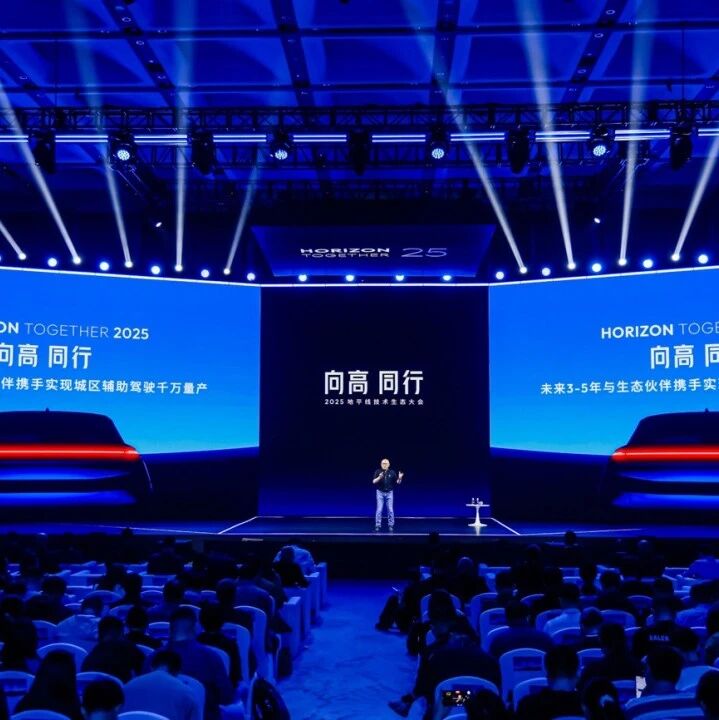
决胜智驾“关键一跃”:行业实践者齐聚地平线技术生态大会,共商普惠之道
机器人圈· 2025-12-10 09:37
Core Viewpoint - The 2025 Horizon Together conference emphasizes the transition of intelligent driving technology from breakthroughs to widespread adoption, with a focus on urban NOA (Navigation on Autopilot) as a critical battleground for commercial success [3][6]. Group 1: Industry Insights - The consensus at the conference is that 2025 marks a pivotal point for intelligent driving, with urban NOA's large-scale adoption being essential for commercial success, hinging on experience, cost, safety, and policy collaboration [3][6]. - The founder and CEO of Horizon, Dr. Yu Kai, highlighted two pillars for breaking through: advancing underlying computing technology and building an open ecosystem with partners to convert high-level driving experiences into scalable user value [3][6]. - The automotive industry is urged to move away from isolated breakthroughs to a collaborative approach that shares value across the entire chain, as stated by Fu Bingfeng, Executive Vice President of the China Association of Automobile Manufacturers [6]. Group 2: Global Collaboration - The intelligent wave is driving a deep restructuring of the global automotive industry, with Chinese technology platforms becoming a core variable in this process [7]. - Thomas Ulbrich, CTO of Volkswagen Group China, emphasized that to lead in the new energy vehicle era, companies must build core capabilities in China, where software is becoming central to automotive business [9]. - The trend of intelligent driving is increasingly defining brand value, with global markets showing growing interest in intelligent cabins and driving assistance features, as noted by Yang Dongsheng, Senior Vice President of BYD [12]. Group 3: Local Development and Collaboration - Local automakers are accelerating the large-scale implementation of top-tier intelligent experiences through deep collaboration [17]. - Su Jun, Vice President of Chery Automobile, discussed the strategic partnership with Horizon, focusing on creating unique designs and brand spirit through advanced technology [19]. - Yang Xinglong from FAW Bestune highlighted the necessity of collaboration with leaders like Horizon to navigate the intelligent transformation, showcasing a clear path of technology co-research and ecosystem building [21]. Group 4: Future Challenges and Opportunities - Jiang Haipeng from Great Wall Motors predicted a technological inflection point around 2028, emphasizing the need for specialized computing architectures to meet future challenges [23]. - Su Linke from Deep Blue Automotive highlighted the rapid success of their L06 model, showcasing the value of collaboration with Horizon in achieving high-quality autonomous driving solutions [26]. - The CEO of CARIZON, Han Hongming, shared insights on how international giants are integrating into China's innovation ecosystem through new collaborative models [28]. Group 5: Key Consensus from the Forum - The forum identified three core consensus points: safety is paramount, user trust is built through human-like interactions, and cost optimization will be driven by hardware restructuring and software paradigm shifts [35][36][37]. - The emphasis on safety as the foundation for user trust was reiterated, with a focus on ensuring system stability in everyday scenarios [35]. - The discussion highlighted that cost reduction is a result of collaborative advancements in hardware and software, with a call for performance iteration and system integration to drive down costs while maintaining high standards [38].