沙尘

Search documents
内蒙古:积极应对风雪降温 全力护航假日返程
Xin Lang Cai Jing· 2026-02-24 12:07
Group 1 - The Inner Mongolia Autonomous Region has experienced severe weather conditions including strong winds, dust storms, and significant temperature drops due to a cold wave starting from February 21, prompting the meteorological bureau to issue multiple weather warnings and emergency responses [1][2] - The Inner Mongolia Meteorological Bureau initiated a level four emergency response for major meteorological disasters and issued various weather alerts, including blue and yellow warnings for strong winds and cold waves, as well as yellow warnings for dust storms [1] - In Hohhot, the maximum snowfall reached 30.6 millimeters, with wind speeds in some areas reaching levels 9 to 10, leading to the issuance of eight different meteorological warning signals during the weather event [1] Group 2 - The Ewenki Autonomous Banner upgraded its blizzard disaster emergency response from level four to level three, with various departments and towns quickly coordinating to implement traffic controls and halt public transport [2] - The tourism department activated emergency plans, temporarily closing a red cultural tourism site to ensure the safety of visitors and staff [2] - Multiple cities, including Baotou, Wuhai, and Ulanqab, closed several tourist attractions in response to the adverse effects of dust storms as indicated by meteorological forecasts [2]
北方有大风降温沙尘天气 内蒙古东北部黑龙江等地有较强降雪
Xin Lang Cai Jing· 2026-02-21 11:03
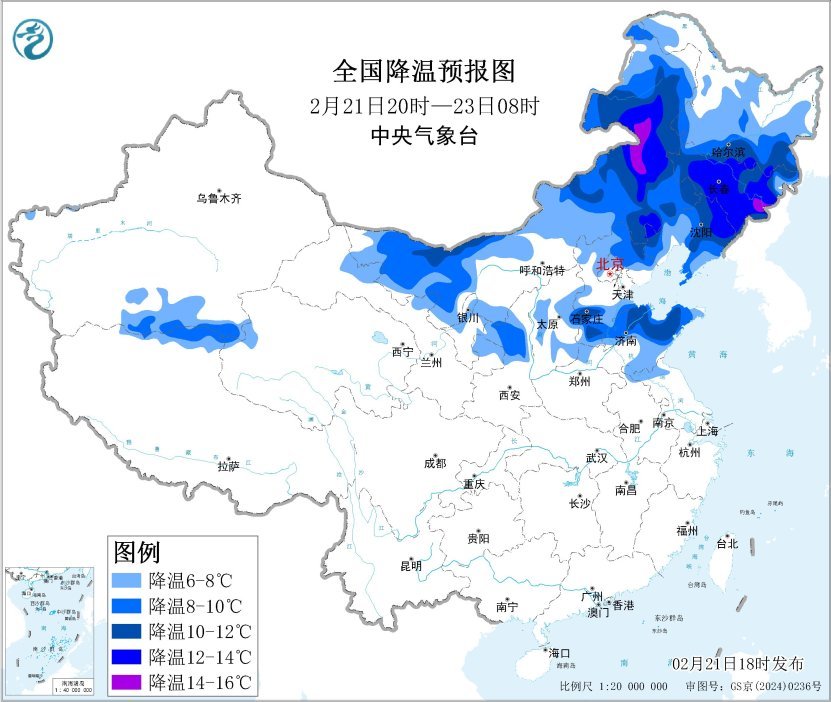
Summary of Key Points Core Viewpoint - The article discusses significant weather events affecting northern China, including strong winds, temperature drops, and dust storms, as well as heavy snowfall in specific regions. It emphasizes the potential impacts on transportation, tourism, and public health during the Spring Festival travel period. Weather Conditions - Strong winds and temperature drops are reported in the eastern Northwest region, Inner Mongolia, and Shanxi, with wind speeds reaching 12-14 levels in some areas. Temperature drops of 6-10°C are expected, with some regions experiencing drops exceeding 12°C [2][5] - Dust storms and floating dust are prevalent in the Northwest, North China, and Inner Mongolia, with local sandstorms reported in areas like Bayannur and Hohhot [2][7] Weather Forecast - From the night of February 21 to February 22, temperatures in Inner Mongolia, the northern Northwest, and Northeast China are expected to drop by 6-10°C, with some areas experiencing drops of 12-14°C [2][5] - A blue cold wave warning has been issued, indicating significant temperature drops across various regions [2] Snowfall Predictions - Heavy snowfall is anticipated in northeastern Inner Mongolia, western Heilongjiang, and western Jilin, with local areas in Heilongjiang expecting extreme snowfall of 20-25 mm [9][12] - Accumulation of snow is expected to reach 6-12 cm in some areas, with localized regions exceeding 18 cm [9] Rainfall and Severe Weather - From February 22 to 24, southern regions are forecasted to experience widespread rainfall, with strong rain expected in areas like Guizhou, Hunan, and Jiangxi, potentially leading to secondary disasters [11][12] - Severe convective weather, including thunderstorms and hail, may occur in parts of Jiangnan and Guizhou [11]

寒潮来袭天气大转变!北方气温“跳水”冷暖快速反转
Xin Lang Cai Jing· 2026-02-21 11:03
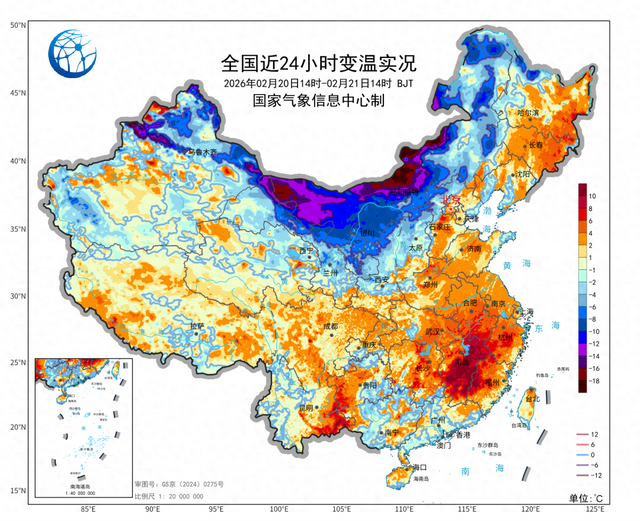
Summary of Key Points Core Viewpoint - A significant weather change is expected after the Spring Festival holiday, with a cold wave, strong winds, sandstorms, and heavy snowfall affecting various regions in China, leading to temperature drops exceeding 10°C in northern areas [1][2][3]. Group 1: Temperature Changes - Northern regions will experience a temperature drop of 6 to 10°C, with some areas in Inner Mongolia and Northeast China seeing drops of 12 to 14°C, and localized drops exceeding 14°C [2][4]. - Major cities like Changchun will see a drop from over 15°C to -6°C, while Shijiazhuang and Jinan will drop from over 20°C to 9°C [7]. Group 2: Weather Warnings - The Central Meteorological Observatory has issued warnings for cold waves, strong winds, sandstorms, and heavy snowfall as the cold air continues to move eastward [3][8]. - Strong winds are expected in Inner Mongolia, Shanxi, and Shaanxi, with gusts reaching 9 to 10 levels, contributing to the largest and strongest sandstorm of the year [8][9]. Group 3: Rain and Snowfall - Rain and snow will increase due to the cold wave, with significant snowfall expected in Inner Mongolia and Northeast China, including heavy snow in parts of Heilongjiang [11]. - A new round of rainfall will affect southern regions starting tomorrow, with small to moderate rain expected in areas like Jiangnan and Huazhong, and localized heavy rain accompanied by thunderstorms [13][14].
寒潮来袭!北京今天阵风7级左右并伴扬沙 明天气温骤降
Yang Shi Wang· 2025-11-29 23:43
Group 1 - A cold wave is expected to impact Beijing with strong winds, temperature drops, sandstorms, and snowfall over the next two days [1][2] - Today, wind speeds will increase significantly, with gusts reaching around level 7, and temperatures are forecasted to be a maximum of 11°C and a minimum of -3°C [2] - Tomorrow, temperatures will drop sharply, with a maximum of 4°C and a minimum of -7°C, and there will be light snow in the western and northern parts of Beijing [1][2] Group 2 - The weather forecast indicates that the temperature will continue to decline, with a maximum of 0°C and a minimum of -8°C expected the day after tomorrow [2] - Meteorological departments have issued warnings for strong winds and cold weather, advising the public to take precautions against potential health risks [2]

明起新一股冷空气来袭 东北等地降雪明显增强部分地区有暴雪
Yang Shi Xin Wen· 2025-11-28 00:54
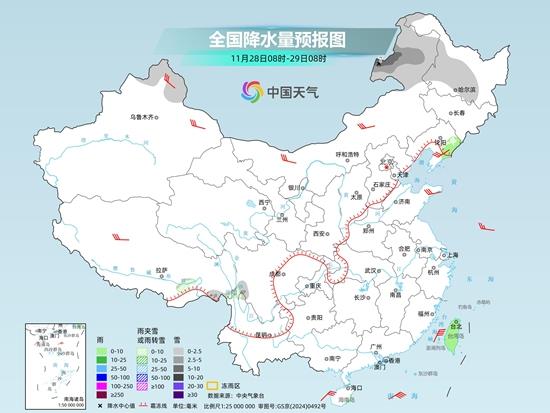
Group 1 - The central and eastern regions of China will experience a temporary rise in temperatures before a new cold air mass arrives, leading to a significant drop in temperatures by early December [2][4] - The cold air mass is expected to cause temperature drops of 8°C to 10°C in some areas, with cities like Shenyang experiencing a drop from a high of 11°C to a low of -7°C [2][4] - Southern regions are less affected by the cold air, maintaining higher daytime temperatures but experiencing lower nighttime temperatures, resulting in a notable temperature difference of around 15°C [2][3] Group 2 - The dry conditions in southern regions are unprecedented for this time of year, with relative humidity dropping below 20% in several areas, such as 9% in Hubei [4][5] - In contrast, northeastern regions are expected to see increased snowfall, with heavy snow warnings in places like central Heilongjiang, where snow accumulation could exceed 10 centimeters [5][6] - The upcoming days will see continued dry and sunny weather in the central and eastern regions, while the northeast will face frequent snow, necessitating caution for travel due to slippery roads and reduced visibility [8]
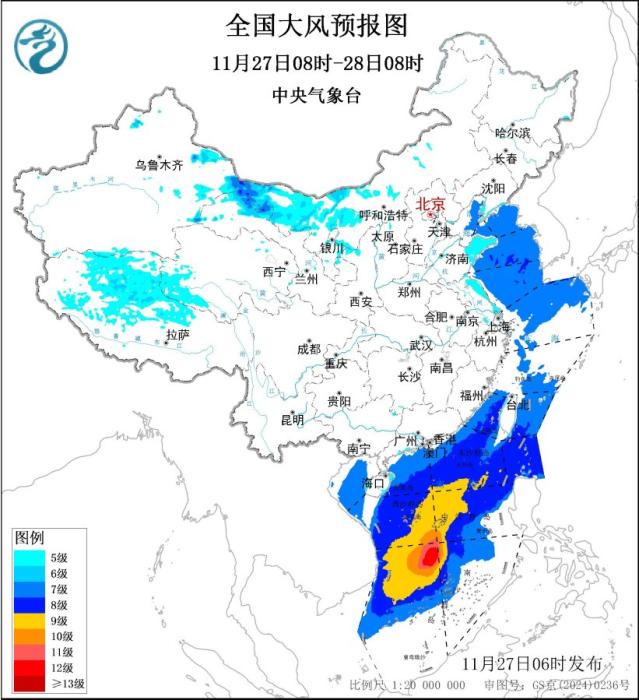
较强冷空气继续影响东北及黄淮以南地区 黄淮江淮等地有沙尘
Zhong Guo Xin Wen Wang· 2025-11-27 00:40
Core Points - A strong cold air mass continues to affect Northeast and regions south of the Huanghuai, with significant impacts expected on energy supply, public health, transportation, and urban operations [1][3][4] - The 27th typhoon "Tianqin" has intensified to typhoon level, with maximum wind speeds reaching 12 levels (33 m/s) and is expected to affect maritime conditions significantly [7][11] Weather Impact Summary - From November 27 to 28, temperatures in most areas south of Huanghuai are expected to drop by around 4°C, while Northeast regions may see drops of 4-6°C, with localized areas experiencing drops of 8-10°C [3][4] - Snowfall has been reported in Inner Mongolia and Northeast regions, with maximum snowfall recorded at 7.7 mm in Tonghua, Jilin [2][3] - Wind gusts of 7-9 levels are expected in various regions, with some areas experiencing gusts up to 14 levels [2][3][4] - Dust storms are anticipated in parts of Inner Mongolia, Gansu, and other regions due to strong winds [4][6] Typhoon "Tianqin" Details - The center of typhoon "Tianqin" is located approximately 485 kilometers southeast of Sansha City, Hainan Province, with a minimum central pressure of 975 hPa [7] - The typhoon is expected to move westward at a speed of 5-10 km/h, with a gradual weakening anticipated after November 28 [7][11] - Areas affected by the typhoon will experience wind speeds of 6-8 levels, with gusts reaching up to 12 levels in proximity to the typhoon's center [7][11]