机器人造船

Search documents
2年半造2艘巨舰?美国造船业工人短缺,特朗普寄望机器人
Sou Hu Cai Jing· 2025-12-31 11:40
Core Viewpoint - The ambitious plan announced by Trump to build two of the largest battleships in U.S. history within two and a half years faces significant challenges, primarily due to a shortage of skilled labor in the American shipbuilding industry [1][3]. Labor Shortage - The U.S. shipbuilding industry is experiencing a critical shortage of skilled workers, particularly welders, which are essential for ship construction [3]. - Shipyards in Virginia and Wisconsin are struggling to recruit and retain workers, leading to initiatives such as paying for technical college tuition and offering jobs to non-violent offenders [3]. - The average age of skilled workers in the industry is around 55, with a high turnover rate of 20%, indicating a looming labor crisis [3]. Training and Funding Issues - Despite federal investment in technical training, the effectiveness is minimal due to Congress's preference for funding projects that distribute jobs across various districts, making it difficult for shipyards to secure adequate training resources [3][5]. Technological Challenges - Trump's suggestion to use robots for shipbuilding to mitigate labor shortages has been met with skepticism, as shipbuilding involves complex processes that require human expertise [5]. - The U.S. shipbuilding industry has seen an 85% decline in production since the 1950s, with a significant reduction in the number of shipyards capable of constructing large vessels [5]. Regulatory and Procurement Hurdles - Current shipbuilding projects are consistently delayed, with all naval vessels under construction experiencing significant schedule overruns due to stringent regulations and changing environmental standards [5][6]. - The integration of advanced technologies, such as electromagnetic railguns and laser weapons, into new ships presents additional challenges, as these technologies are still in developmental stages [6]. Political Implications - The shipbuilding initiative is seen as a strategy by Trump to revive manufacturing and solidify political support, while also aiming to reinforce U.S. naval dominance [7]. - The underlying issues in the shipbuilding industry, including labor shortages, regulatory burdens, and supply chain vulnerabilities, need to be addressed for the ambitious shipbuilding goals to be realized [7].


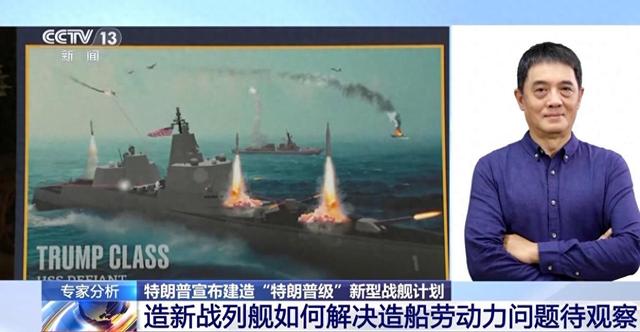
特朗普要造“特朗普级”战列舰,工人不够机器人凑?专家详解
Xin Lang Cai Jing· 2025-12-23 12:55
Core Viewpoint - Trump announced the approval of a plan to build two of the largest battleships in U.S. history, with a total of 20 to 25 new warships planned, featuring advanced weaponry [1][2] Group 1: Shipbuilding Plans - The new warships will have a displacement of 30,000 to 40,000 tons and will be equipped with hypersonic weapons, railguns, cruise missiles, and laser weapons, aiming to become the flagship of the U.S. Navy [1] - The announcement is part of Trump's "Golden Fleet" initiative, which aims to restore U.S. maritime dominance [2] Group 2: Labor Shortages and Innovation - There are concerns regarding the labor shortage in the U.S. shipbuilding industry, which currently employs fewer than 150,000 workers, with an aging workforce and a projected increase in labor gaps over the next decade [4] - Trump suggested that shipyards would rely on robots to address labor shortages, marking a significant shift in shipbuilding methods [4]

专家:劳动力短缺 特朗普宣布建造新型战舰面临现实挑战
Xin Lang Cai Jing· 2025-12-23 11:52
Group 1 - The core announcement is that Trump has approved a plan to build two of the largest battleships in U.S. history, with plans for a total of 20 to 25 new ships, each weighing between 30,000 to 40,000 tons and equipped with advanced weaponry [1][2] - The new battleships are part of Trump's "Golden Fleet" initiative, aimed at restoring U.S. naval dominance, and the announcement coincides with a commitment made in a presidential order signed in April [1][4] - The construction of these battleships raises questions about the current state of the U.S. shipbuilding industry, which is facing significant labor shortages, with a workforce of less than 150,000 and an aging labor pool [4][5] Group 2 - Trump suggested that the labor shortage in shipbuilding could be addressed through the use of robots, indicating a potential shift in shipbuilding methods [4][5] - The U.S. Navy plans to build 10 new ships while retiring 19, indicating a net decrease in the fleet size, which complicates the feasibility of constructing large new battleships [4] - The average age of skilled workers in the shipbuilding industry is 55, with a significant loss of younger workers, creating a looming labor gap that could impact the ambitious shipbuilding plans [4][5]