造船业

Search documents
中国造船业新接订单快速回暖
日经中文网· 2026-03-25 06:18
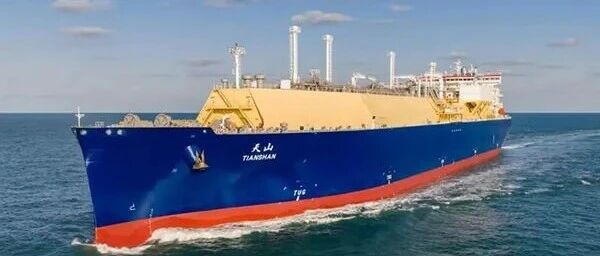
Core Viewpoint - The Chinese shipbuilding industry is experiencing a recovery in new orders, particularly in the high-value liquefied natural gas (LNG) transport sector, following the postponement of U.S. regulatory measures that previously hindered growth [2][4][8]. Group 1: Order Trends and Market Dynamics - New orders in the Chinese shipbuilding industry are rebounding rapidly, with a significant increase in LNG transport vessels, showcasing China's strong global market presence [2][4]. - In 2025, the U.S. Trade Representative's office announced a port fee for ships built in China, which was initially set to take effect in the fall of 2025, leading to a temporary decline in orders [4][6]. - Despite a projected 35% year-on-year decline in Chinese shipbuilding orders in 2025, monthly data showed a contrasting trend, with a substantial increase in orders towards the end of the year, reaching approximately 1,300 million deadweight tons in November, 1.8 times the average for the first ten months [6][9]. Group 2: Competitive Advantages - China's shipbuilding industry benefits from lower labor and steel procurement costs, with labor costs being about half of those in Japan and South Korea, contributing to its competitive edge [10]. - The industry is not solely reliant on low prices; it is also making strides in technology, particularly in the LNG transport sector, where it has historically lagged behind South Korea [10]. - The core enterprise of China Shipbuilding Group, Hudong-Zhonghua Shipbuilding, has successfully delivered 60 LNG transport vessels and reduced construction time from 36 months to 16 months through domestic production of key components [10]. Group 3: Future Outlook - The momentum in new orders is expected to continue into 2026, with China's share of global shipbuilding orders rising from 67% in January to 80% in February [10]. - The CEO of Yangzijiang Shipbuilding indicated that the positive trend in orders is likely to persist, reflecting a recovery in shipowner confidence [9][10].


特朗普“抱怨”进展太慢后,韩国加速通过对美投资法案
第一财经· 2026-03-18 08:31
Core Viewpoint - South Korea has accelerated the review of the U.S. investment law following complaints from U.S. President Trump, with the National Assembly recently approving a strategic investment plan of approximately $350 billion aimed at the U.S. market, which increases South Korea's strategic dependence on the U.S. and reduces its economic policy autonomy [3][6]. Group 1: Legislative Developments - The South Korean government has passed the "Special Law on Strategic Investment Management for Korea-U.S. Relations" to ensure the implementation of a $350 billion investment commitment to the U.S. [3][6]. - The law was approved unanimously by the National Assembly and is designed to facilitate the investment plan, which includes $150 billion for the shipbuilding industry and $200 billion for enhancing economic and national security projects [6][8]. Group 2: Economic Implications - The establishment of the "Korea-U.S. Strategic Investment Corporation" with a government investment of 20 trillion won aims to support the $350 billion investment projects [6]. - The investment plan is seen as a response to U.S. trade and tariff pressures, with potential benefits for South Korea's allies, but it raises concerns about the long-term impact on South Korea's economic independence [3][8]. Group 3: Trade Relations and Challenges - Despite the legislative progress, trade tensions between South Korea and the U.S. remain high, with the U.S. initiating a new round of "Section 301" investigations targeting key industries, including pharmaceuticals and technology [9]. - The South Korean government is committed to maintaining close consultations with the U.S. to balance the benefits achieved through the existing tariff agreements [9]. Group 4: Market Reactions and Risks - The recent volatility of the Korean won, influenced by rising international oil prices and geopolitical tensions, has added pressure on South Korean companies considering large-scale investments in the U.S. [10]. - Companies are reassessing the costs and benefits of their U.S. investment projects due to currency fluctuations and ongoing financial market uncertainties [10].

从“工程师红利”到“科学家红利”,双重优势如何助力中国制造出海
第一财经· 2026-03-10 15:39
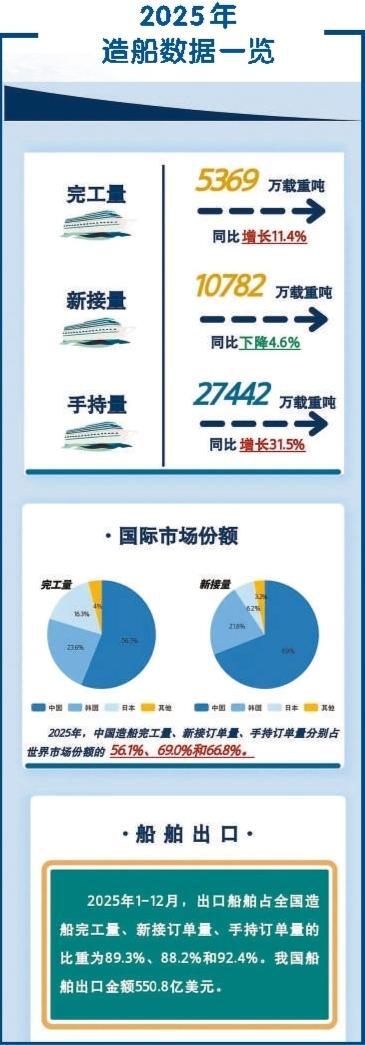
Core Viewpoint - China is transitioning from an "engineer dividend" to a "scientist dividend," indicating a shift towards advanced technology and innovation in various industries, particularly in biopharmaceuticals and shipbuilding [3]. Group 1: Biopharmaceuticals - The revenue from technology licensing in China's biopharmaceutical and gene pharmaceutical sectors reached $135 billion in the previous year, showcasing significant growth from a focus on raw materials and generic drugs [3]. - A major report on liver cancer prevention and treatment, led by Chinese scholars, was published in The Lancet, marking a historic achievement for Chinese research in global health [7]. Group 2: Shipbuilding Industry - Chinese shipbuilders, particularly Hudong-Zhonghua, have gained international orders due to superior technology and quality, with a strategic focus on high-value ship types like LNG carriers and ultra-large container ships [4]. - In 2025, China is projected to complete 53.69 million deadweight tons of shipbuilding, accounting for 56.1% of the global total, with new orders reaching 107.82 million deadweight tons, representing 69.0% of the global market [5]. - The market share of Chinese shipbuilders in the LNG sector has improved significantly, with the ratio of Chinese to Korean market share narrowing from 1:9 to 3:7 [4]. Group 3: Nuclear Energy - China has developed a fifth-generation nuclear energy system, termed "Chinese Hedianbao," which has been recognized internationally and is characterized by its small size, modularity, and long-term stable operation [7][8]. - The "nuclear treasure" technology is expected to play a crucial role in providing stable, low-carbon power for various applications, including remote areas and high-load computing centers, highlighting its potential in international markets [8].
造船业,也开始“高薪抢人”了
2 1 Shi Ji Jing Ji Bao Dao· 2026-02-27 10:46
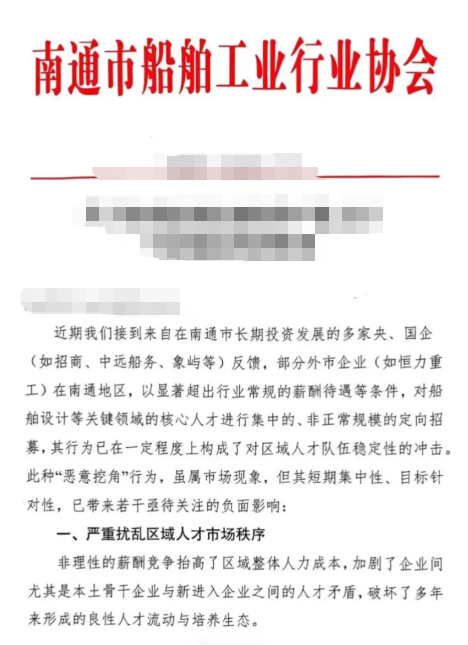
Core Viewpoint - The shipbuilding industry is experiencing a significant talent acquisition trend, indicating a booming market environment in 2024, with companies aggressively recruiting skilled personnel to meet increasing demand for shipbuilding and design [2][10]. Group 1: Talent Acquisition - The Nantong Shipbuilding Industry Association issued a letter highlighting that some external companies are aggressively recruiting key talents in ship design with salaries significantly above industry norms, which they labeled as "malicious poaching" [2][4]. - The primary target of this recruitment effort is identified as Hengli Heavy Industry, which has gained momentum in the industry following its restructuring and public listing [5][7]. - Hengli Heavy Industry is actively recruiting for various design positions, offering superior salary and benefits, and has established an international ship research and design center in Shanghai with a funding of 500 million yuan [7][8]. Group 2: Market Dynamics - The global shipping industry is facing an aging fleet, leading to increased demand for new, greener, and smarter vessels, while the number of shipyards has significantly decreased due to prolonged industry downturns [10]. - In 2024, the global shipbuilding industry is projected to see new orders of 16.8 million deadweight tons, a 31.3% increase year-on-year, marking the highest level since 2008 [11]. - The price index for new ships is expected to rise by 6.2% in 2024, with container ships, oil tankers, and LNG orders experiencing substantial growth rates of 164%, 42%, and 37% respectively [11]. Group 3: Industry Outlook - The shipbuilding sector is anticipated to remain buoyant, with dry bulk and oil tankers expected to drive continued demand for shipyard capacity through 2025 and 2026 [12]. - Hengli Heavy Industry is projected to secure contracts for 115 ships in 2025, exceeding 100 billion yuan in total value, with over 70 new ships already contracted in early 2026 [14]. - The company’s stock, *ST Songfa, has seen a 30% increase in February, reflecting positive market sentiment following its restructuring [14]. Group 4: Regional Significance - Nantong is recognized as a crucial hub for shipbuilding and marine engineering, with an industry output value reaching 211.5 billion yuan in 2024, accounting for about 10% of national shipbuilding output [16]. - The region's focus on high-end, differentiated development in shipbuilding has made it a talent magnet, attracting companies to establish research centers locally [16].
局势逆转!特朗普失去最大底牌,莫迪带头反水,印度还想争第一?
Sou Hu Cai Jing· 2026-02-26 09:11
Group 1 - The U.S. Supreme Court ruled that Trump's unilateral imposition of punitive tariffs on multiple countries exceeded the constitutional boundaries of executive power, effectively dismantling his trade strategy [1][3] - Following the ruling, India swiftly suspended all planned arrangements, including a high-level trade delegation's visit to Washington and the signing of the U.S.-India Strategic Tariff Reciprocity Agreement [5][9] - The agreement required India to halt oil imports from Russia and commit to purchasing at least $500 billion worth of goods from the U.S. over five years, which would necessitate a 117% increase in annual imports from the current level [9][11] Group 2 - India's decision to withdraw from the agreement was influenced by the imbalance in the deal, where the U.S. offered minimal tariff reductions in exchange for significant commitments from India [11][19] - The signing of a comprehensive free trade agreement (FTA) with the European Union provided India with additional leverage, as the EU is a major trading partner [13][15] - Despite the optimism surrounding the FTA, India's manufacturing sector faces significant challenges, including weak production capabilities, quality control issues, and financial instability [17][19] Group 3 - The failure of Trump's tariff policy is attributed to its unconstitutional nature, leading to both judicial and market backlash [19] - India's shift in strategy is seen as a rational response to protect national interests and gain negotiation leverage amid U.S. difficulties [19] - In contrast, China's manufacturing strategy focuses on technological self-reliance and steady capacity expansion, positioning it more favorably in global markets [21]
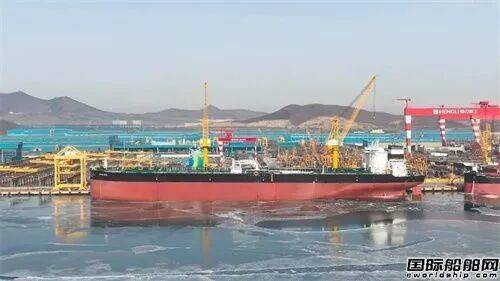
3艘VLCC订单!民营造船新巨头接单势头不减
Sou Hu Cai Jing· 2026-02-26 05:50
Core Viewpoint - Guangdong Songfa Ceramics Co., Ltd. announced the signing of contracts for three 30.6 million-ton Very Large Crude Carriers (VLCC) with a European shipowner, with a total contract value of approximately $300-400 million (RMB 2.065-2.754 billion) [2] Group 1: Company Developments - The contracts were signed with a well-known European shipowner, and specific details about the shipowner are exempt from disclosure under relevant regulations [2] - The new VLCCs are part of the main ship type for Hengli Heavy Industry, which has developed a 30.6 million-ton VLCC featuring safety, environmental friendliness, and advanced performance metrics [2] - Hengli Heavy Industry currently holds a total of 65 VLCC orders, significantly surpassing the second-ranked Korean company, which has 30 orders, making it the largest single shipyard in terms of VLCC orders [2] Group 2: Order and Production Capacity - Including the latest orders, Hengli Heavy Industry has secured a total of 67+4 new ship orders since 2026, comprising 38 VLCCs, 12 Suezmax tankers, 2 LR2 product/crude oil carriers, and various bulk and container ships [3] - In 2025, Hengli Heavy Industry secured 115 ship orders with a total contract value exceeding RMB 100 billion, averaging less than three days per new ship order [3] - The company aims to establish a world-class shipbuilding base, with future production capacity projected to exceed 150 large vessels and 180 marine engines annually, covering various dual-fuel types [3] Group 3: Current Order Backlog - As of now, Hengli Heavy Industry has a backlog of 264 ships totaling 46.16 million deadweight tons, including 108 oil tankers, 96 bulk carriers, 56 container ships, and 4 LPG carriers, with delivery schedules extending to 2030 [4]
50亿押注中国造船,刘强东的电动游艇能否“换道超车”?
Guan Cha Zhe Wang· 2026-02-25 13:13
Core Insights - China's shipbuilding industry is at a critical juncture, leading the world in shipbuilding completion, new orders, and backlog for 15 consecutive years, with market shares of 55.7%, 74.1%, and 63.1% respectively [1] - In contrast, the yacht manufacturing sector in China is significantly lagging, with a total output value of only 12.8 billion yuan (approximately 1.28 billion USD) and an export value of around 600 million USD, capturing less than 4% of the global market [1][2] - The disparity in performance between large commercial vessels and yachts highlights a structural weakness in China's ability to transition from manufacturing to creating high-value experiences [2][3] Current Challenges - The yacht industry in China is characterized by a fragmented structure, with most companies remaining at a basic manufacturing level, lacking the investment needed to develop high-end experiences [2] - The industry faces a significant barrier due to the capital-intensive nature of yacht production, where most domestic companies have not exceeded an investment of 10 million yuan (approximately 1.5 million USD) [2] - The lack of a strong brand identity and experience definition in the yacht sector prevents China from moving up the value chain, resulting in a persistent "small, scattered, and weak" industry [3] Policy and Market Shifts - Recent government initiatives, including a plan to promote high-quality development in yacht consumption, indicate a shift in policy that could support the industry's growth [3] - The challenge remains in identifying which entities can effectively leverage China's manufacturing capabilities to redefine consumer experiences in the yacht market [3] Strategic Initiatives - The establishment of Sea Expandary, a new yacht brand by Liu Qiangdong, aims to address the industry's challenges by investing in a full industrial chain to bridge the gap between manufacturing and experience definition [4] - The brand plans to focus on innovative technologies, such as AI and robotics, to create a new generation of smart, eco-friendly yachts that address traditional pain points like high maintenance costs and noise [4][5] - By optimizing cost structures through vertical integration within China's shipbuilding supply chain, Sea Expandary aims to make quality yachts more accessible, targeting a vision of 100,000 yuan (approximately 15,000 USD) yachts [5] Service and Experience Redefinition - Sea Expandary intends to shift from a product-centric model to a solution-oriented approach, creating a comprehensive ecosystem that includes research, manufacturing, sales, and service [6] - The introduction of flexible service models, such as time-sharing rentals, aims to redefine yacht ownership and enhance user experience, challenging the traditional perception of yachts as exclusive luxury items [6] - This transition from selling hardware to offering lifestyle experiences is crucial for gaining "experience definition rights" in the yacht market [6]
谁说美国佛系?GDP被反超35%,造船业落后断层,死盯中国也没用!
Sou Hu Cai Jing· 2026-02-25 10:23
Group 1 - The core argument is that the United States is not losing its ambition to maintain its global dominance, but rather is intensifying efforts to prevent China from becoming the world's leading power [1][4][6] - The U.S. is engaging in actions such as technological blockades and trade barriers to sustain its hegemonic status, driven by a fear of losing its long-held position as a global leader [6][7] - According to purchasing power parity (PPP), China's economy has already surpassed that of the U.S. by 130% to 135%, indicating a significant shift in global economic power [9][11] Group 2 - China's total electricity generation is currently 2.5 times that of the U.S., and its industrial electricity consumption is six times higher, highlighting a stark contrast in industrial capabilities [15][17] - The U.S. faces a substantial challenge in its shipbuilding industry, with its capacity being only about 1% of China's, reflecting the consequences of decades of deindustrialization [29][31] - The article emphasizes that the U.S. anxiety stems from its relative decline in power and an inability to accept a multipolar world where both nations can coexist with their respective strengths [35]

2025年,我国造船业三大指标继续领跑全球 全球船东看向中国
Ren Min Ri Bao Hai Wai Ban· 2026-02-24 23:35
Core Insights - China's shipbuilding industry continues to lead globally, achieving significant milestones in 2025 with completion volume, new orders, and hand-held orders all surpassing previous records, marking 16 consecutive years at the top [3][4][13] - The shift from being the largest ship consumer to the largest ship supplier globally reflects China's enhanced position in the global value chain, indicating a transition from scale advantages to systemic advantages in manufacturing [13][14] Group 1: Performance Metrics - In 2025, China's shipbuilding completion volume reached 53.69 million deadweight tons, accounting for 56.1% of the global total [3] - New orders amounted to 107.82 million deadweight tons, representing 69.0% of the global total, while hand-held orders reached 27.44 million deadweight tons, making up 66.8% of the global total [3][4] - Approximately 89% of the ships built in China are exported, highlighting the country's significant role in the global shipping market [4] Group 2: Competitive Advantages - China's shipbuilding industry benefits from rapid production capabilities, with companies like Hudong-Zhonghua delivering multiple LNG carriers to Qatar Energy ahead of schedule, showcasing "Chinese speed" [4] - The comprehensive cost-effectiveness of Chinese shipbuilding is attributed to a mature industrial chain, strong market competitiveness, and the ability to provide integrated solutions, which reduces risks for shipowners [5][11] - The systemic competitiveness of China's entire industrial chain allows for effective supply chain management, ensuring production continuity even amid global disruptions [6][11] Group 3: Technological Innovations - The integration of AI in shipbuilding processes has led to significant improvements in production efficiency, with AI-driven scheduling increasing productivity by 25% [8] - The development of green technologies, such as LNG dual-fuel vessels and wind-assisted ships, positions China favorably in the global shift towards sustainable shipping practices [9][10] Group 4: Global Market Position - Six Chinese shipbuilding companies ranked among the top ten globally in terms of completion volume, new orders, and hand-held orders in 2025, with China Shipbuilding Group becoming the largest publicly listed shipbuilding company [14][17] - The robust order backlog extending to 2029 provides stability and confidence for Chinese shipbuilders to invest in technological upgrades and product optimization [17] Group 5: Future Challenges and Opportunities - The primary challenge for China's shipbuilding industry is to maintain its scale advantages while moving up the global value chain, focusing on quality and competitive pricing [17] - Continuous investment in R&D and addressing key technological challenges will be essential for achieving the goal of becoming a "shipbuilding power" [17]
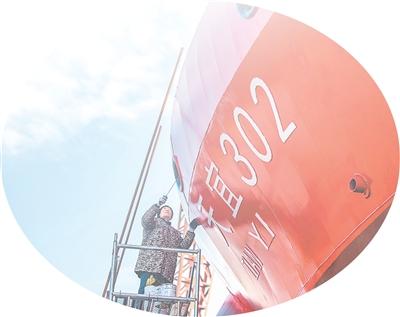
我国造船业三大指标领跑全球,连续16年世界第一
Bei Jing Ri Bao Ke Hu Duan· 2026-02-24 03:28
Core Insights - In 2025, China's shipbuilding industry maintained its global leadership for the 16th consecutive year, with significant increases in key metrics, including a completion volume of 53.69 million deadweight tons, accounting for 56.1% of the global total [2] - The industry has transitioned from being a "shipbuilding powerhouse" to a "global service provider," reflecting China's deep integration into global industrial division and its contribution to the world economy [2] Group 1: Performance Metrics - In 2025, China's new orders reached 107.82 million deadweight tons, representing 69.0% of the global total, while the hand-held order volume was 27.44 million deadweight tons, accounting for 66.8% of the world total, both setting new records [2] - Approximately 89% of the ships built in China are exported, indicating a strong international demand for Chinese shipbuilding [5] Group 2: Global Demand and Competitive Advantages - International shipowners are increasingly favoring Chinese shipyards, with notable contracts signed for various types of vessels, including LNG carriers and oil tankers [3][5] - China's shipbuilding industry benefits from high efficiency and competitive pricing, with the ability to deliver vessels faster than expected, as demonstrated by the rapid delivery of LNG carriers to Qatar [5][7] Group 3: Systemic Competitiveness - China's comprehensive industrial system, which includes all industrial categories recognized by the United Nations, provides a strong competitive edge, allowing for effective supply chain management and cost advantages [8][9] - The integration of AI in shipbuilding processes has improved production efficiency by 25%, showcasing the industry's commitment to innovation and modernization [9] Group 4: Green Transition and Innovation - The shipbuilding industry is making significant strides in green technology, with the delivery of advanced eco-friendly vessels, contributing to the global low-carbon transition in shipping [10][11] - Chinese shipyards are adapting to diverse market demands, focusing on cost-effectiveness, compliance, and automation, which enhances their global competitiveness [11][12] Group 5: Future Outlook and Challenges - The shipbuilding sector is expected to continue its growth trajectory, with a focus on maintaining competitive pricing while moving up the global value chain [17][18] - The industry faces challenges in balancing scale advantages with the need for quality and innovation, necessitating increased R&D investment to overcome technological barriers [18][19]