
特朗普级战列舰

Search documents
退66个国际组织,军费飙至1.5万亿,特朗普正撕裂世界安宁
Feng Huang Wang Cai Jing· 2026-02-02 13:48
Group 1 - The article discusses Trump's recent actions of withdrawing from 66 international organizations and significantly increasing military spending, raising concerns about a shift towards unilateralism and military dominance [1][2] - The withdrawal from these organizations is framed as a move against multilateralism, aligning with Trump's "America First" policy and appealing to conservative voters who are skeptical of globalization [1][2] - The U.S. has a significant backlog of unpaid dues to the United Nations, exceeding $3 billion, which raises questions about the implications of losing voting rights in the UN due to non-payment [2] Group 2 - Trump's military budget proposal aims to increase defense spending from $1 trillion to $1.5 trillion by 2027, which would be the largest budget in Pentagon history if approved [4] - The U.S. national debt exceeds 120% of GDP, and the proposed increase in military spending could add $5.8 trillion to the national debt over the next decade, raising concerns about fiscal sustainability [5] - The funding for this military expansion is expected to come from significant cuts to social programs, indicating a prioritization of military spending over domestic welfare [6] Group 3 - The military expansion plan includes investments in advanced defense systems, such as the "Iron Dome" missile defense system and next-generation fighter jets, although there are doubts about the feasibility and technological readiness of these projects [7][8] - The U.S. Navy's shipbuilding capacity is limited, with only four shipyards capable of constructing large warships and a significant shortage of skilled labor, which could hinder the expansion goals [10] - The military strategy emphasizes remote strike capabilities and a shift towards a more aggressive posture in regions like the Middle East, with increased military presence and potential for conflict [6][11] Group 4 - The U.S. is pressuring allies to increase their defense spending, which has led to tensions within NATO and among allies in the Indo-Pacific region, raising concerns about the sustainability of these alliances [11][12] - The imposition of tariffs on goods from NATO allies further complicates the relationship, as countries express frustration over being asked to increase military spending while facing trade conflicts [12] - The global impact of U.S. military spending and pressure on allies is expected to divert resources from development aid to military needs, potentially igniting a new arms race [13]


“特朗普级”战列舰,造价公布
Xin Lang Cai Jing· 2026-01-16 04:41
Core Viewpoint - The U.S. Navy's proposed first "Trump-class" battleship is estimated to cost up to $22 billion, potentially making it one of the most expensive warships in U.S. history [1][3]. Group 1: Cost and Design - The initial cost estimate for the first ship is $22 billion, with a minimum cost option of $15.1 billion, depending on factors like tonnage, crew size, and weapon configuration [1][3]. - The new battleship will be twice the size of any cruiser or destroyer built by the U.S. Navy since World War II, but only one-third the cost of the current most expensive aircraft carrier, the USS Ford, which was delivered in 2017 at a cost of approximately $13 billion [3]. - The battleship's displacement is expected to be between 30,000 to 40,000 tons, and it will incorporate artificial intelligence for control [4]. Group 2: Strategic Implications - The "Trump-class" battleships are intended to be part of a new "Golden Fleet" to replace the current fleet composition, with plans to build two initially and expand to 20-25 ships over time [3][4]. - The U.S. Department of Defense has stated that the battleship is currently in the design phase, with the first ship expected to be constructed in the early 2030s [3]. Group 3: Industry Challenges - Critics, including former U.S. Navy Rear Admiral Mark Montgomery, argue that the battleship is unnecessary and lacks tactical value, suggesting it is more about political posturing than military need [5]. - The defense industry has expressed concerns about the feasibility of the project, noting that the U.S. Navy has historically struggled to complete shipbuilding tasks on time and within budget, with current shipbuilding projects facing delays of at least one year [5].
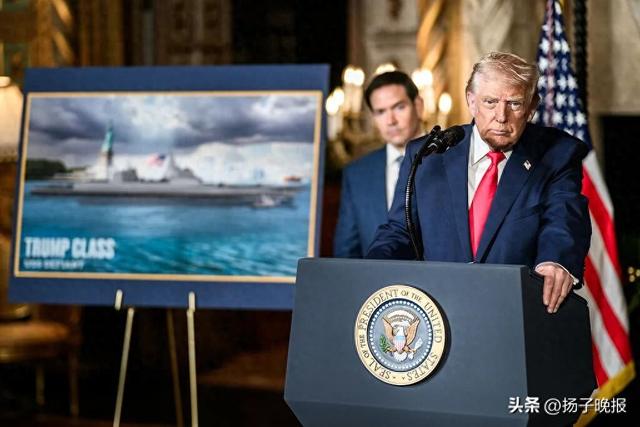
美国拟建首艘特朗普级战列舰 造价或创美历史新高
Ge Long Hui· 2026-01-16 03:06
Core Viewpoint - The estimated cost for the first "Trump-class" battleship proposed by the U.S. Navy is projected to be as high as $22 billion, potentially making it one of the most expensive warships in U.S. history [1] Cost Estimates - The preliminary cost estimate was released by the Congressional Budget Office (CBO) analyst, indicating that the final price will depend on factors such as tonnage, crew size, and weapon configuration [1] - The lowest cost scenario provided is $15.1 billion [1] Size Comparison - The new missile battleship will be twice the size of any cruiser or destroyer built by the U.S. Navy since World War II, but only about one-third the cost of the current most expensive aircraft carrier, the "Ford," which was delivered in 2017 at a cost of approximately $13 billion [1]
特朗普级战列舰是现代版“大和号”?
日经中文网· 2026-01-02 00:33
Core Viewpoint - The article discusses the announcement by former President Trump to build the most powerful battleship in U.S. history, named the "Trump-class," which aims to revitalize the U.S. shipbuilding industry while facing skepticism regarding its feasibility and relevance in modern warfare [2][8][10]. Group 1: Battleship Specifications and Plans - The Trump-class battleship will have a length of 256 to 268 meters, a width of 32 to 35 meters, and a displacement exceeding 35,000 tons, with a crew capacity of 650 to 850 personnel [4]. - The battleship is expected to be equipped with advanced weaponry, including hypersonic missiles, nuclear-capable cruise missiles, electromagnetic railguns, and high-energy laser weapons [4][5]. - The initial plan is to construct two ships, with a future goal of expanding the fleet to 20 to 25 vessels [4]. Group 2: Construction and Industry Implications - The construction will be undertaken by Huntington Ingalls Industries (HII), the largest defense shipbuilding company in the U.S., in collaboration with South Korea's HD Modern Heavy Industries [5]. - The project aims to address the decline of the U.S. shipbuilding industry, which has seen a significant reduction in workforce and capabilities since World War II [10]. - The article highlights that the U.S. shipbuilding industry had 1.4 million jobs at its peak in 1944, but this number is projected to drop to one-tenth by December 2024 [10]. Group 3: Feasibility Concerns - Experts express doubts about the feasibility of the Trump-class battleship, suggesting that design and construction could take over a decade, with costs for each ship estimated at a minimum of $9 billion [6][7]. - The article notes that modern warfare has shifted towards the use of AI and drones, making large battleships less relevant compared to smaller, more agile vessels like destroyers [7]. - Historical context is provided, indicating that battleships have been phased out in favor of aircraft carriers and submarines, with the last U.S. battleships being retired in the 1990s [7][11].
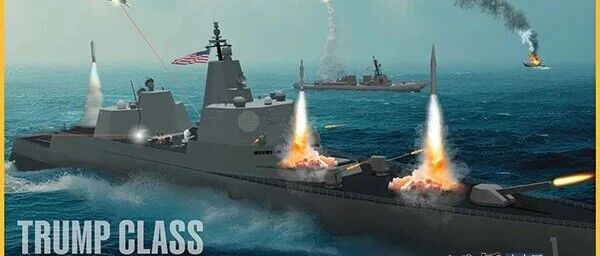
万物皆可“特朗普”?从战舰到签证,特朗普掀起疯狂“冠名潮”
Jin Shi Shu Ju· 2025-12-31 12:06
Core Viewpoint - The article discusses how former President Trump has been merging his personal brand with government projects and institutions since returning to the White House, raising concerns about the implications of this practice for the perception of government services and legacy [1][2]. Group 1: Branding and Government Projects - Trump has placed his name on various government projects, including a planned Navy ship, a prescription drug website, and a federal children's savings account, which some historians view as an effort to create a superficial political legacy [1][2]. - The renaming of the Kennedy Center to include Trump's name has sparked significant protests, with some performances being canceled due to backlash [2]. - The White House spokesperson emphasized that the focus is on achieving Trump's agenda rather than on branding, citing various initiatives as historic achievements made possible by Trump's leadership [1][2]. Group 2: Historical Context and Reactions - Trump's actions have alarmed Democrats and civil society watchdogs, who fear it may create the impression that Trump, rather than the state, is the provider of essential services [2]. - Historical context indicates that naming buildings after presidents typically occurs long after their terms, usually through Congressional action, contrasting with Trump's immediate branding efforts [2][3]. - Experts suggest that while placing names on buildings is easier than passing lasting legislation, it does not contribute significantly to a lasting legacy [3]. Group 3: Specific Initiatives and Future Plans - Trump announced a new class of Navy ships called "Trump-class" battleships, although the actual construction of these ships is uncertain and still in the design phase [4]. - The "Trump Account," a new type of tax-advantaged children's savings account, was created under a tax and spending bill passed by Trump, with potential name changes requiring Congressional approval [4]. - Plans for a $1 coin featuring Trump's likeness to commemorate the 250th anniversary of American independence are under consideration, though its issuance remains unconfirmed [4].
特朗普要造战列舰,真能造出来吗?
Xin Lang Cai Jing· 2025-12-28 13:11
Group 1 - The U.S. President Trump announced the construction of a new battleship named "Trump-class," which he claims will be the fastest and largest warship in the U.S. Navy [1][2] - The estimated cost of the "Trump-class" battleship is over $15 billion, exceeding that of the Ford-class aircraft carrier [2] - The design and review process for the new battleship is expected to take 72 months, or 6 years, and it will replace the previous DDG(X) next-generation destroyer project [1][2] Group 2 - The "Trump-class" battleship will not be a traditional multi-turret battleship but will primarily use missiles as its main weapon, featuring advanced systems such as the MK-41 vertical launch system and hypersonic missile launchers [2] - Military experts express skepticism about the feasibility of the "Trump-class," citing challenges in integrating various advanced weapon systems that are still in development [3] - The construction of the "Trump-class" battleship raises concerns about the U.S. Navy's ability to deliver on such ambitious projects, given past difficulties with new vessel designs [3][5]
一周军评: 刚出炉的《中国军力报告》过期了
Xin Lang Cai Jing· 2025-12-28 01:56
Group 1: U.S. Navy Developments - The U.S. Navy is set to build the "Trump" class battleship, which will have a displacement of over 35,000 tons and feature advanced systems such as the Aegis system and electromagnetic railguns [4][6] - The initial plan includes constructing 2 ships, with a total of 20-25 ships expected to be built, replacing the next-generation destroyer program [6][10] - The announcement has sparked skepticism regarding the practicality and necessity of such a battleship in modern naval warfare, as the era of battleships is generally considered to have ended after World War II [8][10] Group 2: North Korea's Military Advancements - North Korea has completed the assembly of its nuclear-powered strategic missile submarine, which is designed to carry solid-fueled ballistic missiles for long-term underwater strategic patrols [15][17] - The submarine's design reflects North Korea's limited technological capabilities, with a focus on accommodating large missiles while facing challenges in stealth and speed [19] - The submarine's operational goal is to provide a credible nuclear deterrent against the U.S., requiring the missiles to have a range of 12,000 kilometers to reach the U.S. mainland [17] Group 3: U.S.-China Military Reports - The U.S. Department of Defense's annual "China Military Report" was released later than usual, reflecting delays in incorporating recent Chinese military developments [20][25] - The report's content is criticized for being outdated and lacking significant recent events, leading to disappointment among analysts and lawmakers [25][27] - The report continues to reflect long-standing biases and inaccuracies, raising concerns about its reliability for informing U.S. military strategy towards China [27][28]
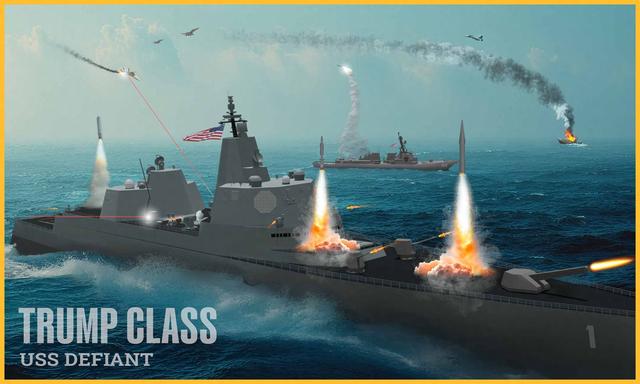
“特朗普”级战列舰计划是闹剧一场?专家辣评:永不启航的纸老虎
Jin Shi Shu Ju· 2025-12-26 09:33
Core Viewpoint - The announcement of the "Trump-class" battleship by President Trump claims it will be the "fastest, largest, and most powerful" battleship, but experts argue that battleships are outdated and the project faces significant challenges [1][2]. Group 1: Project Overview - The "Trump-class" battleship is described as a super warship that aims to maintain U.S. military dominance and intimidate adversaries [1]. - The last U.S. battleship was built over 80 years ago, and the last Iowa-class battleships were retired nearly 30 years ago, indicating that the concept of battleships is outdated [1][2]. Group 2: Expert Opinions - Mark Cancian from CSIS believes the project is impractical due to its long design cycle, high costs, and misalignment with the Navy's current distributed firepower strategy [1][5]. - Bernard Loo compares the project to Japan's Yamato and Musashi battleships, suggesting it is more about prestige than practical military utility [2]. Group 3: Design and Functionality - The proposed battleship will have a displacement of over 35,000 tons and a length exceeding 840 feet, which could make it a target for enemy forces [2]. - Bryan Clark emphasizes that the effectiveness of a vessel relies more on its weaponry than its classification, noting that the Trump-class will include advanced weapon systems like electromagnetic railguns and laser weapons [4]. Group 4: Cost and Budget Implications - The estimated cost of the Trump-class battleship could exceed $8 billion, making it 2 to 3 times more expensive than current destroyers, which could strain the Navy's budget [6]. - Historical context shows that U.S. weapon projects often exceed their budgets and timelines, as seen with the Zumwalt-class destroyer, which was reduced from 32 to 3 units due to cost overruns [6].
美要建“史上最快、最大”“特朗普”级战列舰 赖岳谦一针见血:美军在玩特朗普!所谓战列舰 注定烂尾!
Xin Lang Cai Jing· 2025-12-25 15:19
Core Viewpoint - The announcement of the "Trump-class" battleships by President Trump is seen as a political maneuver rather than a feasible military project, with experts predicting that the project may never come to fruition due to lack of capability and infrastructure [1] Group 1: Project Feasibility - The construction of the "Trump-class" battleships is criticized for lacking the necessary building capacity and infrastructure [1] - Experts suggest that the U.S. military may appear to support the project while secretly delaying it, leading to its potential cancellation [1] Group 2: Military Strategy - The proposed battleships are considered misaligned with future naval warfare needs, indicating a disconnect between political announcements and military requirements [1] - The commentary implies that the project may serve more as a political statement than a strategic military enhancement [1]
特朗普要建“特朗普级”战列舰,称战斗力爆棚,军事专家打出多个问号
Feng Huang Wang Cai Jing· 2025-12-24 09:21
Core Viewpoint - The new "Trump-class" battleship, as described by Trump, raises questions regarding its firepower and feasibility, particularly in comparison to existing naval vessels like the Zumwalt-class destroyer [1] Group 1: Ship Specifications - The planned "Trump-class" battleship has a displacement of 30,000 to 40,000 tons, significantly larger than the Zumwalt-class destroyer, which has a displacement of approximately 15,000 tons [1] - The battleship is expected to feature a vertical launch system with 128 cells and 12 hypersonic weapons, alongside unspecified laser and electromagnetic weapons [1] Group 2: Operational and Technical Concerns - There are contradictions in the proposed systems, such as the claim of high AI control versus the need for 650 to 850 crew members [1] - The large size and displacement of the "Trump-class" may lead to challenges regarding cost, construction time, and overall feasibility for the U.S. [1]