机器管+

Search documents
海南这五年:让清廉成为自贸港的鲜明底色
Zhong Guo Xin Wen Wang· 2025-12-18 06:45
Core Viewpoint - The construction of a clean and transparent environment is essential for the development of Hainan Free Trade Port, with a focus on establishing a long-term mechanism to prevent corruption and promote integrity [1][9]. Group 1: Anti-Corruption Measures - Hainan has seen significant anti-corruption efforts, with multiple high-ranking officials being prosecuted, reflecting the central government's strong stance against corruption [2]. - Since 2022, Hainan has investigated 19,462 cases and disciplined 17,622 individuals, reinforcing the anti-corruption momentum [3]. - The province has focused on grassroots corruption, particularly in rural collective asset management, recovering over 20.66 million yuan [2][3]. Group 2: Preventing Corruption - Hainan has established a "Supervision One Network" to address overlapping responsibilities among departments, improving governance and resolving historical issues [4][5]. - The network has processed over 103,000 cases, enhancing efficiency in supervision and problem resolution [5]. - The "machine management" approach has been implemented to streamline bidding processes, resulting in savings of 6.256 billion yuan across 1,832 projects [6]. Group 3: Promoting Integrity - Hainan is fostering a culture of integrity through educational initiatives, including warning sessions for leaders that emphasize the consequences of corruption [7][8]. - The province has integrated traditional cultural elements into its integrity education, creating a cultural park focused on promoting clean governance [8][9]. - Continuous efforts are being made to ensure that the construction of the Hainan Free Trade Port aligns with the principles of law and integrity, aiming for sustainable development [9].
深度关注丨从“机器管招投标”到“机器管+”
Zhong Yang Ji Wei Guo Jia Jian Wei Wang Zhan· 2025-10-31 00:10
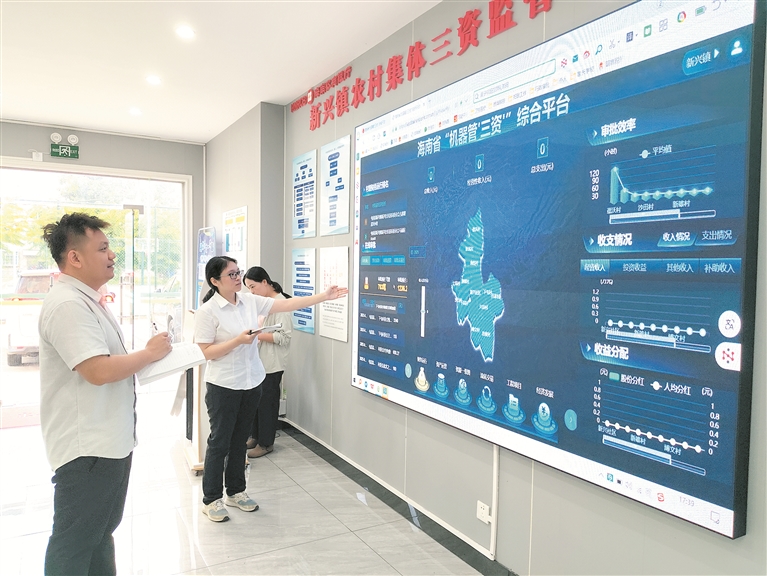
Core Insights - The article emphasizes the use of big data and information technology to enhance supervision and governance in rural collective asset management in Hainan Province, addressing issues such as unclear financial status and management inefficiencies [2][4][20] Group 1: Implementation of "Machine Management" Systems - Hainan Province has implemented the "Machine Management of Bidding" system to combat corruption in public engineering projects, which has been operational since November 2022, with the first project successfully completed [4][6] - The system automates the qualification assessment of bidders and the evaluation process, significantly reducing human interference and increasing transparency [5][6] - As of October 10, 2023, the "Machine Management of Bidding" system has processed 1,832 projects with a total bidding amount of 1,487.72 billion yuan, saving 62.56 billion yuan [6] Group 2: Integration with Supervision Networks - The "Supervision One Network" connects various supervisory departments and enables cross-regional and cross-departmental oversight, enhancing the ability to detect and rectify issues in real-time [8][19] - The integration of the "Machine Management of Bidding" system with the "Supervision One Network" allows for proactive monitoring and intervention in bidding processes, effectively reducing the risk of corruption [8][9] Group 3: Expansion of "Machine Management" Applications - The article discusses the expansion of "Machine Management" applications beyond bidding to include areas such as procurement and rural collective asset management, aiming for comprehensive oversight [12][14] - Future initiatives include the "Machine Management of Prescriptions" and "Machine Management of Campus Meals," which leverage technology to enhance regulatory compliance in healthcare and education sectors [13][14] Group 4: Impact on Governance and Transparency - The implementation of these systems has led to a significant reduction in corruption cases related to engineering projects, with no reported instances of interference in the bidding process since the system's launch [10][19] - The use of technology has transformed the oversight process from a reactive to a proactive approach, ensuring that potential issues are identified and addressed before they escalate [9][20]