村企联建

Search documents
从散到聚 从静到活 从富到暖——东营探路共富乡村的三重变奏
Da Zhong Ri Bao· 2026-01-15 03:37
Core Insights - The article highlights the ongoing efforts in Dongying to achieve "common prosperity" through innovative organizational structures and community collaboration [1][11] - The focus is on transforming the economic landscape of rural areas by leveraging local resources, enhancing productivity, and improving living standards [8][10] Group 1: Organizational Innovation - The establishment of "joint construction" companies has allowed multiple villages to collaborate, leading to cost savings and increased production value, exemplified by the "Juxian Aquatic Products" company [2][3] - Dongying has created 188 joint construction areas covering 985 administrative villages, fostering a cooperative environment that enhances economic resilience [3] - The shift from individual village management to collaborative regional planning has resulted in significant economic benefits, such as increased income from joint projects [3][4] Group 2: Resource Integration - A new rural property trading platform has been established to activate dormant assets, generating over 700 million yuan for local communities through the utilization of idle resources [5] - The integration of urban and rural resources has led to the establishment of partnerships between 347 villages and 325 enterprises, facilitating joint projects that enhance local economies [6][7] - Technological advancements in agriculture, such as IoT applications, have improved production efficiency and expanded market reach for local products [7] Group 3: Economic Impact - The income disparity between urban and rural residents has decreased significantly, with the urban-rural income ratio dropping from 2.39 in 2024 to 2.08 in the first three quarters of 2025 [8] - Employment opportunities have expanded, with over 5,000 individuals finding jobs through local "common prosperity workshops," contributing to direct income increases [8][9] - The implementation of labor remuneration programs has provided substantial financial support to local communities, enhancing overall economic stability [8][10] Group 4: Social Welfare and Community Development - The article emphasizes the importance of social welfare initiatives, such as educational support and healthcare for vulnerable populations, which have been funded through collective economic growth [10] - Community engagement in economic activities has fostered a sense of ownership among residents, transforming them from passive observers to active participants in local development [10][11] - The long-term commitment of local leaders and external support has been crucial in sustaining these development efforts, ensuring that no one is left behind in the pursuit of common prosperity [9][11]
东营|从散到聚 从静到活 从富到暖——东营探路共富乡村的三重变奏
Da Zhong Ri Bao· 2026-01-15 02:09
Core Insights - The article highlights the ongoing efforts in Dongying to achieve "common prosperity" through innovative organizational structures and community collaboration [1][11] - It emphasizes the transformation of rural areas by integrating resources, enhancing productivity, and improving living standards for residents [4][10] Group 1: Organizational Innovation - The establishment of "joint construction" areas has led to the unification of resources among multiple villages, allowing for collective purchasing and selling, which has significantly increased profitability [2][3] - Dongying has created 188 joint construction areas covering 985 administrative villages, which is nearly 60% of the total villages in the city [3] - The shift from individual village management to collaborative efforts has transformed competition into partnerships, enhancing overall community resilience [3] Group 2: Resource Integration - A new rural property trading platform has been established to activate dormant resources, generating over 700 million yuan for local communities through the trading of idle properties [5] - The integration of urban and rural resources has facilitated partnerships between 347 villages and 325 enterprises, leading to the implementation of 272 joint projects [6] - Technological advancements, such as IoT applications in agriculture, have improved production efficiency and product quality, contributing to the growth of local industries [7] Group 3: Economic Impact - The income disparity between urban and rural residents has decreased significantly, with the urban-rural income ratio dropping from 2.39 in 2024 to 2.08 in the first three quarters of 2025 [8] - Over 5,000 individuals have found employment through local "common prosperity workshops," which have become a vital source of income for many families [8][10] - The implementation of labor remuneration programs has directly increased income for thousands of residents, showcasing the tangible benefits of these initiatives [9] Group 4: Social Welfare and Community Development - The article discusses the importance of social services, highlighting investments in education and healthcare that have improved the quality of life for residents [10] - Community-driven initiatives have ensured that the benefits of economic growth are shared among all demographics, including vulnerable groups [10] - The empowerment of local residents through ownership and participation in community projects has fostered a sense of agency and belonging [10][11]
南京六合马鞍街道谱写集体经济发展新篇章
Yang Zi Wan Bao Wang· 2025-11-24 11:45
Core Viewpoint - The development of village-level collective economy is essential for consolidating the ruling foundation of the Party and advancing rural revitalization, serving as a strong engine for achieving common prosperity [1] Group 1: Resource Activation - Villages are focusing on activating idle resources as a breakthrough for developing collective economy, transforming dormant assets like old school buildings and idle factories into productive resources [2] - Jian Shan Village has created over 200 job opportunities by promoting "village-enterprise co-construction" in collaboration with the Ma Ji Industrial Park [2] - Da Sheng Village renovated idle school buildings to attract energy technology companies, generating an annual income of 150,000 yuan for the village collective [2] - Yu Wang Village successfully leased the He Ying Reservoir, achieving an annual rental income of 77,000 yuan, enhancing resource utilization efficiency [2] Group 2: Industry Promotion - The street is guiding villages to develop characteristic industries based on their resource endowments, shifting collective economy from "blood transfusion" to "blood production" [3] - He Wang Lake Village has introduced rural tourism projects, promoting the development of tea culture and poultry farming, creating a new model of "wetland economy" [3] - Ni Qiao Village hosted various events, attracting over 20,000 tourists annually and establishing a strong brand influence [3] - Ping Shan Village integrated 400 acres of land for a photovoltaic project, generating an annual income of 460,000 yuan, achieving both economic and ecological benefits [3] Group 3: Service Revenue - Villages are transitioning from traditional management to modern service models, providing specialized services to achieve stable income [4] - Da Ying Village has generated over 3 million yuan annually by managing community services and public area maintenance [4] - Huang Gang Village expects an annual operating income of 5.2 million yuan by expanding property management and agricultural sales [4] - Guo Ying Village has earned over 2 million yuan by providing land coordination and emergency support services for major construction projects [4] Group 4: Mechanism Innovation - The street is injecting continuous momentum into village-level collective economy development through policy empowerment, project guidance, and mechanism construction [5] - Qin Feng Village established a work mechanism that led to the successful implementation of a 100MW photovoltaic project, increasing collective economic income from 3.49 million yuan to 5.22 million yuan [5] - The center community achieved project service income of 700,000 yuan by leveraging its geographical advantages [5] - Huang Zhao Village has diversified its income sources, achieving a net profit of over 100,000 yuan through agricultural sales and small project contracts [5] - By 2025, the collective economy in the street is expected to show significant growth, with multiple villages achieving operational income exceeding 5 million yuan [5]
活力中国调研行•走进吉林丨41栋民宿撬动240万客流 解码边境小村的增收秘诀
Sou Hu Cai Jing· 2025-08-06 07:11
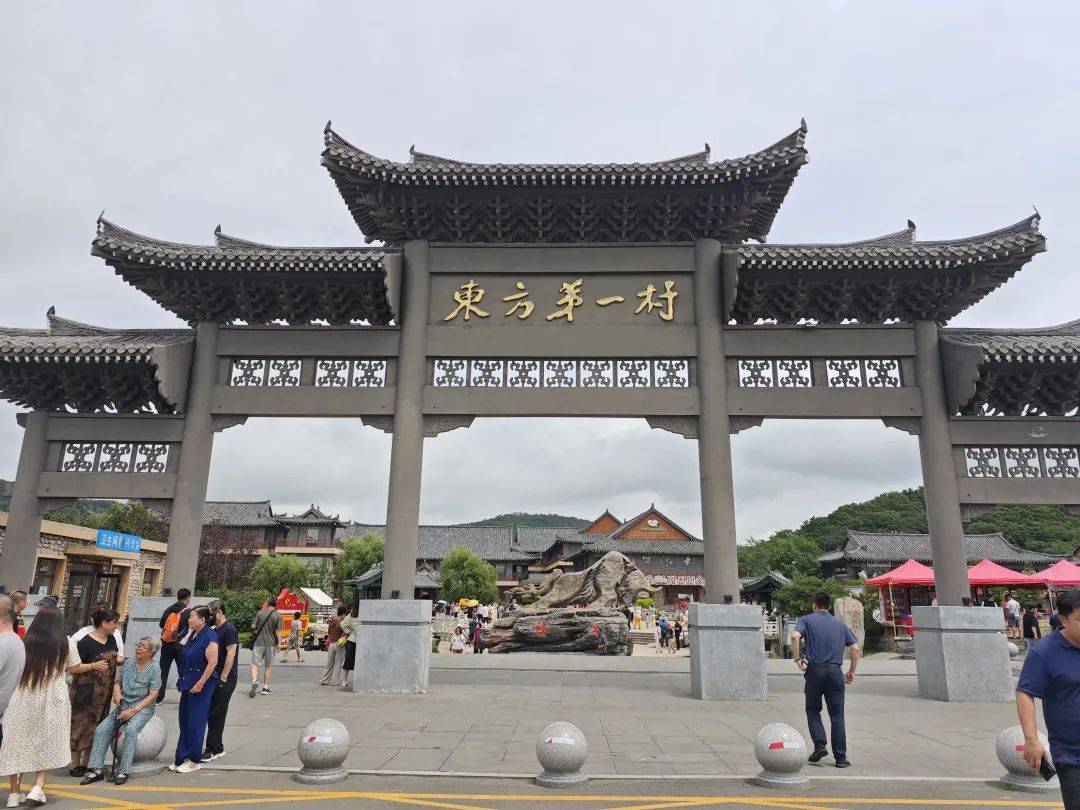
Core Insights - The article highlights the transformation of the border village of Fangchuan in Jilin Province, China, showcasing its development into a modern tourist destination with significant economic growth driven by local initiatives and government support [2][4][12]. Group 1: Economic Development - Fangchuan village has seen a dramatic increase in tourism, with over 200 million visitors in 2023 and projected to reach 240 million in 2024, significantly boosting local income [7][12]. - The village's average income per resident has reached 70,000 yuan, reflecting the positive impact of tourism and local business initiatives [12][13]. - The local government invested 210 million yuan in the "Oriental First Village" project, converting idle farmhouses into 41 unique ethnic-style guesthouses, enhancing both cultural appeal and livability [7][12]. Group 2: Community and Infrastructure - The village has developed a comprehensive set of facilities, including hotels, restaurants, and cultural centers, all designed to reflect the Korean ethnic heritage [7][12]. - A village-enterprise cooperation model has been established, allowing residents to either operate their own guesthouses or receive rental income, fostering a win-win ecosystem [12]. - The local economy has diversified with initiatives such as cattle farming and a fishing cooperative, contributing to a collective income of over 500,000 yuan in 2023 [12][13]. Group 3: Population Growth and Retention - Since the beginning of 2023, the permanent population in border villages of Jilin Province has increased by 8,303, reducing the "hollowing out" rate by 5 percentage points compared to the end of 2022 [12][13]. - The village's transformation has attracted not only local residents but also newcomers seeking employment and a better quality of life, indicating a successful strategy for population retention and attraction [12][13].