杠杆机制

Search documents
期货交易与股票交易的主要区别是什么?
Jin Rong Jie· 2026-01-23 22:13
Group 1 - The core difference between stock trading and futures trading lies in the underlying assets, with stocks representing equity in publicly listed companies and futures being standardized contracts for future delivery of goods or financial assets [1] - Stock trading typically follows a T+1 settlement system, while futures trading employs a T+0 mechanism, allowing for multiple transactions within the same trading day [1][2] - Futures trading supports both long and short positions, enabling investors to profit from both rising and falling prices, whereas stock trading primarily allows for profit through long positions [1][2] Group 2 - Leverage is a key distinction, with stock trading requiring full payment of the stock's value, while futures trading allows participation with a margin of 5%-20%, amplifying both potential returns and risks [2] - The sources of returns differ, with stocks generating income from capital gains and dividends, while futures profits are solely derived from price changes, with higher risk due to leverage [2] - Futures trading involves daily settlement of accounts, ensuring margin requirements are met, unlike stock trading which does not have mandatory daily settlements [2] Group 3 - The trading purposes for stock investors typically include long-term holding for value appreciation and short-term speculation, while futures participants also include hedgers who use contracts to lock in prices and mitigate risks [3]
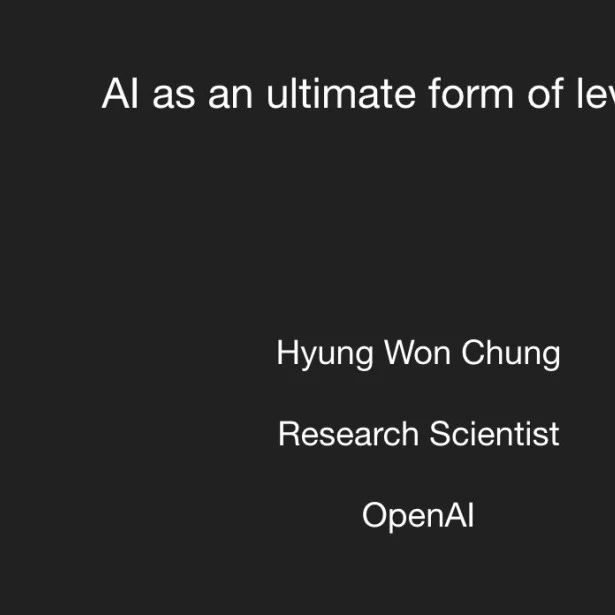
o1核心贡献者离职后首发声:AI是史上最强杠杆,超越人力、资本和代码
猿大侠· 2025-07-18 05:04
Core Viewpoint - AI is emerging as the most powerful leverage mechanism in history, fundamentally transforming how value is created from individual to societal levels [1][4]. Group 1: AI as a Lever - AI is identified as the fourth and most powerful form of leverage, alongside human, capital, and code [10]. - Historical methods of wealth creation relied on three types of leverage: human, capital, and code, with AI now providing a new dimension [10][15][16]. - AI's ability to learn, reason, and create allows it to function independently or in combination with other leverage forms, producing compound effects [22]. Group 2: The Evolution of Leverage - Human leverage, the oldest form, requires permission and management, exemplified by large-scale projects like pyramid construction [11]. - Capital leverage, prominent in the 20th century, allows for significant returns on investment through borrowing, but carries systemic risks as seen in the 2008 financial crisis [15]. - Code and media leverage enable exponential value creation with minimal additional effort, as seen in software applications and online content [16][18]. Group 3: AI's Impact on Organizations - AI agents can work like employees without requiring permission, allowing for easy scaling and significant productivity increases [24]. - The introduction of AI agents can fundamentally change organizational structures, reducing coordination costs and enhancing output [25][26]. - This shift signifies a transformation in how value is created, moving away from traditional human management to designing and deploying AI systems [26]. Group 4: Broader Implications for Society - AI's role in connecting disparate fields of expertise can facilitate scientific progress, which is essential for sustainable growth [27][28]. - The complexity of modern science requires collaborative efforts that AI can help bridge, addressing gaps in knowledge across disciplines [28]. - The potential underestimation of AI's transformative impact on society and individual capabilities is a critical consideration for the future [28].

2025年国内投资者如何投资现货黃金?现货黄金投资必看秘籍!
Sou Hu Cai Jing· 2025-07-07 03:35
Market Overview - In 2025, the global economy is navigating multiple uncertainties, with spot gold shining as a "safe haven" asset, maintaining a high price of $3308 per ounce as of June, with daily volatility reaching 3.2% and fluctuations exceeding $50, marking a near ten-year high [1] - Investors face both significant opportunities and unprecedented challenges in the gold market, necessitating strategies to seize opportunities and mitigate risks [1] New Market Dynamics - Leverage mechanisms and two-way trading have become mainstream, allowing investors to maximize potential returns through margin trading, with leading platforms offering leverage up to 1:100, though beginners are advised to limit it to 1:50 to reduce risk [3] - Continuous 24-hour trading covers major global markets, with the North American session being the most active, accounting for over 60% of daily trading volume [3] - Macro factors such as Federal Reserve monetary policy, U.S. non-farm payroll data, geopolitical conflicts, and global inflation data are key drivers of gold price fluctuations, with a 91% probability of abnormal price movements around Federal Reserve meetings [3] Platform Selection - Choosing a compliant trading platform is crucial for investment success, as the market is rife with scams and high-leverage traps [4] - Investors should prioritize platforms with regulatory qualifications, such as AA-class members of the Hong Kong Gold Exchange (HKGX), which require high margins and undergo strict audits [4] - Kingrong China, an AA-class member of HKGX, offers a transparent and secure trading environment with zero account opening fees and low spreads of $0.1 per ounce [4] Technical Analysis and Trading Strategies - The three rules for trend judgment include using a combination of 5-day, 20-day, and 60-day moving averages to identify bullish trends, with an accuracy rate of 78% in the $1800-$2100 range [5] - Volume-price analysis indicates that price increases should be accompanied by rising trading volumes, with a warning for potential pullbacks if volume declines [6] - Advanced tools like the "trend reversal alert" feature can enhance trading success, increasing win rates to 68% in Q2 2025 [6] Risk Management Strategies - The World Gold Council reported a 23% year-on-year increase in gold price volatility, with unprotected investors facing average losses of 35-50% of their principal during extreme fluctuations [7] - Key risk management strategies include maintaining a diversified asset allocation, strict stop-loss measures, and avoiding high-risk trading periods [8] New Investor Development - New investors are encouraged to start small, utilizing simulated trading accounts and participating in competitions to refine their strategies, with a survival rate of 78% in the first month of real trading [7] - The integration of AI analysis tools is shaping a new trend in gold investment, emphasizing the importance of disciplined risk management and continuous learning [7]