
极地精神

Search documents
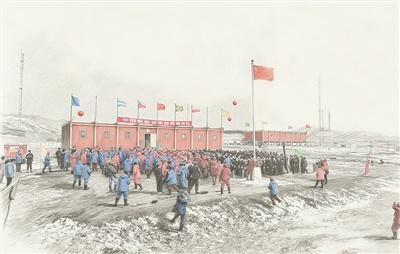
“我”在南极科考站(创新图录·历史跨越)
Ren Min Wang· 2026-02-08 23:13
Group 1 - The establishment of China's first Antarctic research station, the Great Wall Station, marked a significant milestone in the country's polar exploration efforts, which have evolved from non-existent to a robust presence over the past 40 years [2][4] - The current phase of China's polar exploration is characterized by a transition from a polar power to a strong polar nation, with plans to enhance the support and guarantee system for deep-sea and polar exploration as outlined in the 14th Five-Year Plan [5] - The Great Wall Station serves as a foundational achievement for subsequent advancements in polar research, symbolizing the dedication and sacrifices of the first Antarctic wintering team [4][5] Group 2 - The polar exploration framework has expanded to include "five stations, two ships, and one base," indicating a comprehensive approach to scientific research in Antarctica [4] - There is a focus on innovation in polar engineering equipment and technology to support cutting-edge scientific research, aiming to amplify China's influence in international polar studies [5]

心有山海 踏浪而行——写在中国第42次南极考察队起航之际
Xin Hua She· 2025-11-01 09:18
Core Viewpoint - The article highlights the significance of China's 42nd Antarctic Expedition, emphasizing the country's evolution from a novice to a strong player in polar exploration over the past 40 years, showcasing advancements in scientific research and international cooperation in addressing climate change [3][5][15]. Group 1: Historical Context - In 1984, China made its first expedition to Antarctica without a complete map, marking the beginning of its polar exploration journey [3]. - The establishment of the first Antarctic research station, Great Wall Station, occurred in 1985, symbolizing China's initial foothold in Antarctica [6][7]. - China became a consultative party to the Antarctic Treaty in 1985, gaining decision-making rights in Antarctic affairs [7]. Group 2: Scientific Advancements - The 42nd Antarctic Expedition aims to utilize advanced technologies such as clean drilling and sampling systems to explore deep ice layers [10]. - China has achieved significant breakthroughs in polar research, including decoding the genome of Antarctic krill and launching the first polar remote sensing satellite [10]. - The introduction of the "Snow Dragon 2," China's first domestically built polar research icebreaker, has enhanced the country's capabilities in polar exploration [8]. Group 3: Climate Change and Global Responsibility - The article discusses the critical role of polar regions in global climate change, with the Antarctic sea ice extent reaching its third-lowest level in history at 1.97 million square kilometers in 2024 [5]. - China's commitment to addressing climate change is underscored by its emphasis on ecological protection and international cooperation in polar research [5][11]. - The country actively participates in international governance related to Antarctic environmental protection and has proposed the "Green Expedition" initiative, gaining recognition from the global community [11]. Group 4: Cultural and National Significance - The construction of the Qinling Station, named after a significant Chinese mountain range, reflects the cultural heritage and national pride associated with China's Antarctic endeavors [12][13]. - The spirit of perseverance and dedication among Chinese researchers is highlighted, showcasing their commitment to scientific exploration despite harsh conditions [14][15]. - The expedition symbolizes a collective national effort to contribute to global scientific knowledge and environmental stewardship [15][16].