极致透明

Search documents
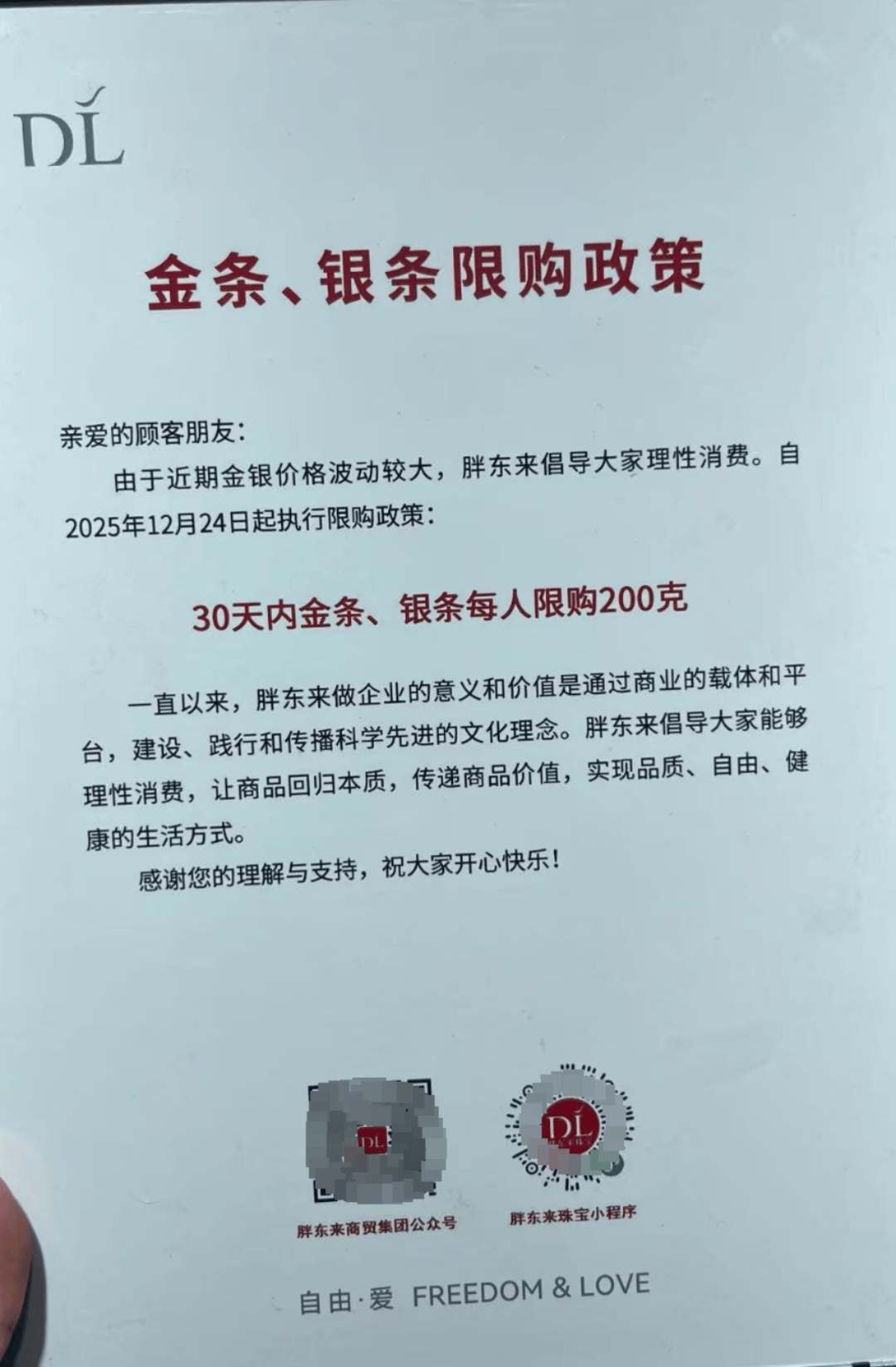
胖东来黄金销售火爆引跨省抢购 工艺费25元代购称得提前两天联系
Sou Hu Cai Jing· 2025-12-25 13:57
Core Insights - The surge in consumer interest at the Pang Donglai jewelry counter is driven by its transparent pricing mechanism, with a flat processing fee of only 25 yuan, contrasting sharply with traditional gold stores where fees can exceed 100 yuan per gram [1][5][6] Group 1: Consumer Behavior - Consumers from various provinces, including Jiangsu, Beijing, and Xi'an, are willing to wait for hours to purchase gold, indicating a strong demand for the products offered by Pang Donglai [1][5] - Many customers express that despite the long wait times, the transparent pricing and high value for money make the experience worthwhile, as local gold stores often charge significantly higher processing fees [5][6] Group 2: Pricing Strategy - Pang Donglai's pricing strategy includes a one-price system for processing fees, with many products having no processing fee at all, which is a significant departure from the traditional model where fees are charged per gram [6][10] - The company also displays the purchase price on the tags, enhancing transparency and allowing consumers to understand the cost structure better [6][10] Group 3: Appointment and Resale Market - Due to the increasing customer flow, Pang Donglai has implemented an appointment system for purchasing gold, with the first batch of appointment numbers selling out in under 10 seconds each morning [9][10] - The rise of a resale market has emerged, where resellers use multiple accounts to secure appointment numbers and charge a fee for their services, prompting the company to consider stricter regulations to ensure fair access for regular consumers [10][11] Group 4: Brand Trust and Marketing Strategy - The success of Pang Donglai is attributed to its commitment to transparency and building brand trust, which has created a "safe island" for consumers, simplifying their purchasing decisions [11] - The company's marketing approach is characterized as "anti-marketing," focusing on honesty and transparency, which has transformed the traditional sales model into one that emphasizes trust and reliability [11]

达利欧警告:多策略对冲基金模式“难撑50年”,或难成长期业务
美股IPO· 2025-11-25 07:10
Core Viewpoint - Ray Dalio, founder of Bridgewater, believes that the multi-strategy hedge fund model sweeping Wall Street may not have a long-term future due to its reliance on small, dispersed teams that struggle to establish stable, long-term relationships [1][3][4]. Group 1: Multi-Strategy Hedge Fund Model - The multi-strategy hedge fund model has seen a surge in popularity, with notable figures like Bobby Jain and Michael Gelband launching their own funds [4]. - Major players in this space, such as Millennium Management and Citadel, have been operational for about 35 years, managing assets of over $81 billion and approximately $71 billion, respectively [4]. - These funds typically allocate capital to dozens or even hundreds of "pods" (investment teams), each focusing on specific market segments, which allows them to achieve stable returns across various market conditions [4]. Group 2: Risks and Challenges - The multi-strategy model is not without risks, as regulators are increasingly scrutinizing the high leverage used by these funds and the potential for "liquidation cascades" [5]. - Dalio emphasizes that the "segregated" approach of having many small teams can hinder the development of deep relationships among employees, affecting stability and competitiveness [5][6]. Group 3: Bridgewater's Culture and Performance - Bridgewater is known for its unique corporate culture, which Dalio has shaped through principles of "extreme honesty" and "extreme transparency," encouraging open disagreements and employee evaluations [8]. - The current CEO, Nir Bar Dea, has taken steps to moderate some of the more unusual practices within the company culture and has made adjustments to leadership and personnel structures [9]. - Bridgewater's flagship macro fund is projected to achieve its largest annual gain since 2010, with a 26.4% increase in the first nine months of the year [10].