柔性化制造

Search documents
轮式人形,杀死传统AGV?
机器人大讲堂· 2025-11-12 10:11
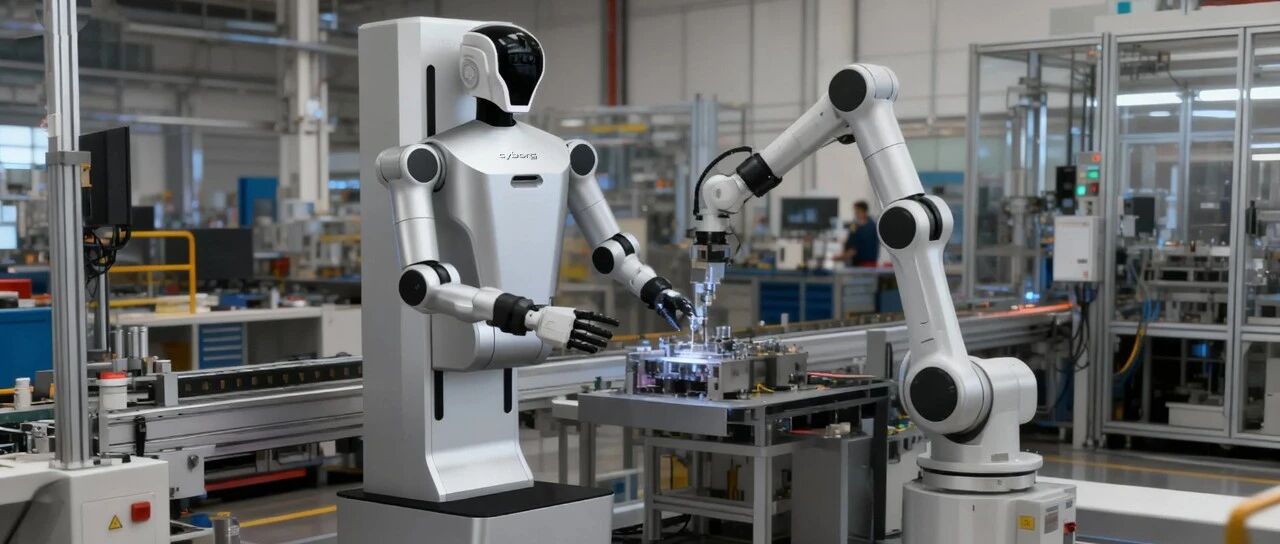
Core Insights - The industrial robot industry is at a critical juncture, requiring flexibility, high load capacity, precision, and digital capabilities to meet the evolving demands of global manufacturing [1] - 2025 is seen as a pivotal year for humanoid robots to transition from experimental stages to large-scale applications, with leading companies targeting "thousands" of units for delivery [1] - Despite the promising outlook, the humanoid robot industry faces significant challenges that must be addressed to achieve large-scale production [2] Group 1: Challenges in the Humanoid Robot Industry - The integration of humanoid robots into manufacturing lines is hindered by the need for high efficiency, adaptability, and low operational costs in complex production environments [3] - Production bottlenecks exist due to the technical, integration, and cost challenges associated with bipedal humanoid robots, which affect efficiency and reliability [5] - High component costs dominate the humanoid robot market, creating a vicious cycle of low production volumes leading to high costs, which further discourages supply chain investment [7] Group 2: Cyborg-W01 and Cyborg-H02 Innovations - The Cyborg-W01 wheeled humanoid robot addresses the challenges of flexibility and digital integration in manufacturing environments, balancing efficiency and cost reliability [8] - Cyborg-W01 features 53 degrees of freedom and advanced navigation technology, allowing for high mobility and precision in tight spaces, with a maximum speed of 1m/s and navigation accuracy of ±1cm [11] - The design of Cyborg-W01 enhances integration and standardization for mass production, enabling it to adapt to narrow spaces and improve data collection and execution capabilities [12] Group 3: Cyborg-H02 as a Versatile Gripper - The Cyborg-H02 high-performance underactuated biomimetic hand addresses the limitations of traditional robotic hands, providing a solution for both heavy lifting and precision tasks [19] - Cyborg-H02's innovative design allows for high flexibility and adaptability, enabling it to handle various shapes and sizes of components without the need for custom fixtures [21] - The hand's ability to balance heavy loads and perform delicate operations is supported by a combination of biomimetic principles and multi-sensor integration, significantly reducing downtime in production lines [25] Group 4: Systemic Solutions for B-end Applications - The collaboration between Cyborg-W01 and Cyborg-H02 represents a comprehensive capability unit that meets the urgent needs of B-end applications in industrial manufacturing [26] - In warehouse logistics, their synergy not only facilitates sorting but also dynamically updates inventory information, addressing the industry's data application challenges [28] - This approach demonstrates how robotic collaboration can enhance efficiency and reduce costs, paving the way for market growth and potential C-end applications [29] Conclusion and Future Outlook - The humanoid robot industry in 2025 will focus on practical capabilities rather than conceptual competition, with companies needing to address customer pain points and demonstrate scalable business models [30] - The combination of Cyborg-W01 and Cyborg-H02 exemplifies a direction towards highly collaborative, adaptable, and commercially viable intelligent systems in industrial production [30]

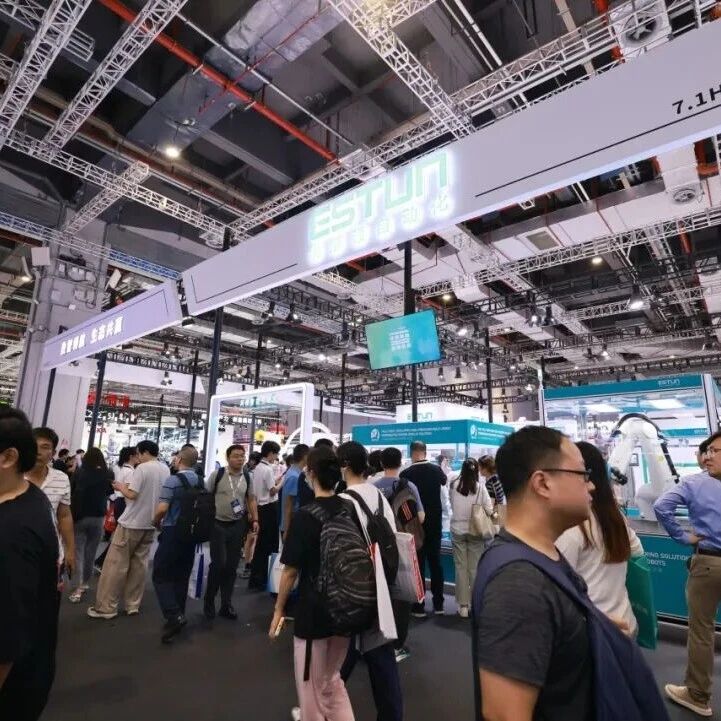
埃斯顿携全新机器人新品、行业解决方案、AI+数字化技术闪耀工博会!
机器人大讲堂· 2025-09-29 10:11
Core Viewpoint - The industrial manufacturing sector is undergoing a profound transformation towards intelligence and flexibility, with smart robots becoming integral nodes in the manufacturing ecosystem, shifting production from "experience-driven" to "data-driven" [1] Group 1: Industry Trends - The shift towards intelligent and flexible manufacturing is reshaping the global manufacturing competitive landscape, enhancing core competitiveness for companies and enabling rapid market responsiveness [1] - The 25th China International Industry Fair held in Shanghai highlighted the vibrancy of the robotics industry [2] Group 2: Company Highlights - Estun, a leading player in the robotics industry, showcased its full industrial chain innovations at the fair, emphasizing smart and flexible manufacturing [4] - Estun's industrial robot shipments surpassed foreign brands for the first time in the first half of the year, achieving a market share of 10.5% and raising the domestic market's localization rate to 55.3% [4] Group 3: Product Innovations - Estun launched the ER1200-3300, a six-axis robot with a payload of 1200kg, marking a breakthrough in key technologies and achieving 100% localization of core components [7] - The ER180-3100-PL-EX, an explosion-proof industrial robot, is designed for high-risk environments in industries such as petrochemicals and military, ensuring safety and strong performance [10] - The TRIO controller leverages AI technology to enhance development efficiency, reducing project implementation time by 50% [15] Group 4: Advanced Solutions - The iER.OS multi-machine intelligent control system improves configuration efficiency by 50% and enhances absolute positioning accuracy by over five times [18] - Estun's solutions for high-precision automation, such as the 3D scanning measurement system and laser cutting systems, demonstrate significant advancements in manufacturing efficiency and precision [23][30] Group 5: Digital Transformation - Estun's digital software platforms, including EstunEditor and E-Care, aim to facilitate the digital transformation of manufacturing processes, enhancing operational efficiency and reducing costs [53]