核心CPI破1%

Search documents
中国宏观经济向上结构性盘整拐点出现:核心CPI重返1%浅析
Sou Hu Cai Jing· 2025-10-18 05:52
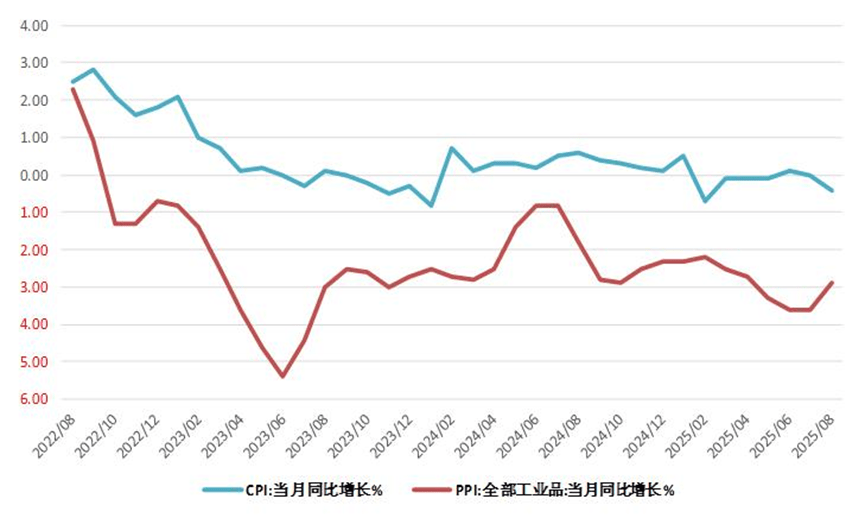
Core Insights - The report indicates that China's economy has passed its most difficult adjustment period and is entering a new phase characterized by structural optimization and demand-driven growth, rather than a traditional V-shaped recovery [2][30] - Key indicators such as core CPI returning to 1%, narrowing PPI-CPI gap, stabilization of the real estate market, and adjustments in the labor market signal this upward trend [2][30] Group 1: Core CPI and Consumer Demand - In September 2025, China's core CPI rose by 1.0% year-on-year, marking the first time it exceeded 1% in 19 months, with a continuous increase over five months [3][5] - The CPI's month-on-month increase of 0.1% indicates a positive shift in price momentum, while the year-on-year decline of 0.3% shows a narrowing of the downward pressure [3][5] - The rise in core CPI reflects a recovery in domestic demand and enhanced consumer market dynamics [3][5] Group 2: PPI-CPI Gap and Economic Resilience - The narrowing of the PPI-CPI gap is a critical indicator of improved economic efficiency, driven by both supply and demand factors [8][9] - Supply-side policies have stabilized prices in key industries, while demand-side recovery has led to a continuous rise in core CPI [8][9] - The structural changes in the economy, including the decline in food prices, have also contributed to the narrowing of the gap [8][9] Group 3: Consumption Upgrade as an Economic Engine - The recovery in core CPI is fundamentally linked to the release of consumer potential, with a clear trend of structural upgrades in consumption rather than a broad rebound [13][15] - Policies such as the "old-for-new" consumption initiative have significantly boosted retail sales in various sectors, indicating a robust market response [15][20] - The shift from survival-oriented consumption to development-oriented consumption is evident, with a decrease in the Engel coefficient from 33% in 2012 to 29.8% in 2024 [16][27] Group 4: Real Estate and Employment Market Stabilization - The real estate market is showing signs of bottoming out, with a significant reduction in the year-on-year decline of new home sales in early 2025 [17][18] - The employment market is also stabilizing, with the urban unemployment rate declining from its peak earlier in the year, indicating a search for new equilibrium [18][19] - Structural adjustments in the labor market are evident, with policies aimed at supporting employment for key demographics [19][20] Group 5: Macroeconomic Policy Effectiveness - China's proactive macroeconomic policies in 2025, including fiscal and monetary measures, have effectively supported economic stability and growth [20][21] - The implementation of the "old-for-new" policy has been enhanced by significant financial support, reflecting a strategic approach to stimulate consumption [20][21] - Future policy directions will focus on sustaining internal demand and fostering innovation, with an emphasis on coordinated macroeconomic policies [22][27]