桥梁检测

Search documents
水下能摸、空中能看!这个软体机器人,成了桥检人的“替身”
机器人大讲堂· 2026-02-27 10:34
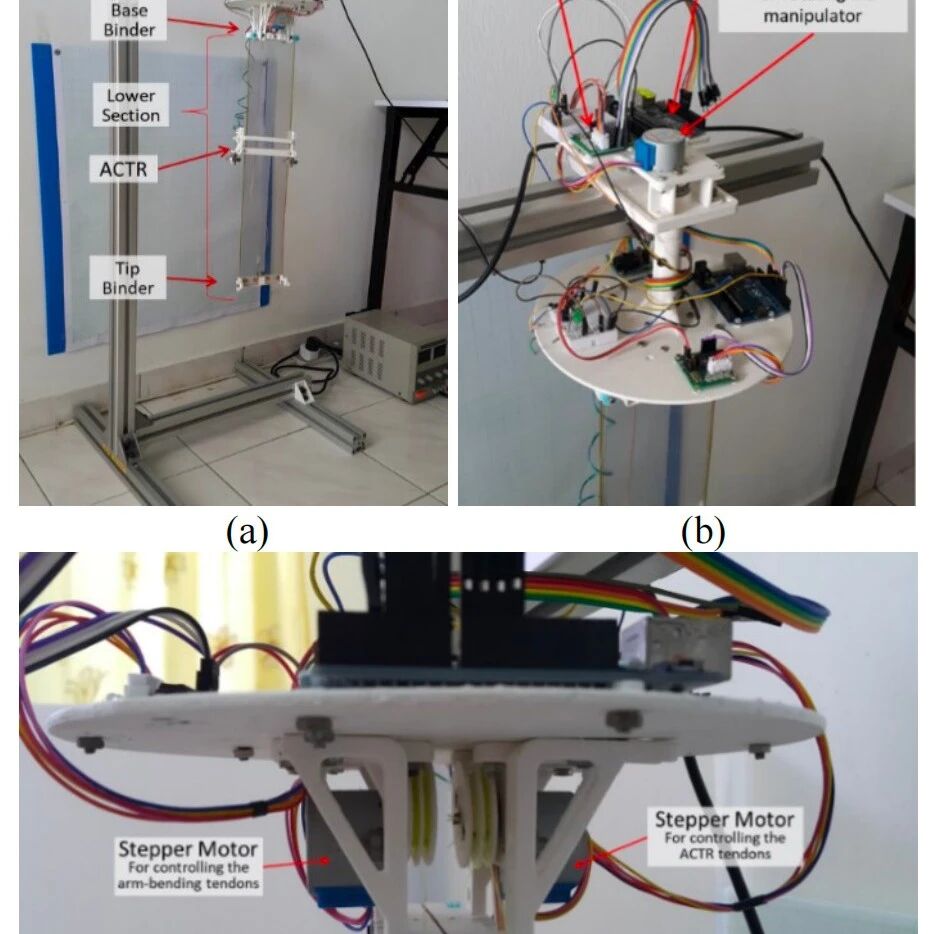
Core Viewpoint - A new soft-bodied continuum robot developed by a team from Malaysia's Polytechnic University can perform bridge inspections both above and below water seamlessly, significantly reducing costs and operational complexity compared to traditional methods [2][4][24]. Group 1: Traditional Inspection Methods - Traditional bridge inspection requires multiple teams and equipment, including drones, ROVs, and remote divers, leading to high costs and operational inefficiencies [4][24]. - The cost of traditional systems starts at $50,000, with operational costs ranging from $100 to $800 per hour, depending on the equipment used [24]. Group 2: Innovative Robot Design - The new robot features a simple design with a rotating base, a soft arm, and an ACTR (Arm Constrainer and Tendon Router) slider, utilizing only three motors to achieve its functionality [5][10]. - The robot's three degrees of freedom allow it to perform tasks effectively without the need for more complex machinery [8][12]. Group 3: Performance and Testing - The robot successfully captured clear images from five critical inspection points on a bridge model, demonstrating its capability to operate in both submerged and exposed conditions [18][19]. - The robot's design allows for different viewing angles and perspectives, enhancing its inspection capabilities [19][22]. Group 4: Cost Efficiency - The estimated cost of the new robot is under $1,500, with operational costs below $100 per hour, making it significantly cheaper than traditional methods [3][24]. - A five-year cost analysis shows that using this robot for inspecting 20 bridges could save up to 85% compared to traditional methods [26]. Group 5: Future Applications - The robot's potential applications extend beyond bridge inspections to include dam inspections, offshore wind turbine foundation checks, and maintenance of port facilities [27][28]. - Future versions of the robot may include features such as extendable arms, modular designs, and semi-autonomous operation capabilities [28].