
检查检验结果互认

Search documents
广西织密儿科服务网络
Ren Min Ri Bao· 2026-02-02 22:25
Core Insights - The article highlights the efforts of Guangxi Zhuang Autonomous Region in enhancing healthcare services, particularly in pediatrics, to ensure high-quality health outcomes for the population [1] Group 1: Pediatric Services Expansion - Guangxi has implemented measures to expand and balance pediatric service resources, achieving full coverage of pediatric services in all secondary and tertiary public general hospitals [1] - The region has focused on the training and recruitment of pediatric talent, with the number of pediatric practitioners (including assistants) reaching 1.39 per 1,000 children, significantly improving pediatric emergency and inpatient service capabilities [1] Group 2: Healthcare Accessibility Improvements - The mutual recognition of medical examination and testing results has been deepened, effectively reducing the medical burden on the public [1] - Guangxi has established 438 mutual recognition projects for medical examination and testing results, with 14 prefecture-level cities having over 200 mutual recognition projects each, and an average of 413 mutual recognition projects per city [1]
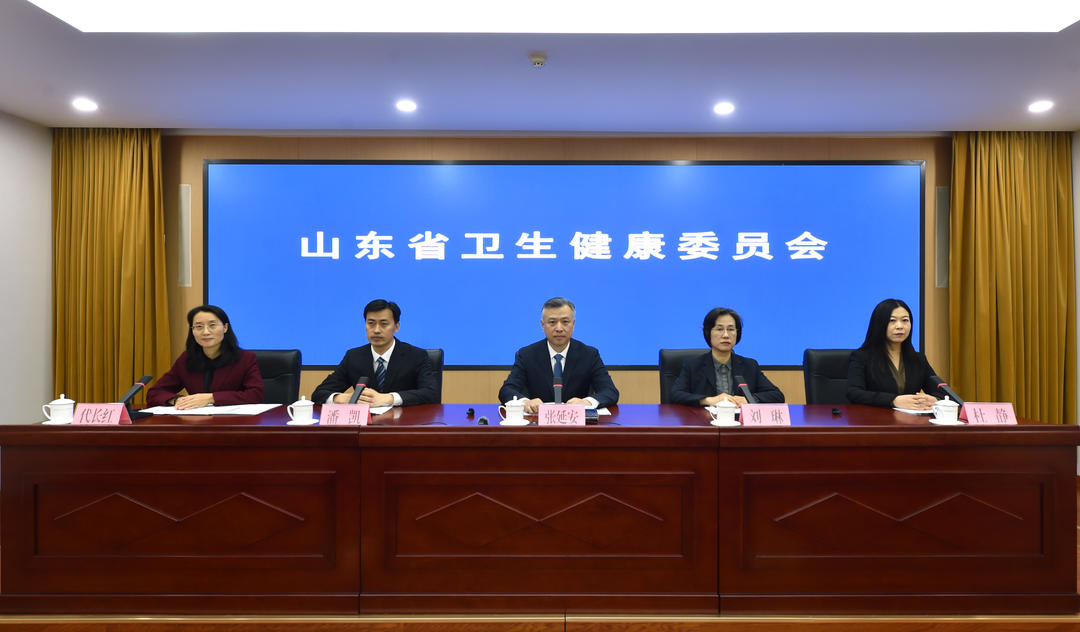
告别重复检查,山东1468家医疗机构实现检查结果共享
Qi Lu Wan Bao· 2026-01-15 08:08
Core Insights - Shandong Province's health system has made significant advancements in service delivery, focusing on mutual recognition of medical services and data sharing, with over 15 million mutual recognitions achieved [1][3] Group 1: Data Sharing and Technology Integration - A unified platform called "Lu Medical Mutual Recognition" has been established, connecting 1,468 medical institutions and covering all secondary and above public hospitals, enabling real-time monitoring and data sharing [3] - The "Lu Cloud Imaging" system has been enhanced, with daily uploads of 200,000 test reports and over 4TB of medical imaging data processed, improving efficiency in data transmission [3] - Patients can access their test reports and imaging results via hospital WeChat accounts, allowing for convenient mobile access to their medical information [3] Group 2: Accessibility and Community Engagement - The mutual recognition service has been expanded to include township health centers, community health service centers, and private medical institutions, making it easier for residents to access services locally [4] - Collaborative efforts within medical alliances have been strengthened, resulting in a 10.9% increase in two-way referral services across all counties [4] - Cross-province mutual recognition initiatives are being implemented, with Shandong and Henan provinces set to achieve online mutual recognition of test results by December 2025 [4] Group 3: Quality Assurance and Standards - A comprehensive quality control system has been established, incorporating provincial, municipal, and county-level evaluations to reduce quality disparities between urban and rural areas [4] - The mutual recognition standards have been standardized and updated dynamically, with 429 mutual recognition projects now covering common diseases and treatment needs [4] - Medical institutions are guided to optimize their testing projects based on clinical necessity, ensuring support for mutual recognition efforts [4] Future Directions - Shandong plans to further expand coverage of grassroots medical institutions, deepen cross-province cooperation, and enhance platform functionalities to improve the quality of mutual recognition services [5]

地市内医疗机构之间检查检验结果互认项目超200项
Ren Min Ri Bao· 2026-01-09 00:08
Core Viewpoint - The article highlights the continuous improvement of China's grassroots healthcare system during the 14th Five-Year Plan period, focusing on enhancing service capabilities and optimizing service models to provide foundational health guarantees for urban and rural residents [1] Group 1: Grassroots Healthcare Infrastructure - The number of grassroots healthcare institutions in China has reached 1.04 million, ensuring that every town in rural areas has a health center and every administrative village has a village clinic, while every urban street has a community health service center and every community has a community health service station [1] - Over 50% of the national medical treatment volume is accounted for by grassroots healthcare institutions, with more than 90% of residents able to reach the nearest medical service point within 15 minutes [1] Group 2: Medical Community Development - A total of 3,099 tightly-knit county medical communities have been established, covering all counties and county-level cities, as well as one-third of urban districts, serving a population of 924 million [1] - By 2025, all counties with a permanent population exceeding 100,000 will have the capability for blood dialysis, allowing residents to access these services close to home [1] Group 3: Interconnectivity and Efficiency - The initiative of "grassroots examination, district diagnosis, and mutual recognition of results" is being advanced, with over 200 mutual recognition projects for examination and testing results established among medical institutions within cities across all provinces [1] - 25 provinces have built provincial-level imaging clouds, with a total of over 350 million retrievals [1]
地市内医疗机构之间检查检验结果互认项目超过200项
Ren Min Ri Bao· 2026-01-04 22:29
Core Viewpoint - The article highlights the continuous improvement of China's primary healthcare system during the 14th Five-Year Plan period, focusing on enhancing service capacity and optimizing service models to provide fundamental health guarantees for urban and rural residents [1]. Group 1: Primary Healthcare Infrastructure - The number of primary healthcare institutions in China has reached 1.04 million, ensuring that every township in rural areas has a health center and every administrative village has a village clinic, while urban areas have community health service centers and stations [1]. - Over 50% of the national medical treatment volume is accounted for by primary healthcare institutions, with more than 90% of residents able to reach the nearest medical service point within 15 minutes [1]. Group 2: Medical Community Networks - A total of 3,099 tightly-knit county medical communities have been established, covering all counties and county-level cities, as well as one-third of urban districts, serving a population of 924 million [1]. - By 2025, all counties with a permanent population exceeding 100,000 will have the capability for blood dialysis, allowing residents to access these services locally [1]. Group 3: Interconnectivity and Efficiency - The initiative of "primary examination, district diagnosis, and mutual recognition of results" is being advanced, with over 200 mutual recognition projects for inspection and testing results implemented across all provinces [1]. - 25 provinces have established provincial imaging clouds, with a total of over 350 million retrievals recorded [1].
青岛严查医疗领域突出问题 减轻群众就医负担
Zhong Yang Ji Wei Guo Jia Jian Wei Wang Zhan· 2025-12-06 00:33
Group 1 - The Qingdao Municipal Commission for Discipline Inspection and Supervision has conducted on-site inspections of three medical institutions, identifying issues such as unclear standards and inconvenient usage of the municipal smart inspection and testing system [1] - In 2023, the Qingdao Commission has focused on issues affecting public interests, such as repeated medical inspections and illegal charges, establishing a communication mechanism with the Municipal Health Commission and holding six special meetings to address these issues [1] - A task, problem, rectification, and effectiveness list has been established to ensure accountability and problem resolution, with bi-weekly updates and follow-ups [1] Group 2 - The Qingdao Commission promotes a comprehensive approach of "check, rectify, and manage" in collaboration with the Municipal Health Commission, organizing self-checks in hospitals and verifying abnormal hospitalization costs [2] - The Commission has urged market supervision departments to investigate and handle five cases of price violations in the medical charging sector, while the municipal medical insurance department has imposed administrative penalties on seven medical institutions [2] - The digital empowerment initiative has led to the establishment of a mutual recognition mechanism for inspection and testing results, with 861 medical institutions connected to the municipal platform, achieving 116.32 million mutual recognitions this year, thereby reducing the burden on patients [2]