森林火险

Search documents
大反转!猛降17℃!河南大范围雨雪沙尘要来了
Xin Lang Cai Jing· 2026-02-18 12:10
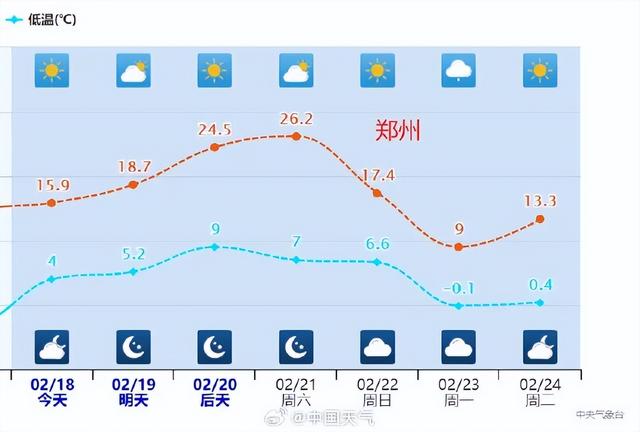
Core Viewpoint - A significant temperature fluctuation is expected in Henan, with a major warming trend followed by a strong cold front bringing rain and snow [1][6]. Group 1: Temperature Changes - A large-scale warming is anticipated across most regions of China, with temperatures rising by 15 to 20 degrees Celsius in areas from Huanghuai to the Yangtze River [1]. - On February 21, temperatures in northern and southwestern parts of Henan may reach around 26 degrees Celsius, while other areas will range from 22 to 24 degrees Celsius [1]. - The highest temperature on February 21 will contrast sharply with the lowest temperature on February 23, which is expected to drop to 9 degrees Celsius, marking a 17-degree difference [8]. Group 2: Weather Conditions - Strong winds are expected from February 19 to 20, with gusts reaching 6 to 7 levels, increasing the risk of forest fires due to dry conditions [4]. - A cold front will begin affecting Henan on the night of February 21, bringing strong winds, temperature drops, and potential sandstorms or dust [6]. - Rain and mixed precipitation are forecasted for February 22 to 23 and again from February 25 to 26, coinciding with the peak travel period for the Spring Festival [10]. Group 3: Daily Weather Forecast - February 19: Sunny with temperatures ranging from 4 to 19 degrees Celsius [11]. - February 20: Partly cloudy with temperatures from 6 to 24 degrees Celsius [11]. - February 21: Partly cloudy with a high of 26 degrees Celsius [11]. - February 22: Cloudy with temperatures dropping to a high of 16 degrees Celsius [11]. - February 23: Overcast with light rain or mixed precipitation, temperatures between 5 and 10 degrees Celsius [11]. - February 24: Partly cloudy with temperatures from 0 to 10 degrees Celsius [11]. - February 25: Partly cloudy with temperatures from 2 to 12 degrees Celsius [11].

直冲20℃ 河南开启回暖模式
Xin Lang Cai Jing· 2026-02-17 08:04
Group 1 - The last snowfall of the Year of the Snake has ended, with light to moderate snow in parts of the west and southwest, and light rain in the central and eastern regions [1] - A significant warming trend is expected from today until the fifth day of the new year, with temperatures in many areas reaching over 20°C, peaking at around 25°C in cities like Zhengzhou, Anyang, and Kaifeng on the 21st [3][4] - The temperature difference between day and night is increasing, exceeding 16°C in most areas from the 19th to the 21st, with some regions exceeding 20°C [5] Group 2 - Strong winds are forecasted on the 20th and 21st, with western or southwestern winds at 3 to 4 levels and gusts around 6 levels, prompting caution for outdoor activities [6] - As temperatures rise, the forest fire risk level is expected to increase over the next six days, advising against carrying fire sources in mountainous areas [8] - Fog and haze are anticipated due to increased humidity after the rain and snow, with light to moderate haze expected in the afternoon and evening [9] Group 3 - A cold air mass is expected to impact the province at the end of the Spring Festival holiday, bringing strong winds and a drop in temperature along with rain and snow [11] - The temperature fluctuations during the Spring Festival holiday have been significant, requiring the public to adjust clothing accordingly to prevent colds [12] - The weather forecast for the next three days indicates mostly sunny to partly cloudy conditions with light to moderate haze, and fog in some areas overnight [13][14][15]
春节期间天气晴好 天干物燥注意防火
Zheng Zhou Ri Bao· 2026-02-13 00:59
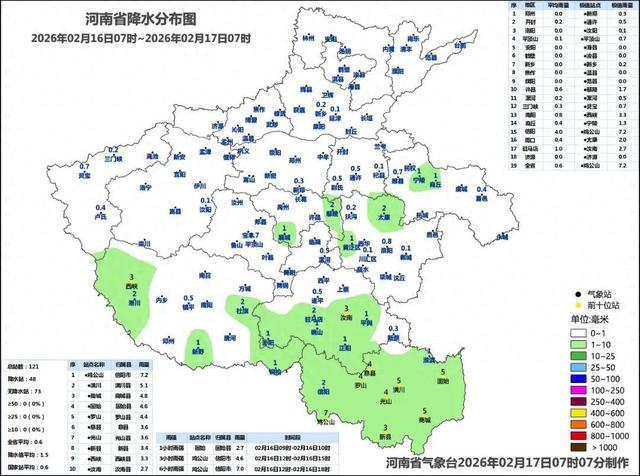
Group 1 - The core viewpoint of the articles indicates that during the 2026 Spring Festival holiday, Zhengzhou will experience mainly sunny or partly cloudy weather, with frequent strong winds due to cold air influences [1][2] - The weather forecast details specific conditions for each day of the holiday, including temperature ranges and wind conditions, highlighting significant temperature fluctuations [1] - The forecast predicts a notable drop in temperature from February 15 to 16, followed by a gradual increase starting February 17, with a general trend of cooling towards the end of the holiday [1] Group 2 - The meteorological authority advises that the overall weather during the holiday will be dry, with a high forest fire risk and numerous windy days, urging citizens to pay close attention to fire safety [2] - Due to the significant temperature variations, there is a recommendation for citizens to adjust their clothing accordingly to prevent colds [2]
暴跌12.2℃!寒潮来袭,浙江大部将跌破0℃,山区局部中到大雪,最厚衣服准备!
Xin Lang Cai Jing· 2026-01-18 00:58
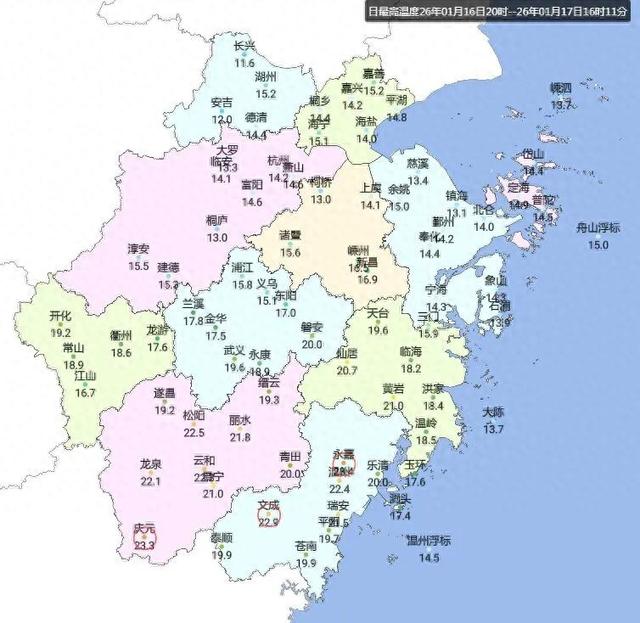
Core Viewpoint - A significant cold wave is expected to impact Zhejiang province, leading to a sharp drop in temperatures and potential health risks associated with low temperatures, particularly for vulnerable populations [1][4]. Weather Conditions - A cold air mass has already caused temperatures in northern Zhejiang to drop by 6-11°C, with a notable decrease of 12.2°C in Lin'an [1]. - The highest temperatures recorded yesterday in northern Zhejiang were between 13-16°C, while southern and southeastern coastal areas experienced temperatures of 19-22°C [1]. - The warmest locations included Yongjia at 23.4°C, Qingyuan at 23.3°C, and Wencheng at 22.9°C [1]. Upcoming Weather Forecast - From January 20, a cold wave will lead to a "rapid freeze" across Zhejiang, with temperatures in central and northern regions expected to drop below 5°C, accompanied by light rain and possible snow [2][4]. - The mornings of January 21 and 22 will see minimum temperatures ranging from 0 to -2°C in most areas, with mountainous regions experiencing temperatures between -3 to -6°C [4]. - A significant drop in maximum temperatures is anticipated, remaining in single digits throughout the day [4]. Health Advisory - The prolonged low temperatures may increase the risk of cardiovascular and respiratory diseases, particularly among the elderly and those with chronic conditions [4]. Wind and Rain Forecast - From January 19 to 22, coastal areas of Zhejiang will experience strong northerly winds of 8-10 levels, raising concerns for navigation safety [5]. - A warming trend is expected from January 23 to 25, with maximum temperatures potentially reaching double digits [5]. - A rain event is forecasted for January 25-26 due to southwest airflow and lower-level shear [5]. Fire Risk Advisory - The forest fire risk meteorological level is rated at four, indicating a high risk, necessitating enhanced fire source management in forest areas [6].
今年1月以来 江西平均降水量较常年同期偏少九成
Xin Lang Cai Jing· 2026-01-16 09:52
Core Viewpoint - Jiangxi Province has experienced significantly reduced precipitation since January 2026, with an average rainfall of only 4 millimeters, which is 90% less than the historical average for the same period [1] Group 1: Weather Conditions - Since January 2026, the average temperature in Jiangxi has been 7.1°C, which is 0.5°C higher than the historical average [1] - The average maximum temperature in Jiangxi has reached 14.2°C, exceeding the historical average by 3.3°C [1] - Satellite monitoring indicates that Jiangxi has recorded 445 heat source points since January 2026, which is double the number from the same period last year [1] Group 2: Fire Risk and Weather Alerts - Due to prolonged dry and hot weather, the forest fire risk level in areas such as Nanchang and Ganzhou remains at a high danger level, prompting an orange alert for forest fire risk [3] - A strong cold wave is expected to impact Jiangxi starting January 19, leading to a significant drop in temperatures and potential rain, snow, and freezing conditions [3] - The temperature in most areas is projected to decrease by 12°C to 14°C, with minimum temperatures in northern Jiangxi dropping to between -3°C and -1°C, and in high-altitude areas like Lushan, temperatures could fall to -6°C [3]
最高冲21℃!长沙接下来的天气……
Chang Sha Wan Bao· 2026-01-11 06:51
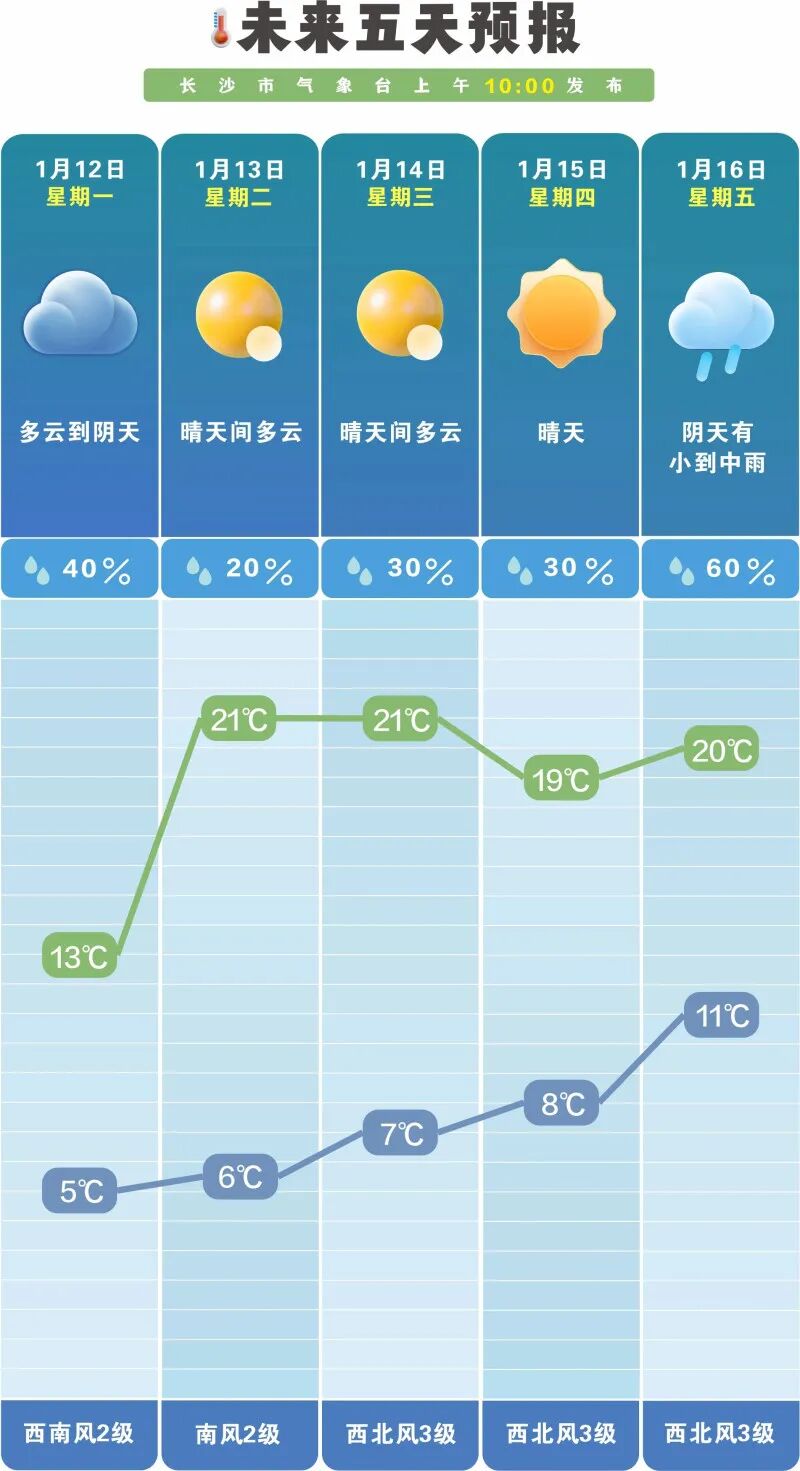
Core Viewpoint - The weather in Changsha is experiencing an unusual warmth during the "Three Nine" period, with temperatures expected to rise significantly, reaching around 21°C in the coming week [1][4]. Weather Forecast - The weather forecast for the next five days indicates a transition from cloudy to sunny conditions, with maximum temperatures increasing from 13°C on Monday to around 21°C on Tuesday and Wednesday [1]. - The warm weather is accompanied by significant temperature differences between day and night, with nighttime lows ranging from 5°C to 11°C [1][4]. Weather Risks - There is a notable risk of forest fires and fog in various regions of Hunan province, particularly in cities like Changsha, Xiangtan, and Zhuzhou, with high fire risk levels expected [4]. - Citizens are advised to remain cautious of the low temperatures in the early morning and evening, despite the daytime warmth, and to stay hydrated and moisturized due to the dry air [4][5].
冷暖即将反转?下周“火箭式”升温,多地暖到20度!
Xin Lang Cai Jing· 2026-01-11 04:51
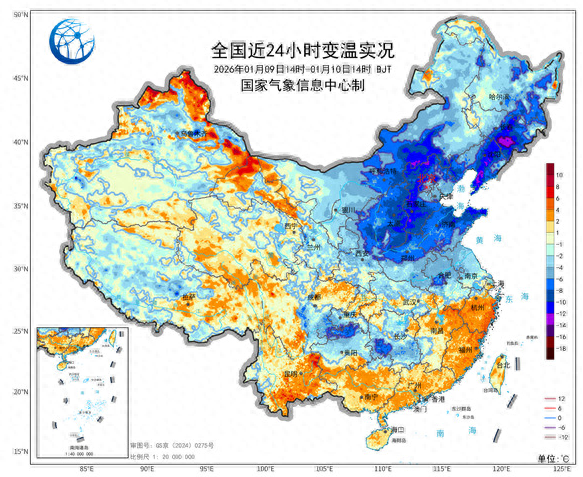
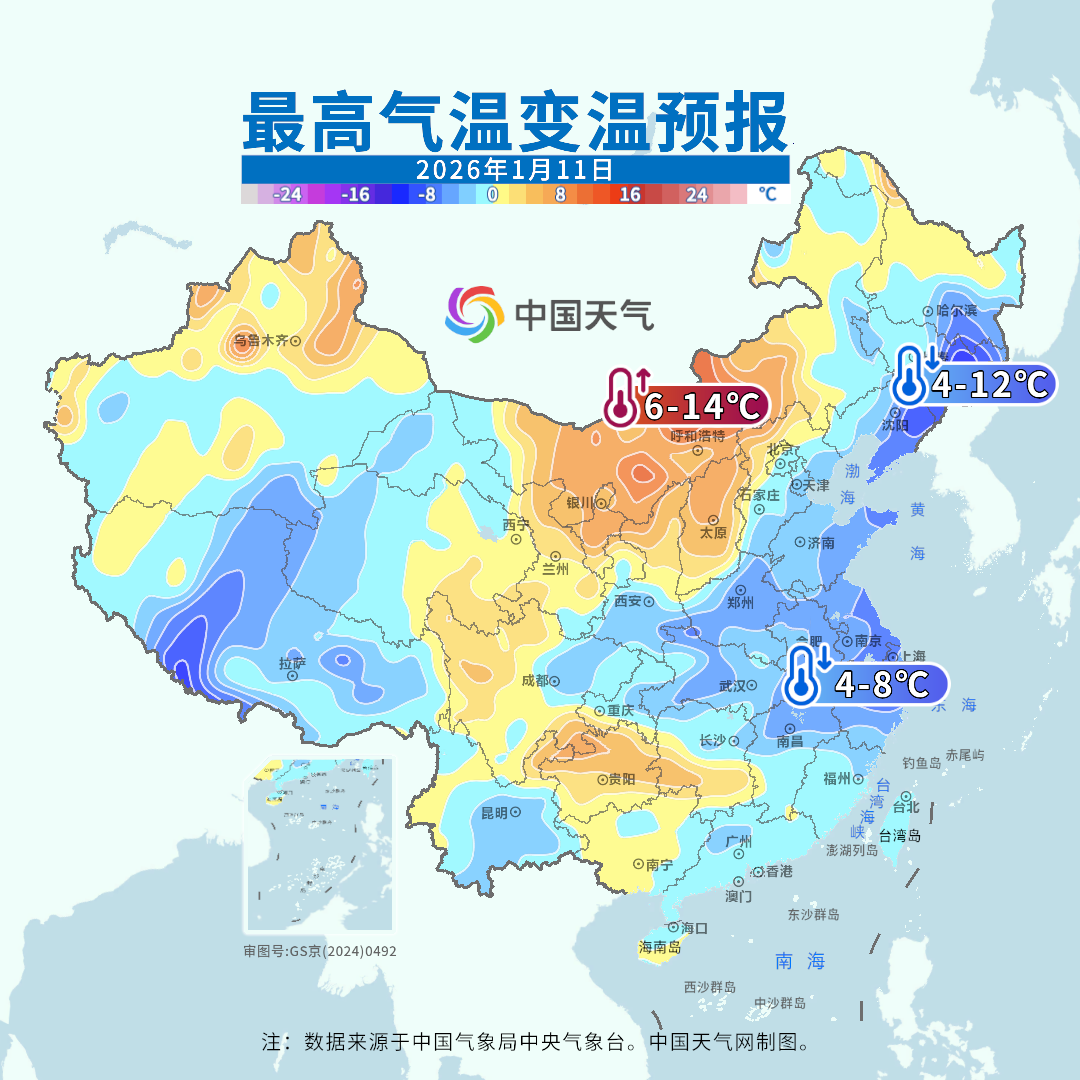
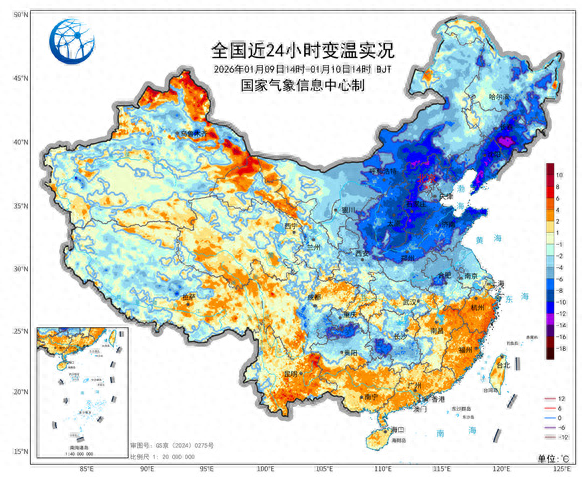
Group 1 - The core viewpoint of the article highlights the impact of cold air on temperature drops across various regions in China, with specific areas experiencing significant decreases in temperature [1][2] - The article notes that on January 11, temperatures in Northeast, Huanghuai, and Jiangnan regions will reach recent lows, with some areas in Jiangnan and Jianghuai seeing maximum temperatures below 10°C [2][4] - The article indicates that while cold air will continue to affect the country, its intensity will be weaker next week, leading to a general temperature rise in most parts of central and eastern China [4][6] Group 2 - The article mentions that the northeastern region will experience frequent snowfall, while other areas will have little to no precipitation, maintaining a dry weather pattern [4][6] - It is reported that humidity levels in southern regions are low, with some areas experiencing relative humidity below 30%, raising concerns about fire hazards [6] - The article forecasts a significant increase in the diurnal temperature range in central and eastern regions, with some areas experiencing differences exceeding 20°C [8]
明天起,河南将开启“火箭式”升温模式!最高气温将直冲17℃
Xin Lang Cai Jing· 2026-01-11 04:50
Summary of Key Points Core Viewpoint - The current cold wave in Henan province has resulted in significant temperature drops and extremely dry conditions, with a notable recovery in temperatures expected shortly. Group 1: Temperature Changes - January 11 marks the coldest day in the current cold wave, with most areas in Henan experiencing maximum temperatures around 5°C, a drop of over 10°C compared to the previous day's high of 15.9°C in Nanyang Xixia [1][5] - Starting January 12, temperatures are expected to rise dramatically, with afternoon highs projected to reach 13-17°C [5] - By January 14, temperatures in areas like Anyang and Xinyang could peak at 19°C, raising questions about the winter season [5] Group 2: Humidity and Dry Conditions - The cold air has brought extreme dryness, with relative humidity across the province generally below 30%, and some northern areas dropping to around 10% [1] - This "drying" effect contributes to a heightened sensation of cold and skin tightness [1] Group 3: Wind Conditions - The strong winds that affected the province have significantly weakened, with wind speeds dropping from a peak of 32.5 m/s (level 11) in Linzhou Ma'an Nao on January 10 to levels of 2 to 3 on January 11 [3] Group 4: Fire Risk and Health Advisory - Due to the extreme dryness and rapid temperature increase, forest fire risk levels are expected to reach high to extreme danger across most of the province on January 12 [10] - Residents are advised to exercise caution with fire outdoors and ensure electrical safety at home to prevent fire hazards [10] - The rapid temperature fluctuations may increase the risk of colds, prompting recommendations for layered clothing to adapt to significant temperature differences [10]
下周部分地区最高气温升至20℃上下 昼暖夜冷需注意保暖
Xin Lang Cai Jing· 2026-01-10 13:16
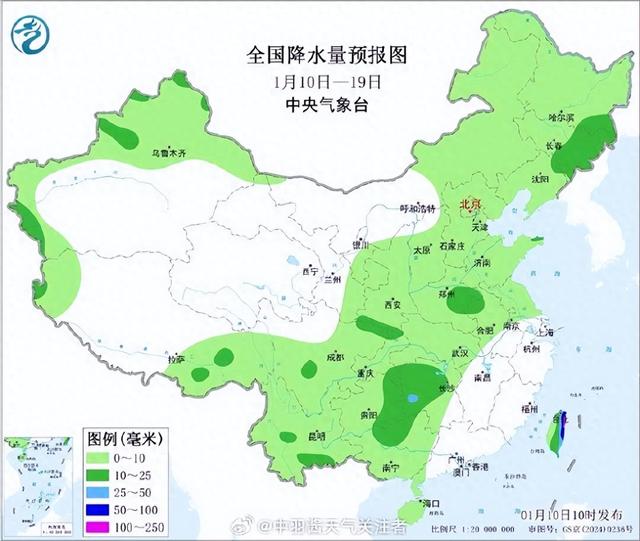
Group 1 - The core viewpoint indicates that while cold air will frequently affect the weather, temperatures in North China and southern regions will generally rise, with maximum temperatures significantly higher than usual, particularly in the Yangtze River basin where many areas will see highs around 20°C [1][7] - The temperature drop will continue to move east and south, affecting Northeast, East North China, Huanghuai, and Jianghuai regions, with slight decreases also expected in Jiangnan and southeastern South China [2] - Over the next ten days, cold air will frequently impact the weather, but its intensity will be relatively weak and mainly affect northern areas, with most of the country experiencing higher than normal temperatures [3] Group 2 - In Northeast China, cold air and frequent snowfall will lead to temperatures being lower than the historical average for this time of year, with cities like Changchun and Harbin experiencing maximum temperatures below -10°C and -18°C respectively [5] - For North China and southern regions, temperatures will fluctuate and rise, with significant increases expected from December 12 to 16, particularly in maximum temperatures, which will reach around 20°C in cities like Hefei, Wuhan, Nanjing, Hangzhou, Changsha, and Nanchang [7] - Despite the warming trend, nighttime temperatures will not rise significantly, leading to a large diurnal temperature range exceeding 15°C in many areas, with some locations surpassing 20°C, necessitating attention to warmth during early morning and evening outings [7] Group 3 - Alongside the temperature increases, most regions in China will maintain a dry weather pattern with little precipitation, and even in the south, afternoon humidity levels will drop below 40% or even 30% in some areas [8] - Due to the lack of rainfall, certain areas in southern Fujian, southeastern Jiangxi, eastern and southern Guangdong, and southeastern Guangxi will face high forest fire risk levels, highlighting the need for fire safety precautions [8]
下周部分地区最高气温升至20℃上下,昼暖夜冷注意保暖
Xin Lang Cai Jing· 2026-01-10 12:18
Group 1 - The core viewpoint indicates that while cold air is frequent, temperatures in North China and southern regions are generally rebounding, with maximum temperatures significantly higher than usual, particularly in the Yangtze River basin where many areas will see highs around 20°C [1][7] - The temperature drop will continue to move east and south, affecting Northeast, East North China, Huanghuai, and Jianghuai regions, with slight decreases also expected in Jiangnan and southeastern South China [2] - Over the next ten days, cold air will frequently impact the country, but its overall intensity will be weak and primarily affect northern areas, with most regions experiencing higher than normal temperatures [3] Group 2 - In Northeast China, cold air and frequent snowfall will lead to temperatures being generally lower than the same period in previous years, with cities like Changchun experiencing highs below -10°C for most of the next six days [5] - For North China and southern regions, temperatures will generally rise from December 12 to 16, with significant increases in maximum temperatures, particularly in cities like Hefei, Wuhan, Nanjing, Hangzhou, Changsha, and Nanchang, where highs may approach or reach 20°C [7] - Despite the warming trend, nighttime minimum temperatures will not rise significantly, leading to a widening diurnal temperature range, with some areas experiencing differences exceeding 20°C [7] Group 3 - Most regions in China will maintain a dry weather pattern with scarce rain and snow, even in the south where afternoon humidity may drop below 30% in some areas [8] - Due to the lack of precipitation, certain areas in southern Fujian, southeastern Jiangxi, eastern and southern Guangdong, and southeastern Guangxi will have high forest fire risk levels, necessitating caution regarding fire safety [8]