气温波动

Search documents
春节假期开端我国降水增多增强 寒潮携降温影响中东部
Xin Lang Cai Jing· 2026-02-15 02:09
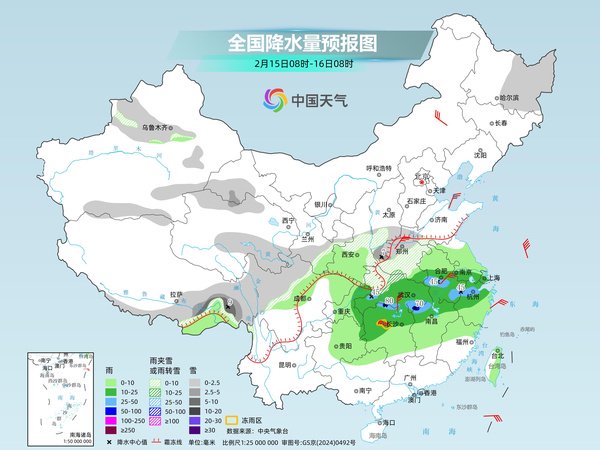
Core Viewpoint - The article discusses the weather conditions in China during the Spring Festival holiday, highlighting increased precipitation, potential strong convective weather, and significant temperature drops due to a cold wave affecting the central and eastern regions of the country [1][6]. Weather Conditions - On February 15, the first day of the Spring Festival holiday, increased precipitation is expected in various regions, with possible strong convective weather in parts of Jianghan and Jiangnan, and snowfall in Shaanxi and Henan [1]. - The cold wave is anticipated to move southward, causing temperature drops exceeding 12°C in localized areas of western Jiangnan [1][6]. - The northeastern region experienced snowfall, while the southwestern region saw rain due to warm and humid air [1]. Forecasts - The Central Meteorological Observatory predicts small to moderate snow or sleet in several areas, including northeastern Heilongjiang and parts of Xinjiang, with moderate to heavy rain expected in regions like Hubei and Hunan [1][2]. - The weather forecast indicates that from February 15 to 17, temperatures in the central and eastern regions will drop by 6 to 10°C, with localized areas in western Jiangnan experiencing drops of over 12°C [6]. Public Advisory - The article advises the public to pay attention to weather forecasts and warnings due to the potential for thunderstorms, strong winds, and localized hail during this period [4].

春节期间天气晴好 天干物燥注意防火
Zheng Zhou Ri Bao· 2026-02-13 00:59
Group 1 - The core viewpoint of the articles indicates that during the 2026 Spring Festival holiday, Zhengzhou will experience mainly sunny or partly cloudy weather, with frequent strong winds due to cold air influences [1][2] - The weather forecast details specific conditions for each day of the holiday, including temperature ranges and wind conditions, highlighting significant temperature fluctuations [1] - The forecast predicts a notable drop in temperature from February 15 to 16, followed by a gradual increase starting February 17, with a general trend of cooling towards the end of the holiday [1] Group 2 - The meteorological authority advises that the overall weather during the holiday will be dry, with a high forest fire risk and numerous windy days, urging citizens to pay close attention to fire safety [2] - Due to the significant temperature variations, there is a recommendation for citizens to adjust their clothing accordingly to prevent colds [2]
辽宁冬季以来气温阶段性起伏大 预计2月气温依旧偏低
Xin Lang Cai Jing· 2026-02-05 11:04
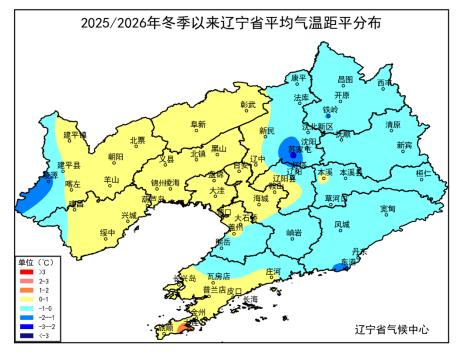
Climate Conditions Analysis - The average temperature in the province since the beginning of winter is -8.0℃, which is consistent with the historical average for the same period [2] - The southern part of Shenyang, southern Dandong, western Tieling, and western Chaoyang have temperatures lower by 1.1 to 1.5℃, while other regions show slight variations [2] Temperature Fluctuations - The average temperature for early winter (December 2025) was -5.5℃, which is 1.3℃ higher than the historical average of -6.8℃ [3] - In mid-winter (January 2026), the average temperature dropped to -10.9℃, 1.5℃ lower than the historical average of -9.4℃, marking the lowest in the past nine years [3] - The latter half of January experienced a significant drop in temperature, with average, maximum, and minimum temperatures lower by 4.7℃, 4.7℃, and 4.4℃ respectively, all being the lowest in the past decade [3] Precipitation Analysis - The average precipitation since the beginning of winter is 14.0 mm, which is 10% higher than the historical average of 12.2 mm [6] - December 2025 saw an average precipitation of 9.6 mm, 30% higher than the historical average of 7.6 mm [6] - January 2026 recorded an average precipitation of 4.4 mm, close to the historical average of 4.2 mm [6] February Climate Forecast - The average temperature for February 2026 is expected to be between -6.1℃ and -5.6℃, which is 0.5 to 1.0℃ lower than the historical average of -5.1℃ [6] - Average precipitation for February is projected to be around 9 mm, which is 20% to 30% higher than the historical average of 7.2 mm [6] - Recommendations for relevant departments include ongoing measures for cold weather preparedness and response to sudden temperature drops [6]
寒潮发威!中东部迎冷暖逆转局地降温超20℃ 看你家何时降温最猛
Yang Shi Wang· 2026-02-05 06:24
Core Viewpoint - A significant cold wave is expected to impact central and eastern China from February 5 to 7, with temperature drops exceeding 12°C in many areas, and localized drops potentially exceeding 20°C [1][3]. Group 1: Temperature Changes - The cold air will lead to a reversal of the warm weather pattern, with temperatures in central and eastern regions dropping by 6 to 10°C from north to south [1][5]. - The northeastern region, Jianghuai, and eastern Jiangnan will be the core areas for temperature drops, with some areas experiencing decreases of 12 to 16°C, and localized drops over 20°C [3][5]. - On February 5, the main temperature drops will be concentrated in Northeast and North China, with areas like Inner Mongolia, northern Hebei, Beijing, and western Liaoning experiencing drops of 12 to 16°C, and localized drops around 18°C [3][5]. Group 2: Weather Conditions - The cold wave will be accompanied by increased cloud cover and reduced sunlight, leading to more significant temperature drops during the afternoon compared to nighttime [3]. - Southern regions will remain warm initially, with maximum temperatures generally exceeding 15°C, particularly in southern Jiangnan and South China, where temperatures may exceed 20°C [5]. - By February 6, the cold front will rapidly move southward, affecting areas south of the Yangtze River, with maximum temperatures dropping below 10°C in the middle and lower reaches of the Yangtze River, accompanied by rain and snow [5][7]. Group 3: Public Advisory - The public is advised to dress appropriately for the significant temperature fluctuations and to be cautious of travel conditions due to the cold wave and accompanying precipitation, especially during the Spring Festival travel period [9].

最高气温6℃ 今日本周最暖
Xin Lang Cai Jing· 2026-02-02 20:06
Core Viewpoint - The weather in Shenyang is expected to fluctuate significantly this week, with a warm spell followed by a sharp drop in temperatures [1] Summary by Relevant Sections - **Temperature Forecast** - On February 3rd, the maximum temperature in Shenyang is projected to reach 6°C due to strong southerly winds [1] - The temperature will drop to around 5°C on February 4th, followed by a drastic decline from -10°C on the night of February 4th to -22°C by the night of February 7th [1] - **Weather Patterns** - The warm air is not expected to sustain the high temperatures, as rapid warming is typically followed by a more severe cooling [1] - A shift from southerly to northwesterly winds will contribute to the significant temperature drop over the following days [1] - **Long-term Outlook** - Despite the strong cold air, there is an indication that the cold front may weaken, with temperatures expected to rise again on February 8th [1]
广西气温直冲24℃ 2月5日后冷空气上线
Xin Lang Cai Jing· 2026-02-02 00:29
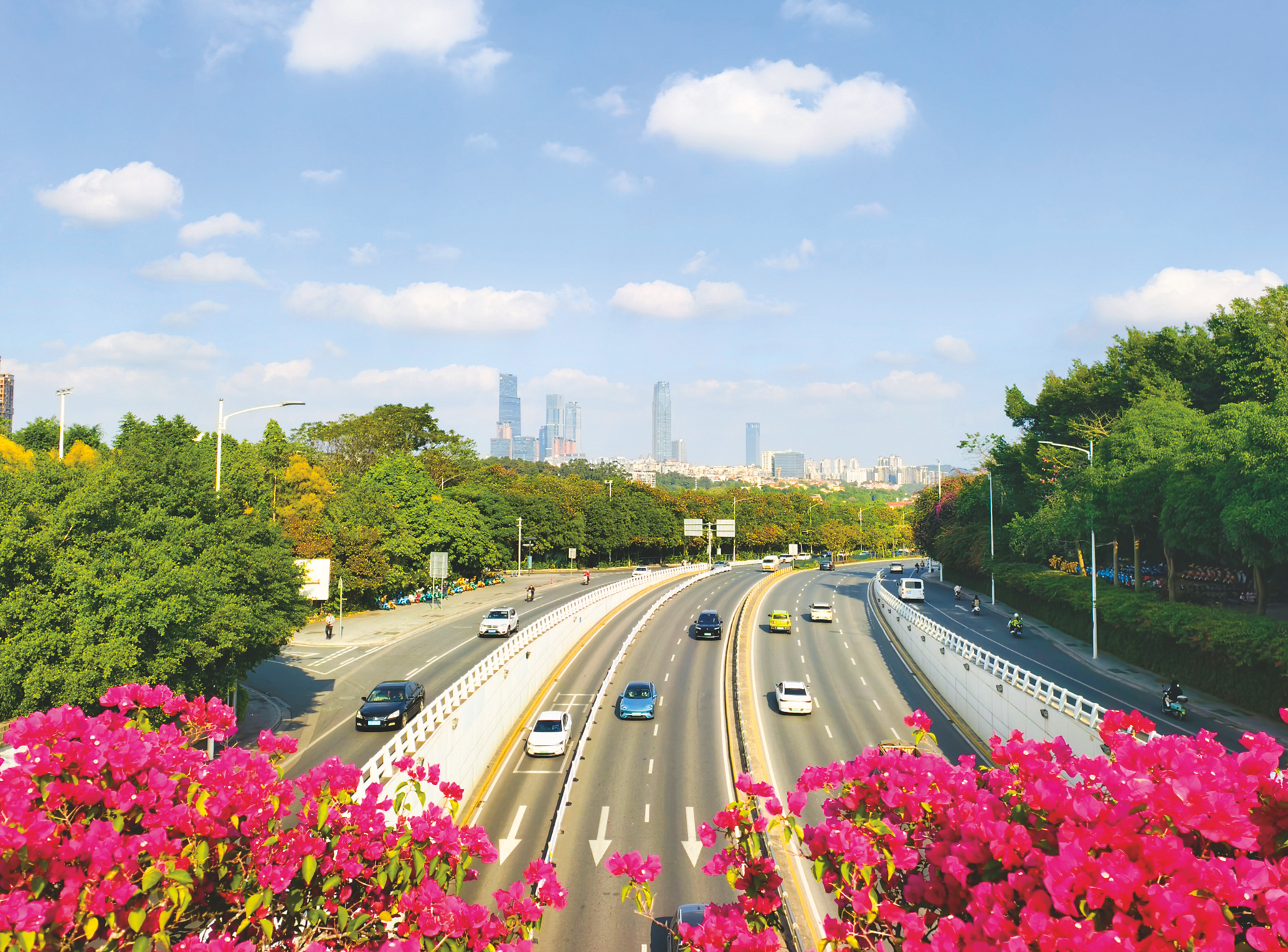
Group 1 - The Spring Festival travel season in 2026 has begun, with favorable weather conditions in Guangxi for travel, as temperatures are gradually rising, reaching a high of 24°C in southern Guangxi [1] - From February 5th, a new cold air mass will arrive, bringing rain, temperature drops, and strong winds, prompting travelers to dress warmly [1] - The China Meteorological Administration announced that February will experience four cold air events, including moderate and strong cold air processes [1] Group 2 - Starting from February 1st, most of the country has entered a warming trend, with southern regions also experiencing rising temperatures [3] - The Guangxi Meteorological Station forecasts that temperatures will rise over the next three days, with northern Guangxi reaching highs of 14°C to 20°C and southern regions reaching 20°C to 24°C [3] - The temperature fluctuation in Guangxi will show a clear trend of rising then falling over the next week, indicating that travelers should closely monitor weather forecasts and adjust their clothing accordingly [3]
春运初期坐上气温过山车
Xin Lang Cai Jing· 2026-02-01 00:44
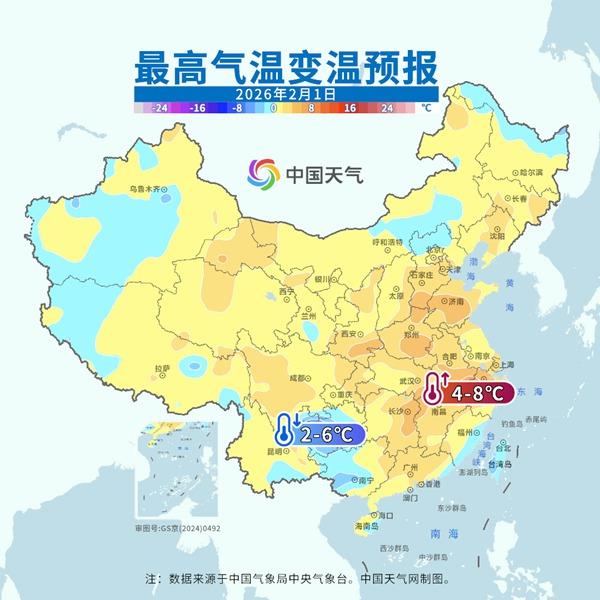
Group 1 - The core viewpoint of the articles highlights the significant temperature fluctuations in Guangxi due to cold air masses, affecting the region's weather patterns leading up to the Spring Festival travel period [1][2] - From January 31 to February 1, temperatures in Guangxi dropped by 5 to 10 degrees Celsius compared to the same time on January 30, with specific areas experiencing rain and icy conditions [1] - The lowest temperatures recorded during this cold spell were between -4°C to 2°C in high-altitude areas, and 7°C to 13°C in other regions, with Nanning experiencing temperatures between 11°C to 16°C [1] Group 2 - The weather forecast for Nanning indicates a transition from cloudy conditions to sunny weather, with temperatures expected to rise from 11°C to 22°C between February 2 and 3 [2] - A new cold air mass is anticipated to impact Guangxi again from February 5 to 6, although it is expected to be weaker with a smaller temperature drop [1] - The upcoming week will see rapid weather changes, with temperatures fluctuating significantly, and a notable cold front expected to affect central and eastern China, causing temperature drops of 4°C to 8°C, and locally up to 10°C to 12°C [2]
2月将有4次冷空气过程 春运出行有哪些影响?一文了解
Xin Lang Cai Jing· 2026-01-31 11:13
Core Viewpoint - The weather forecast for the Spring Festival travel period in February 2026 indicates multiple cold air processes affecting China, with varying temperatures and precipitation patterns across different regions. Group 1: Cold Air Processes - Four cold air processes are expected in February, with varying intensities: moderate in early February, strong in mid-February, moderate again in mid-February, and weak towards the end of the month [1][2][3]. Group 2: Temperature Trends - Average temperatures in February show that most regions will be close to or above normal, except for northern parts of China where temperatures may be 0.5 to 1°C lower than usual [1]. - Significant warming is anticipated, with some areas experiencing temperature increases exceeding 10°C, and in some cases, over 15°C [6][8]. Group 3: Precipitation Patterns - Precipitation is expected to be higher in northeastern and northern regions, with risks of low-temperature rain and snow events [2][3]. - Southern regions, including parts of East China and South China, are forecasted to have lower precipitation, leading to potential meteorological drought conditions [4]. Group 4: Upcoming Weather Events - A new cold air mass is set to arrive from February 5 to 7, bringing temperature drops of 4 to 8°C, with localized areas experiencing drops of 10 to 12°C [7]. - The weather will fluctuate significantly, with a trend of warming followed by cooling, necessitating travelers to stay updated on weather forecasts [10].
春运出行请注意!未来一周气温波动大,要及时添衣保暖
Xin Lang Cai Jing· 2026-01-31 10:14
Core Insights - The 2026 Spring Festival travel rush will begin on February 2, with concerns about cold waves and widespread rain, snow, and freezing weather during the travel period [1] Weather Forecast - Four cold air processes are expected to impact China in February, with varying intensities: moderate in early February, strong in mid-February, moderate again in mid-February, and weak towards the end of the month [1] - Average temperatures in February will be lower by 0.5 to 1°C in northern parts of North China, western Northeast China, northwestern Tibet, and northern Xinjiang, while the rest of the country will see temperatures close to or above normal [1] Precipitation Patterns - The eastern and central regions of China will experience more precipitation in the north than in the south, with potential for low-temperature rain and snow events [2] - Northeast China, northern North China, and northern Xinjiang will have temperatures near or below normal with above-normal precipitation, leading to risks of strong cooling, strong winds, and heavy snowfall [2][3] Regional Weather Variations - Southern regions, including southeastern East China, southern Central China, eastern South China, and western Southwest China, will experience higher temperatures and continued low precipitation, raising concerns about potential meteorological drought [4] Upcoming Weather Changes - A significant warming trend is expected to last for about five days, with temperatures in many areas rising by over 10°C, and some regions exceeding 15°C [5][6] - A new cold air mass will arrive on February 5, bringing temperature drops of 4 to 8°C, with localized drops of 10 to 12°C in central and eastern regions [7] Seasonal Transition - February 4 marks the beginning of spring, with many areas experiencing spring-like warmth, particularly in the lower reaches of the Yangtze River and the North China Plain [8] - Following the warming trend, the northeastern and lower Yangtze regions will see the most significant temperature drops, exceeding 10°C in some areas [10]
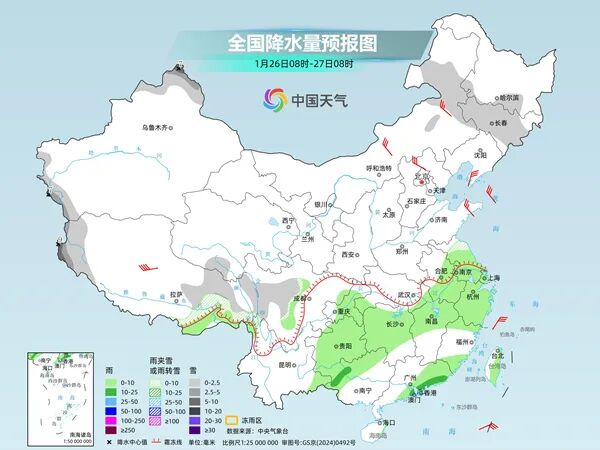
冷冷冷冷冷!雨雪天气即将来袭!
Xin Lang Cai Jing· 2026-01-25 12:06
Group 1 - Two cold air masses will impact China from January 25 to the following week, causing frequent temperature fluctuations in the central and eastern regions [2][3] - The first cold air mass will bring a temperature drop of 3 to 6 degrees Celsius, with local areas experiencing drops exceeding 8 degrees Celsius [2] - The second cold air mass will arrive from January 29 to 31, leading to a temperature decrease of 4 to 8 degrees Celsius, with some areas dropping around 10 degrees Celsius [2] Group 2 - Rain and snow weather will increase due to the influence of the cold air masses, with small to moderate snow expected in North China, Northeast China, and parts of the Huanghuai region from January 25 to 27 [3][5] - On January 27, areas in Xinjiang and Tibet will experience small to moderate snow, with some regions facing heavy snow [7] - The rain and snow range will expand rapidly on January 25, with North China and Huanghuai experiencing small to moderate snow or sleet [7]