
森林草原火险

Search documents
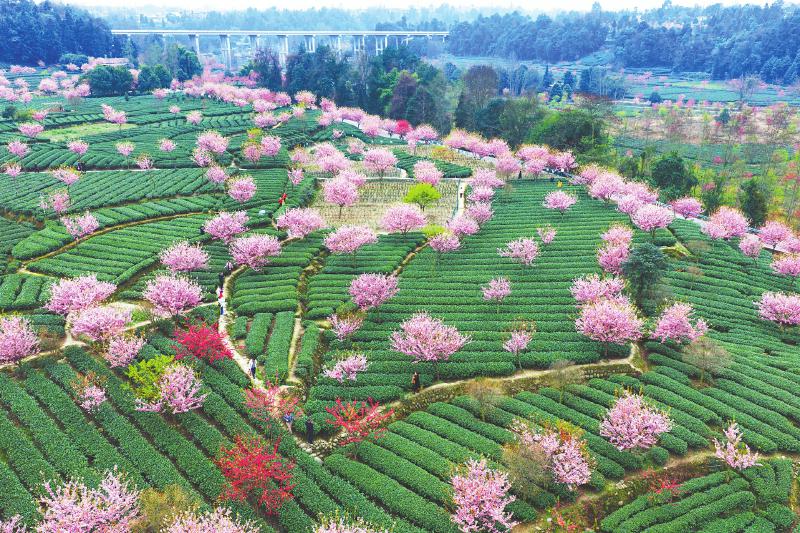
四川盆地大部分城市已经入春
Xin Lang Cai Jing· 2026-02-24 22:22
Core Viewpoint - Chengdu has entered meteorological spring on February 13, marking the fourth earliest spring onset since 2000, with most cities in the Sichuan Basin also experiencing the same [2] Weather Forecast - From February 25 to 27, the Sichuan Basin is expected to have mostly cloudy weather with high temperatures but significant temperature differences between day and night, and scattered light rain in some areas during early and late hours [2] - From February 28 to March 2, the forecast indicates showers or light rain across most of the basin, with localized moderate rain, and a temperature drop; northern and eastern parts of the western Sichuan Plateau may experience light snow or rain, with localized moderate snow or rain [2] - Meteorological experts warn of high forest and grassland fire risk in most areas of the western Sichuan Plateau and the Panzhihua region, emphasizing the need for fire prevention measures [2]

2月四川是冷是暖?
Xin Lang Cai Jing· 2026-02-08 18:30
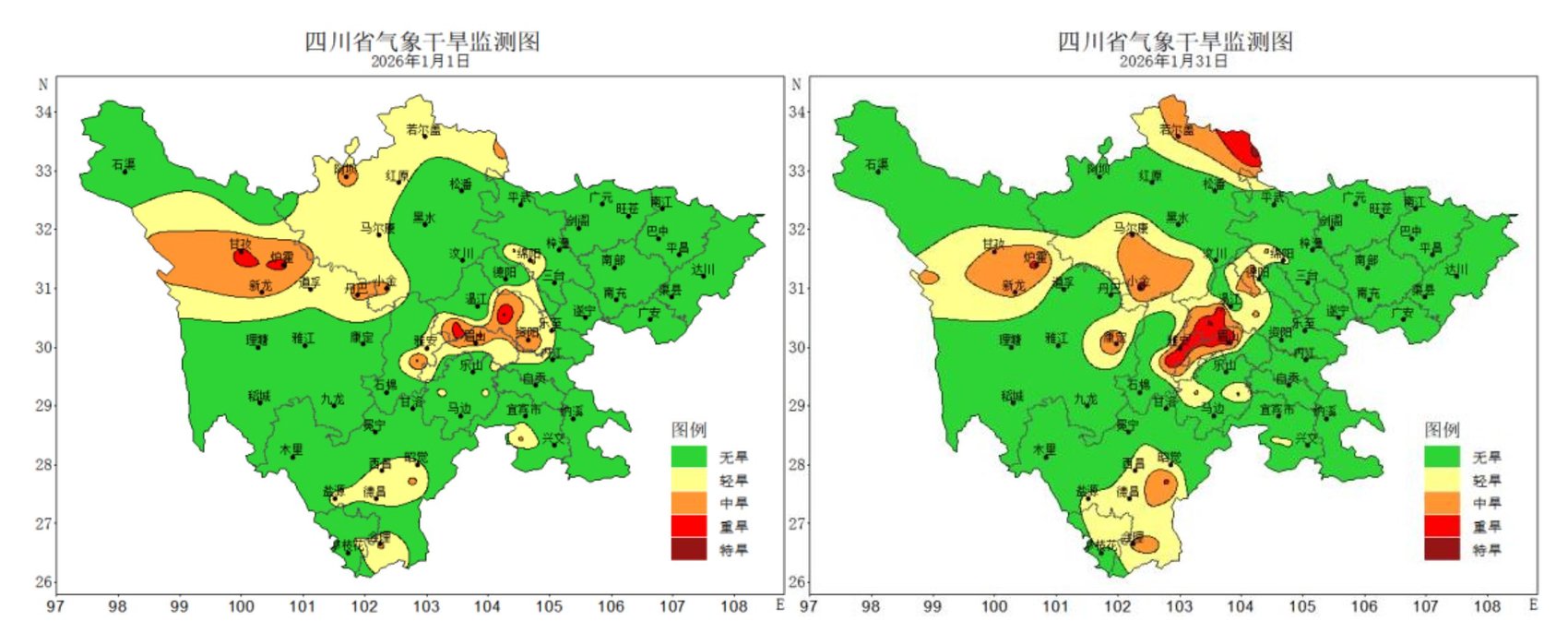
Core Insights - The average temperature in January for Sichuan was recorded as the 9th highest for the same period in history, with a significant increase compared to the historical average [1][2] - February is expected to continue the trend of warmer and drier weather, with specific regions facing higher fire risk due to seasonal dryness [1] Temperature Summary - The average temperature for February is projected to be between 8.5℃ and 9.0℃, which is higher than the historical average of 7.5℃ [1] - In specific areas like Aba Prefecture, Ganzi Prefecture, and the Panzhihua region, temperatures are expected to be 1.0℃ to 2.0℃ above the historical average [1] Precipitation Summary - The expected average precipitation for February is between 10.5 mm and 12.5 mm, which is lower than the historical average of 13.4 mm [1] - The northern basin is expected to see precipitation levels 10% to 20% higher than the historical average, while Ganzi Prefecture and the Panzhihua region may experience a decrease of 20% to 50% [1] Drought Conditions - As of January 31, 48 out of 156 national meteorological observation stations in Sichuan reported ongoing meteorological drought conditions, with varying degrees of severity [1] - The areas most affected by moderate to severe drought include northern Ganzi Prefecture, northern Aba Prefecture, and parts of Liangshan Prefecture [1]
1月四川气温为历史同期第9高位,2月是冷是暖?
Xin Lang Cai Jing· 2026-02-08 14:26
Core Insights - In February, Sichuan will continue the warm and dry climate trend observed in January, with a high risk of seasonal winter dryness in certain areas, particularly in the western plateau and Panxi regions, necessitating enhanced preventive measures [1][3] Temperature and Precipitation - The average temperature in Sichuan for February is expected to be between 8.5 and 9.0°C, which is higher than the historical average of 7.5°C [1] - The average precipitation for February is forecasted to be between 10.5 and 12.5 millimeters, lower than the historical average of 13.4 millimeters [1] - Specific regions such as Ganzi and Panxi are expected to see precipitation levels 20% to 50% below historical averages, while the northern basin may experience 10% to 20% above average precipitation [1][3] Drought Conditions - As of January 31, 48 out of 156 national meteorological observation stations in Sichuan reported ongoing meteorological drought conditions, with varying degrees of severity [1][3] - The areas most affected by moderate to severe drought include northern Ganzi, northern Aba, and parts of Liangshan and the western basin [1][3] Fire Risk and Weather Monitoring - The fire risk level in February for the western plateau, Ganzi, and Panxi regions is projected to be at level 3, with potential increases to level 2 during dry and windy periods [3] - The Sichuan Climate Center emphasizes the need for fire risk monitoring and management, especially with increased human activity during the Spring Festival [3] Air Quality and Weather Conditions - The probability of stable weather conditions in the basin is high, which may hinder the dispersion of pollutants and lead to fog and haze [3] - The winter season is characterized by frequent fog, while mountainous and plateau areas may experience rain and snow, necessitating enhanced monitoring to mitigate transportation impacts [3]
内蒙古呼伦贝尔市今冬发生低温雪灾风险较高
Zhong Guo Xin Wen Wang· 2025-11-20 10:41
Core Viewpoint - The risk of low-temperature snow disasters in Hohhot, Inner Mongolia, is high this winter, particularly in Hohhot City, which is known for its extreme cold temperatures [1] Weather Conditions - Hohhot City experiences a long winter from late October to late April, lasting over six months [1] - Historical records indicate extreme low temperatures, with a past record of -58°C in Genhe City [1] - The Inner Mongolia Meteorological Bureau reports significant temperature fluctuations and increased precipitation in eastern Inner Mongolia [1] Future Weather Predictions - For the winter of 2025, there is a high fire risk in the forest and grassland areas of western and central Inner Mongolia [1] - Specific regions at risk include the western and southeastern parts of Hohhot City, eastern Hinggan League, most of Tongliao City, northeastern and southern parts of Chifeng City, southern Xilin Gol League, and central-southern Ulanqab City [1] - In December 2025, temperatures in most of Inner Mongolia are expected to be close to the historical average, while January 2026 will see higher temperatures [1] - February 2026 is predicted to have lower temperatures in the eastern regions, with frequent extreme temperature changes noted in December 2025 and February 2026 [1]