楼上创新

Search documents
从“样品”到“产品”再到“产业” 全场景畅通的未来产业发展新模式逐渐成熟
Yang Shi Wang· 2025-11-28 06:36
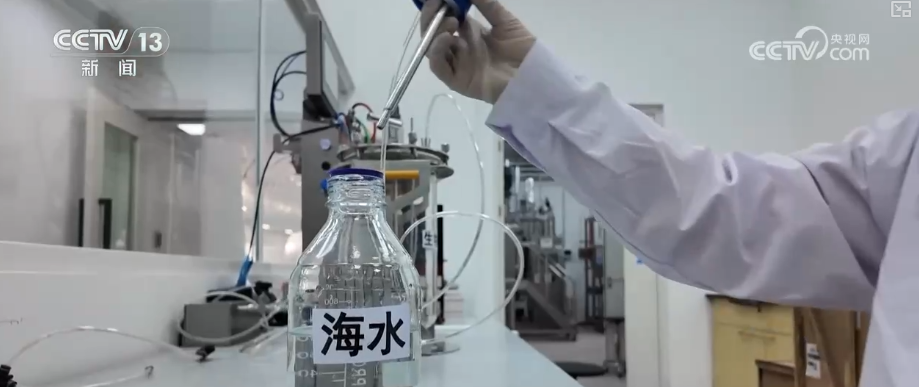
Core Viewpoint - The article discusses China's latest development in artificial marine carbon cycling systems, which utilize electrocatalysis to capture dissolved carbon dioxide from seawater and convert it into a nutrient for microorganisms, ultimately producing green materials for plastic products [1][3]. Group 1: Technology and Innovation - The artificial marine carbon cycling system has been operational in real seawater for over 500 hours, achieving a carbon dioxide capture efficiency exceeding 70% [3]. - The system converts carbon dioxide into polybutylene succinate, a green raw material used in everyday plastic products like straws and beverage bottles [3]. - The article highlights various innovative applications in biological manufacturing, such as using yeast for plant component production and bacteria for synthesizing smart adhesive alternatives [3]. Group 2: Industry Development and Ecosystem - Shenzhen's innovation model promotes collaboration between research and entrepreneurship, facilitating the transition from laboratory samples to market-ready products [9][10]. - The local ecosystem supports startups from inception to growth, with 121 companies established within the last decade successfully going public, including 87 on A-shares and 34 on Hong Kong stocks [17]. - The article emphasizes the importance of a complete innovation and entrepreneurship ecosystem, which has led to significant achievements in the biomanufacturing sector [17]. Group 3: Future Prospects - The biomanufacturing sector in China is entering a critical development phase, with investment in synthetic biology manufacturing reaching nearly 30 billion annually during the 14th Five-Year Plan [21]. - Experts suggest that the focus should be on building an innovation system for biomanufacturing and cultivating landmark products in emerging fields such as bio-based materials and biomedicine [21].