未来产业

Search documents
聚焦能源科技创新 共筑能源强国未来
中国能源报· 2026-03-30 02:21
Core Viewpoint - The energy sector is leveraging technological innovation as a driving force, focusing on industrial upgrades and open cooperation to navigate uncertainties and ensure development certainty in the construction of a strong energy nation [2][4]. Group 1: Technological Innovation in Energy - The "14th Five-Year Plan" emphasizes consolidating advantages, breaking bottlenecks, and enhancing core technologies to ensure strategic autonomy in the energy sector [4]. - Significant advancements in energy technology were showcased at the 2026 Zhongguancun Forum, illustrating China's progress from following to leading in energy technology [5]. - The Gansu Zhengning coal-fired power plant captures 1.5 million tons of CO2 annually with a capture rate exceeding 90%, demonstrating effective carbon capture and utilization [5]. - Breakthroughs in controlled nuclear fusion technology have positioned China at the forefront globally, with advancements in high-temperature superconductors and plasma physics [5]. Group 2: Future Energy Technologies - New technologies such as wind, solar, hydrogen, and energy storage are rapidly penetrating transportation scenarios, indicating significant future potential [6]. - The introduction of a superconducting electric maglev train capable of reaching speeds of 600 km/h represents a strategic technological advancement in transportation [7]. - By 2025, China's coal and gas production is projected to exceed 4 billion cubic meters, with wind and solar installations surpassing 1.8 billion kilowatts, marking a shift towards greener energy sources [7]. Group 3: Industry Collaboration and Ecosystem - The integration of artificial intelligence across various sectors, including energy, is reshaping economic development and enhancing operational efficiency [9]. - The synergy between electricity and computing power is crucial for the advancement of artificial intelligence, which is becoming a national strategic priority [10]. - The establishment of a resilient ecosystem through full-chain integration is essential for supporting technological advancements in the energy sector [12]. Group 4: Global Cooperation and Carbon Management - The Zhongguancun Forum serves as a platform for international collaboration in energy innovation, focusing on renewable energy, carbon capture, and marine energy development [14]. - The forum's discussions on comprehensive carbon management highlight the importance of digital technologies in integrating various energy sources to address carbon emissions [15]. - The emphasis on sustainable marine energy development underscores the need for international cooperation to balance resource extraction and ecological protection [14].

国家创投引导基金,最新出手了哪些子基金?
母基金研究中心· 2026-03-29 09:04
Group 1 - The core viewpoint of the article highlights the establishment and initial project signings of the Beijing-Tianjin-Hebei Venture Capital Guidance Fund, which aims to support early-stage and startup enterprises through a structured investment approach [1][4][5] Group 2 - On March 25, during the 2026 Investment Beijing Conference, the Beijing-Tianjin-Hebei Fund completed its first batch of key project signings, including four sub-funds with total initial scales of 6.52 billion, 10 billion, 15 billion, and 10 billion yuan respectively [1] - The total scale of the Beijing-Tianjin-Hebei Fund is reported to be 500 billion yuan, with over 80% of its funds allocated for sub-fund investments and no more than 20% for direct investments [4][5] - The fund's investment strategy focuses on early and small investments in "hard technology," targeting strategic emerging industries and future industries as outlined in the 14th Five-Year Plan [5]


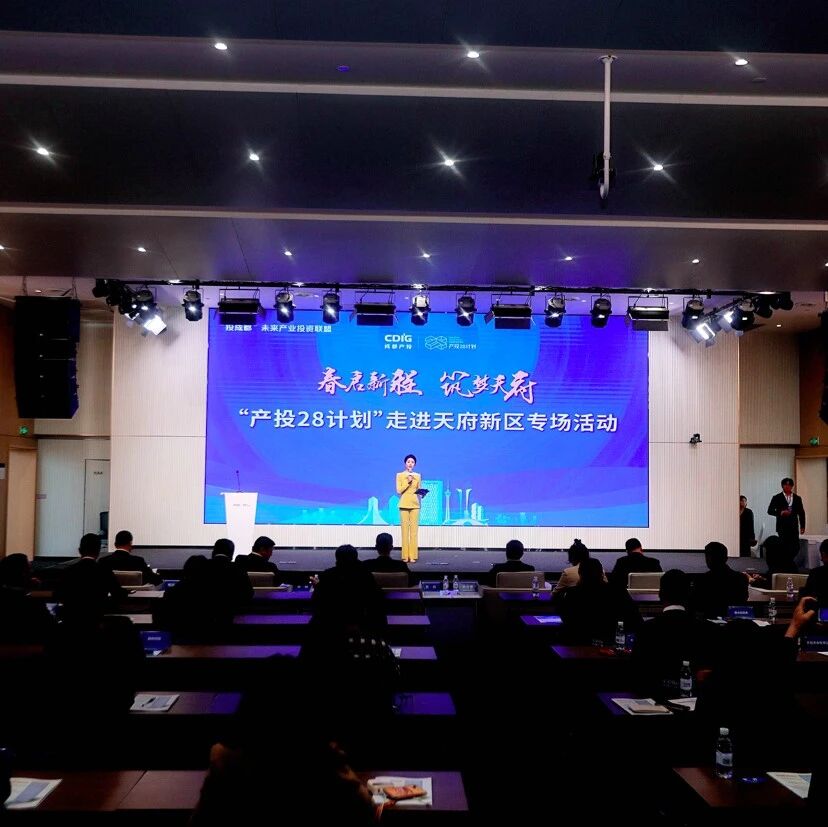
瞄准未来产业,四川天府新区“牵手”成都产投集团
投中网· 2026-03-28 11:45
Core Insights - The article emphasizes the strategic importance of the "28 Production Investment Plan" initiated in Chengdu, which aligns with national goals for future industries and aims to enhance urban industrial development [3][5]. Group 1: Strategic Collaborations - A strategic cooperation agreement titled "1+N" was signed between the Sichuan Tianfu New Area Management Committee and Chengdu Production Investment Group, focusing on industrial investment and technology transfer [5]. - This collaboration is seen as a proactive response to Chengdu's 14th Five-Year Plan, particularly in fostering emerging and future industries [5]. Group 2: Capital Empowerment - The establishment of the Chengdu Future Industry Tianfu New Area Angel Investment Fund is a key initiative to support early-stage technology ventures [7]. - Three specific partnerships were formed to create a "triangular support" system for the strategic plan, focusing on early incubation, major project funding, and talent development [9]. Group 3: Project Implementation - Five investment projects were signed during the event, marking a significant step towards actualizing the strategic plans [11]. - The projects cover critical sectors such as semiconductors, high-end equipment, and energy technology, indicating a clear path from planning to investment [11]. Group 4: Future Industry Focus - The article highlights a consensus on the need to invest early and in small amounts in future industries, as outlined in the 2026 government work report [11]. - The participating companies in the event were primarily from cutting-edge fields like AI chips, commercial aerospace, and drones, showcasing a diverse range of innovative ventures [15]. Group 5: Integrity and Sustainable Development - A joint commitment to integrity in cooperation was established to ensure that capital empowerment and industrial development occur in a transparent and regulated manner [17]. - The collaboration between Sichuan Tianfu New Area and Chengdu Production Investment Group is viewed as a solid foundation for nurturing a new growth cycle in the industry [19].
未来产业十大赛道公布
21世纪经济报道· 2026-03-27 04:28
Core Viewpoint - The article emphasizes the importance of "localized and differentiated development" in the context of future industries, highlighting the need for strategic planning and resource allocation to achieve high-quality growth in emerging sectors [2][5][6]. Summary by Sections Future Industry Development - The Ministry of Industry and Information Technology (MIIT) is focusing on the overall development of future industries, with a clear emphasis on strategic planning and the establishment of a technology foresight mechanism to guide local development based on regional resources [5][6]. - The government has outlined key areas for future industries, including quantum technology, biomanufacturing, hydrogen energy, and nuclear fusion, as part of the 14th Five-Year Plan [3][9]. Key Tracks for Future Industries - The 2026 Future Industry Forum announced ten key tracks for future industries: humanoid robots/embodied intelligence, biomanufacturing, brain-computer interfaces, cell and gene therapy, low-altitude equipment, nuclear fusion energy, autonomous agents, high-level autonomous driving, satellite internet, and quantum computing [10][11]. - Predictions indicate that several of these tracks will reach trillion-yuan market scales, with humanoid robots expected to see a global market demand of trillions by 2035, and biomanufacturing projected to create $30 trillion in economic value by 2050 [10][11]. Local Government Initiatives - Local governments are actively responding to national policies, with 19 provinces and cities issuing nearly 30 policy documents related to future industries, establishing over 60 provincial pilot zones focusing on key areas like artificial intelligence and quantum technology [5][6]. - The MIIT plans to enhance technological supply and support for future industries through major national projects and financial backing, while also exploring regulatory frameworks that accommodate the unique characteristics of future industries [7][10]. Market Growth and Trends - The article notes that the cell and gene therapy market is expected to grow at a rate of 20%, while the nuclear fusion industry has seen investments surge from $1.9 billion in 2021 to $9.766 billion, reflecting a compound annual growth rate of over 50% [11]. - The autonomous driving sector is on the verge of commercialization, with significant advancements in technology and successful case studies emerging in both the U.S. and China [11].

京津冀创业投资引导基金首批子基金落地
FOFWEEKLY· 2026-03-26 10:10
Core Viewpoint - The establishment of the Jinzhongzi Phase II Fund, with a total scale of 1 billion yuan, marks a significant step in the collaborative layout of "patient capital" and the cultivation of new productive forces in the Beijing-Tianjin-Hebei region [1] Group 1 - The Jinzhongzi Phase II Fund was officially launched at the "Investment Beijing Conference" during the 2026 Zhongguancun Forum, and it is a sub-fund of the National Venture Capital Guidance Fund for the Beijing-Tianjin-Hebei region [1] - The fund aims to focus on disruptive and cutting-edge technology projects, providing long-term support to early-stage hard technology enterprises [1] - The Jinzhongzi Phase I Fund, established in August 2020 with a total scale of 401 million yuan, has invested in 34 projects across various industries, including artificial intelligence, integrated circuits, life health, new energy, and new materials [1] Group 2 - The Jinzhongzi Phase II Fund will adhere to the policy direction of "investing early, investing small, investing long-term, and investing in hard technology," targeting strategic emerging industries and future industry directions [1] - The fund will focus on high-end manufacturing tracks and core projects such as the Zhongguancun Development Group's "Hundred Schools Thousand Fruits" initiative, emphasizing breakthroughs in original innovation from research institutions [1] - By providing long-term capital support, the fund aims to help scientists and entrepreneurs overcome early-stage risks [1]

50亿,杭州青科智合产业母基招GP
FOFWEEKLY· 2026-03-26 10:10
Group 1 - The core viewpoint of the article is the public selection of fund management institutions for the Qingshan Lake Technology City Industrial Mother Fund, aimed at promoting industrial upgrading and high-quality development in the region [1] - The Qingshan Lake Technology City Industrial Mother Fund has a total scale of 5 billion yuan, focusing on strategic emerging industries such as high-end equipment, life and health, integrated circuits, artificial intelligence, new energy, and new materials [1][2] - The fund operates primarily through sub-fund investments, with at least 80% of the total fund size allocated to sub-funds [1] Group 2 - Sub-funds are required to focus on the leading industries of Qingshan Lake Technology City and invest in niche sectors to cultivate quality projects through market-oriented methods [2] - The investment requirements allow for early-stage, growth-stage, mature, and merger projects, with a maximum investment ratio of 40% from the mother fund to any single sub-fund and a maximum investment amount of 200 million yuan [2] - The duration of sub-funds should not exceed 10 years, and the total equity investment in a single enterprise should not exceed 20% of the sub-fund's size [2]

当前经济与政策思考:如何实现未来产业的投入增长和风险分担
ZHONGTAI SECURITIES· 2026-03-26 09:02
Funding Sources - In the U.S., government funding is predominant, with the National Institutes of Health (NIH) leading basic research in biomanufacturing, while the Department of Energy (DOE) allocated $790 million for fusion research in FY 2025[5] - The European Union's Quantum Flagship program plans to invest approximately €1 billion over 10 years, with total investments in quantum technology reaching around €2 billion by 2024[10] - Japan's government initiated the "Moonshot R&D" program with an initial budget of ¥100 billion (approximately $900 million) to address structural societal challenges by 2050[13] Investment Mechanisms - The U.S. has established a stable budget mechanism through congressional authorization, with DARPA's budget increasing from approximately $2.27 billion in 1996 to over $4 billion in 2026, reflecting an annual growth rate of about 3%[16] - The EU's Multi-annual Financial Framework (MFF) locks in research funding for seven years, with the Horizon Europe program having a total budget of €95.5 billion for 2021-2027[17] - Japan's Strategic Innovation Promotion Program (SIP) operates on a rolling basis, allowing for adjustments based on project evaluations every five years[19] Risk Sharing - In the U.S., the federal government absorbs the risk of early-stage research failures in quantum technology, while companies like IBM and Google bear the risks during commercialization[20] - The EU employs a "first loss" mechanism where public funds cover a specific percentage of losses to improve the risk-return profile for private investors, with the European Investment Bank (EIB) providing guarantees to enhance project financing[21] - Japan's collaborative agreements between government and companies, such as NTT and Fujitsu, allow for shared risk in quantum technology development, integrating resources from universities and labs[23]
雷军、蔡崇信、李东生,最新发声!
券商中国· 2026-03-22 23:40
Core Viewpoint - The article discusses insights from industry leaders on the future of emerging industries and technological innovation in China, emphasizing the importance of a complete industrial ecosystem for growth and the role of AI in societal benefits. Group 1: Xiaomi's Perspective - Xiaomi's founder Lei Jun highlights that China's complete industrial ecosystem will serve as fertile ground for future industry growth, with the current year marking the beginning of the "14th Five-Year Plan" [2] - He emphasizes that the depth and breadth of existing industries directly influence the speed and height of future industry development, citing Xiaomi's focus on embodied intelligence and robotics as an example [2][3] - Lei Jun believes that embracing uncertainty is crucial for cultivating future industries, with China's vast market providing the necessary drive and validation space for technological optimization and commercial implementation [2] Group 2: Alibaba's Perspective - Alibaba's chairman Jack Ma states that China's technological development is based on independent innovation and a philosophy of openness and mutual benefit, marking a transition from a period of accumulation to one of explosive growth [4] - He asserts that the ultimate goal of AI is to make its applications widespread and beneficial to society, with Alibaba committed to continuous innovation across various sectors [4] - Ma expresses confidence in China's market and economy, emphasizing the importance of AI in personal consumption, enterprise, healthcare, and finance [4] Group 3: TCL's Perspective - TCL's founder Li Dongsheng discusses the need for a modern industrial system that requires both hard support (technological breakthroughs and capital investment) and soft environments (institutional innovation and open collaboration) [5] - He points out that emerging industries like integrated circuits and new energy are characterized by high technology, heavy assets, and long cycles, necessitating a dual drive of technology and capital [5] - Li emphasizes the importance of direct financing, particularly equity financing, for the advanced manufacturing sector, advocating for regulatory easing to facilitate capital market access for leading enterprises [5][6]




关于产业发展,雷军、蔡崇信、李东生最新发声!
证券时报· 2026-03-22 13:26
Group 1 - The core viewpoint of the article emphasizes the importance of a complete industrial ecosystem in China as fertile ground for the growth of future industries, highlighting the strategic significance of nurturing and expanding future industries for national development and innovation opportunities [4]. - Lei Jun pointed out that the depth and breadth of existing industrial foundations directly influence the speed and height of future industrial development, with Xiaomi focusing on developing embodied intelligence robots that rely on advanced components and a robust industrial system [4][5]. - The article discusses the unique advantages of China's large-scale market in driving a feedback mechanism from demand to technology, applications, and industries, which is essential for fostering high-uncertainty industries [4]. Group 2 - Jack Ma emphasized that China's technological development is based on independent innovation and an open, mutually beneficial philosophy, marking a transition from a period of accumulation to an explosive phase of innovation across various sectors [6][7]. - The article highlights that the ultimate goal of AI is to make its applications widespread and beneficial to society, with Alibaba focusing on innovation and the application of AI in personal consumption, enterprise, healthcare, and finance [7]. - The article notes that the construction of a modern industrial system requires both hard support through technological breakthroughs and capital investment, as well as soft support through institutional innovation and open collaboration [8]. Group 3 - Li Dongsheng pointed out that emerging pillar industries like integrated circuits and new energy exhibit characteristics of high technology, heavy assets, and long cycles, necessitating a dual drive of technology and capital for successful industrialization [8]. - The article mentions that the "14th Five-Year Plan" categorizes manufacturing into traditional, emerging, and future industries, which are interdependent and mutually beneficial, providing fertile ground for AI technology applications [9]. - It is suggested that companies should actively expand foreign investment and international cooperation to achieve globalization and enhance global resource allocation capabilities [9].

绿氢,为何成为未来产业和新兴能源载体?
国家能源局· 2026-03-22 03:27
Core Viewpoint - The article emphasizes the strategic importance of green hydrogen as a key component in the future energy landscape, highlighting its role in achieving carbon neutrality and its potential for widespread application across various industries [1][2][5]. Group 1: Future Industries and Green Hydrogen - The Chinese government is focusing on future industries, including hydrogen energy, as part of its development strategy, with green hydrogen being identified as a crucial energy carrier [1][2]. - Green hydrogen is derived from renewable energy sources and is essential for achieving carbon neutrality, serving as a zero-carbon fuel and raw material across multiple sectors [2][5]. Group 2: Advantages of Green Hydrogen - Green hydrogen offers significant advantages over hydrogen produced from fossil fuels, including lower costs, higher efficiency, and no carbon emissions during production [5][6]. - The storage costs for hydrogen are significantly lower than those for energy storage batteries, making it a viable option for large-scale renewable energy storage [5][6]. Group 3: Applications of Hydrogen Energy - Hydrogen can be utilized in various applications, including hydrogen storage, as a raw material in chemical and metallurgical industries, and in hydrogen-powered systems such as fuel cells for vehicles and machinery [6][7]. - The development of hydrogen fuel cells has advanced significantly, with applications expanding to various sectors, including transportation and industrial machinery [7][8]. Group 4: Technological Breakthroughs - The hydrogen energy technology chain includes multiple stages such as renewable energy generation, hydrogen production, storage, and application, requiring a comprehensive technological framework [8][10]. - China has made progress in developing alkaline electrolysis technology for hydrogen production, with plans to establish a complete industrial chain by 2025 [8][11]. Group 5: Commercialization Challenges - The commercialization of green hydrogen faces challenges due to the complexity of its production, transportation, storage, and utilization processes, necessitating technological advancements and integration across various energy forms [11][12]. - Strategies for large-scale commercialization include utilizing surplus renewable energy for hydrogen production and integrating hydrogen with electricity and thermal energy systems [11][12]. Group 6: Innovative Projects - Recent breakthroughs include the development of a pure hydrogen gas turbine that can operate stably, significantly reducing carbon emissions compared to traditional power generation methods [14]. - The "Hydrogen Teng" fuel cell developed for extreme environments demonstrates the versatility and reliability of hydrogen technology, with potential applications in various sectors [15].