
人工海洋碳循环系统

Search documents
布局未来:六大产业引领“十五五”新开局
Guo Ji Jin Rong Bao· 2026-01-01 00:31
Core Viewpoint - The "14th Five-Year Plan" lays the foundation for the "15th Five-Year Plan," which aims to cultivate emerging and future industries as a key part of building a modern industrial system, positioning China strategically for the next round of global technological and industrial transformation [1][3] Group 1: Strategic Overview - The "15th Five-Year Plan" emphasizes the construction of a modern industrial system and the consolidation of the real economy as primary strategic tasks, signaling the necessity for a solid technological and industrial foundation for China's modernization [3] - Future industries are characterized by their frontier, disruptive, and high-growth nature, stemming from significant breakthroughs in basic science, and are expected to dominate global economic landscapes in the coming decades [3] Group 2: Key Future Industries - Six future industries identified in the "15th Five-Year Plan" are crucial for driving the next wave of technological revolution, interlinked and collaboratively evolving to form a new matrix of productive forces [5] - Quantum technology is positioned as a cornerstone for information security and computational advancements, with China leading in quantum communication and achieving "quantum supremacy" with prototypes [5] - Biomanufacturing connects green transformation with industrial upgrading, with a market size nearing 1 trillion yuan, showcasing potential in achieving carbon neutrality through innovative technologies [5] - Hydrogen and nuclear fusion energy represent ultimate solutions for energy, with ongoing developments in compact fusion devices pushing towards engineering applications [5] Group 3: Market and Technological Development - Brain-computer interfaces and embodied intelligence are redefining human-machine relationships, with significant market growth expected in these areas by 2025 [6] - The sixth generation of mobile communication (6G) is set to integrate communication, perception, computation, and artificial intelligence, with China establishing a leading edge in 6G technology [6] Group 4: China's Unique Advantages - China's unique advantages lie in the combination of a new type of national system and a super-large market, allowing for concentrated resource investment in strategic areas like quantum and fusion technologies [8] - A tailored approach is essential for developing future industries, focusing on 1-2 key segments based on local resources and industrial foundations [8] - Establishing a virtuous cycle of technology, capital, and talent is crucial for fostering innovation and long-term investment in emerging technologies [8]
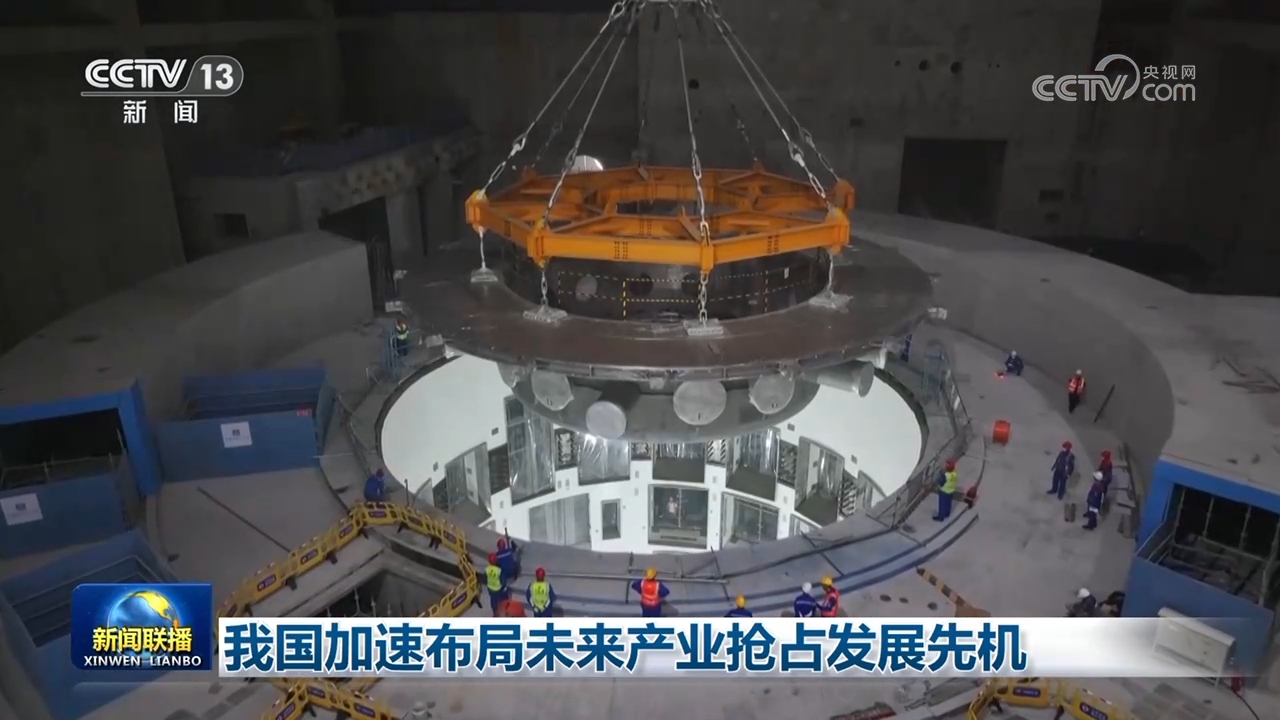
我国加速布局未来产业抢占发展先机
Yang Shi Wang· 2025-12-18 12:32
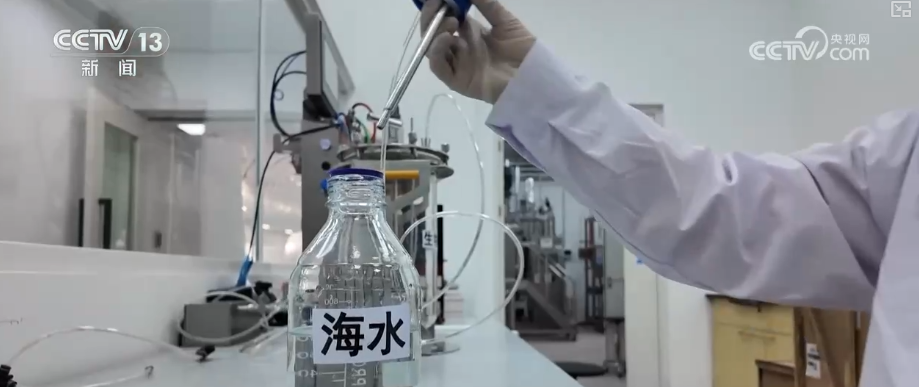
Core Insights - The "14th Five-Year Plan" emphasizes the strategic development of six future industries, including quantum technology, biomanufacturing, hydrogen energy, and nuclear fusion energy, with a focus on transitioning from laboratory research to real-world applications [1][3] Group 1: Industry Development - A compact fusion energy experimental device (BEST) has entered the assembly phase, aiming for commercial application of fusion energy during the "14th Five-Year Plan" [3] - Significant breakthroughs in core technologies have been achieved, with several quantum sensors developed and applied in precision equipment across various fields [5] - The "artificial ocean carbon cycle system" in Shenzhen has operated stably for over 500 hours in real seawater, achieving over 70% CO2 capture efficiency, converting seawater CO2 into green raw materials for plastic production [7] Group 2: Market Potential - The market for embodied intelligence is expected to exceed 5 billion yuan by 2025, while the brain-computer interface market is projected to surpass 3.8 billion yuan, and the biomanufacturing industry is anticipated to approach 1 trillion yuan in total scale [11] Group 3: Policy and Support - The government will continue to strengthen policy support, focusing on the core tracks of the six future industries, creating development clusters, and nurturing specialized and innovative enterprises to form new trillion-yuan industry tracks [12]

从“样品”到“产品”再到“产业” 全场景畅通的未来产业发展新模式逐渐成熟
Yang Shi Wang· 2025-11-28 06:36
Core Viewpoint - The article discusses China's latest development in artificial marine carbon cycling systems, which utilize electrocatalysis to capture dissolved carbon dioxide from seawater and convert it into a nutrient for microorganisms, ultimately producing green materials for plastic products [1][3]. Group 1: Technology and Innovation - The artificial marine carbon cycling system has been operational in real seawater for over 500 hours, achieving a carbon dioxide capture efficiency exceeding 70% [3]. - The system converts carbon dioxide into polybutylene succinate, a green raw material used in everyday plastic products like straws and beverage bottles [3]. - The article highlights various innovative applications in biological manufacturing, such as using yeast for plant component production and bacteria for synthesizing smart adhesive alternatives [3]. Group 2: Industry Development and Ecosystem - Shenzhen's innovation model promotes collaboration between research and entrepreneurship, facilitating the transition from laboratory samples to market-ready products [9][10]. - The local ecosystem supports startups from inception to growth, with 121 companies established within the last decade successfully going public, including 87 on A-shares and 34 on Hong Kong stocks [17]. - The article emphasizes the importance of a complete innovation and entrepreneurship ecosystem, which has led to significant achievements in the biomanufacturing sector [17]. Group 3: Future Prospects - The biomanufacturing sector in China is entering a critical development phase, with investment in synthetic biology manufacturing reaching nearly 30 billion annually during the 14th Five-Year Plan [21]. - Experts suggest that the focus should be on building an innovation system for biomanufacturing and cultivating landmark products in emerging fields such as bio-based materials and biomedicine [21].
全球首款“摄像”磁共振等 一批实用型科技创新成果亮相高交会
Yang Shi Xin Wen· 2025-11-15 08:13
Core Insights - The 27th China International High-Tech Achievements Fair showcased a range of practical technological innovations [1] Group 1: Medical Technology - The world's first "imaging" MRI system was unveiled, featuring LIVE Imaging technology that revolutionizes MRI imaging from "photography" to "video," reducing patient examination time from 50 minutes to 20 minutes [2] - A flexible underwater exoskeleton system was presented, enhancing divers' mobility underwater and significantly reducing gas consumption, with a maximum waterproof depth of 150 meters [3] - A "dynamic electrode" brain-machine interface was introduced, featuring a nerve fiber electrode with a diameter of only 196 micrometers, capable of precise signal monitoring in soft tissues [4] Group 2: Environmental Technology - A research team demonstrated an "artificial ocean carbon cycle system" that captures CO2 from seawater and converts it into liquid intermediates, ultimately producing biodegradable plastics [5][6]
海水“变”生物塑料 中国科研人员联合破解海水捕碳难题
Zhong Guo Xin Wen Wang· 2025-10-07 08:10
Core Insights - Chinese researchers have developed an "artificial marine carbon cycle system" that captures CO₂ from seawater and converts it into intermediates for biomanufacturing, addressing climate change and supporting the development of green low-carbon materials [1][2] Group 1: Research and Development - The research was conducted by a team from the University of Electronic Science and Technology of China and the Shenzhen Institute of Advanced Technology, with results published in the journal "Nature Catalysis" [1] - The system integrates "electrocatalysis + synthetic biology" to create a complete chain from "seawater carbon capture" to "material and molecular production," demonstrating a scalable platform for interdisciplinary collaboration [1][2] Group 2: Technical Achievements - The electrocatalysis team achieved over 70% CO₂ capture efficiency in natural seawater using a newly designed electrolytic device that operates continuously for over 500 hours [2] - The research team plans to establish integrated "green factories" in coastal areas to continuously capture CO₂ and convert it into formic acid, which will then be transformed into green plastic materials using engineered bacteria [2] Group 3: Economic and Environmental Impact - This research aligns with China's "dual carbon" goals and the development of a blue economy, providing a new pathway for utilizing marine carbon sinks and contributing to high-value utilization of marine carbon resources [1]