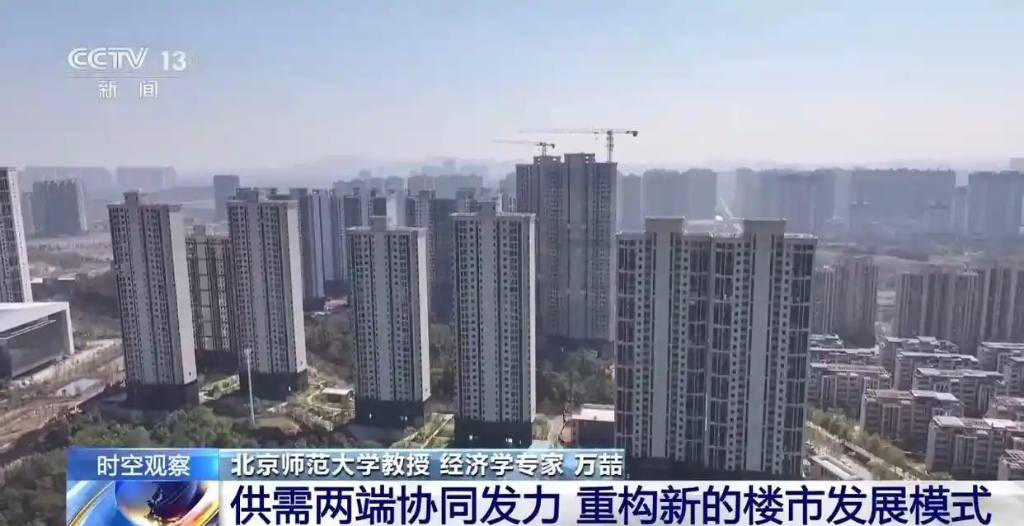
楼市发展新模式

Search documents
一揽子金融政策如何稳市场稳预期?
Yang Shi Xin Wen· 2025-05-07 21:34
Core Viewpoint - The Chinese government has introduced a comprehensive financial policy package aimed at stabilizing the market and expectations, with a focus on supporting the real estate and stock markets, as well as small and private enterprises [1] Group 1: Real Estate Market Support - The policy aims to create a dual-driven stability mechanism for the real estate market, focusing on coordinated efforts from both supply and demand sides [2] - On the demand side, measures include lowering personal housing provident fund loan rates and reducing the interest rate for first-time homebuyers, which is expected to save residents over 20 billion annually in interest payments [4] - On the supply side, the financial regulatory authority plans to revise merger loan management methods to help real estate companies optimize their balance sheets through mergers and acquisitions, alleviating liquidity pressures [4] Group 2: Stock Market Support - The introduction of new capital into the stock market is being facilitated through expanded long-term investment trials for insurance funds, which lowers capital occupation costs and encourages institutional investment in equity assets [6] - The China Securities Regulatory Commission is set to deepen reforms in the Sci-Tech Innovation Board and the Growth Enterprise Market, enhancing the inclusivity and adaptability of the market [8] - The focus on integrating technology and industrial policies is expected to drive funds towards strategic emerging industries, optimizing the stock market's industry structure [8] Group 3: Support for Small and Private Enterprises - The policy emphasizes increasing financing coverage by enhancing coordination mechanisms and actively engaging with enterprises to meet their financing needs, particularly for first-time borrowers [9] - Cost reduction measures include passing on interest rate benefits and managing bank costs to alleviate the financial burden on enterprises [11] - Efficiency improvements are targeted through streamlined approval processes and tailored services for businesses, particularly those most affected by tariffs [13] - The overall environment for financing small and private enterprises will be improved through a comprehensive policy framework that integrates monetary, fiscal, and industrial tools [15] - The policy aims to address the financing challenges faced by small and private enterprises through systematic measures that focus on precise support and regulatory easing [17]