气隙集成

Search documents
3D NAND,如何演进?
半导体行业观察· 2025-11-10 01:12
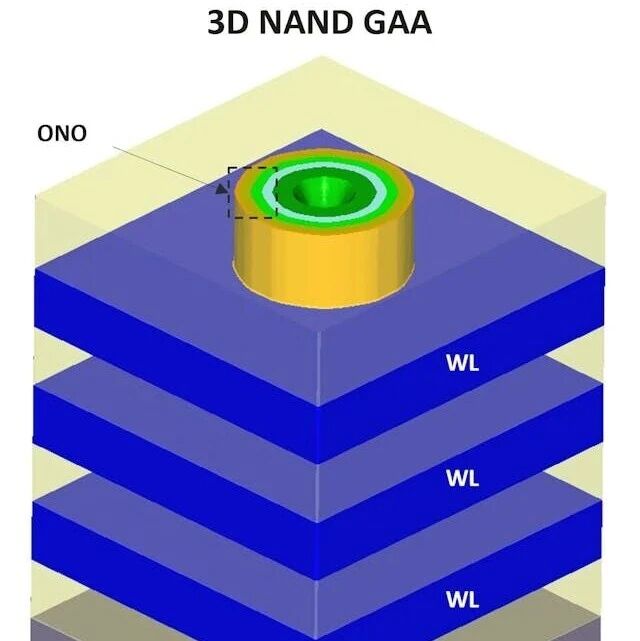
Core Insights - The article discusses the evolution and advancements in NAND flash memory technology, particularly focusing on 3D NAND and its implications for data storage density and performance [2][9][26]. Group 1: NAND Flash Memory Overview - NAND flash memory has fundamentally changed data storage and retrieval since its introduction in the late 1980s, being widely used across various electronic markets, including smartphones and data centers [2]. - The demand for data storage has surged, prompting chip companies to enhance NAND flash memory density and reduce costs per bit [2]. Group 2: Technological Advancements - The transition from 2D NAND to 3D NAND has allowed for increased storage density by stacking memory cells vertically and enhancing the number of bits stored per cell [2][9]. - Key advancements include the shift from floating gate transistors to charge trap cells, which improve read/write performance and enable higher storage densities [2][4]. Group 3: Future Directions - The semiconductor industry is exploring new technologies to further increase storage density, including vertical scaling and the integration of air gaps to reduce cell interference [3][15]. - Companies are investing in tools to enhance 3D NAND density, such as increasing the number of bits per cell and reducing the xy spacing of GAA cells [11][12]. Group 4: Challenges and Solutions - Maintaining uniformity in the manufacturing process while increasing the number of stacked layers poses significant challenges, including increased complexity and costs [9][12]. - The introduction of air gaps between adjacent word lines is proposed as a solution to mitigate cell interference, which has shown promising results in maintaining memory performance [15][21]. Group 5: Innovations in Memory Architecture - The article highlights the potential of charge trap layer separation to enhance the storage window and prevent charge migration within memory cells [22][25]. - Future developments may include innovative architectures that horizontally align conductive channels or utilize trench structures to significantly improve bit storage density [27].