氪金追星

Search documents
为了心爱的偶像哥哥,她们不惜在街头找干爹
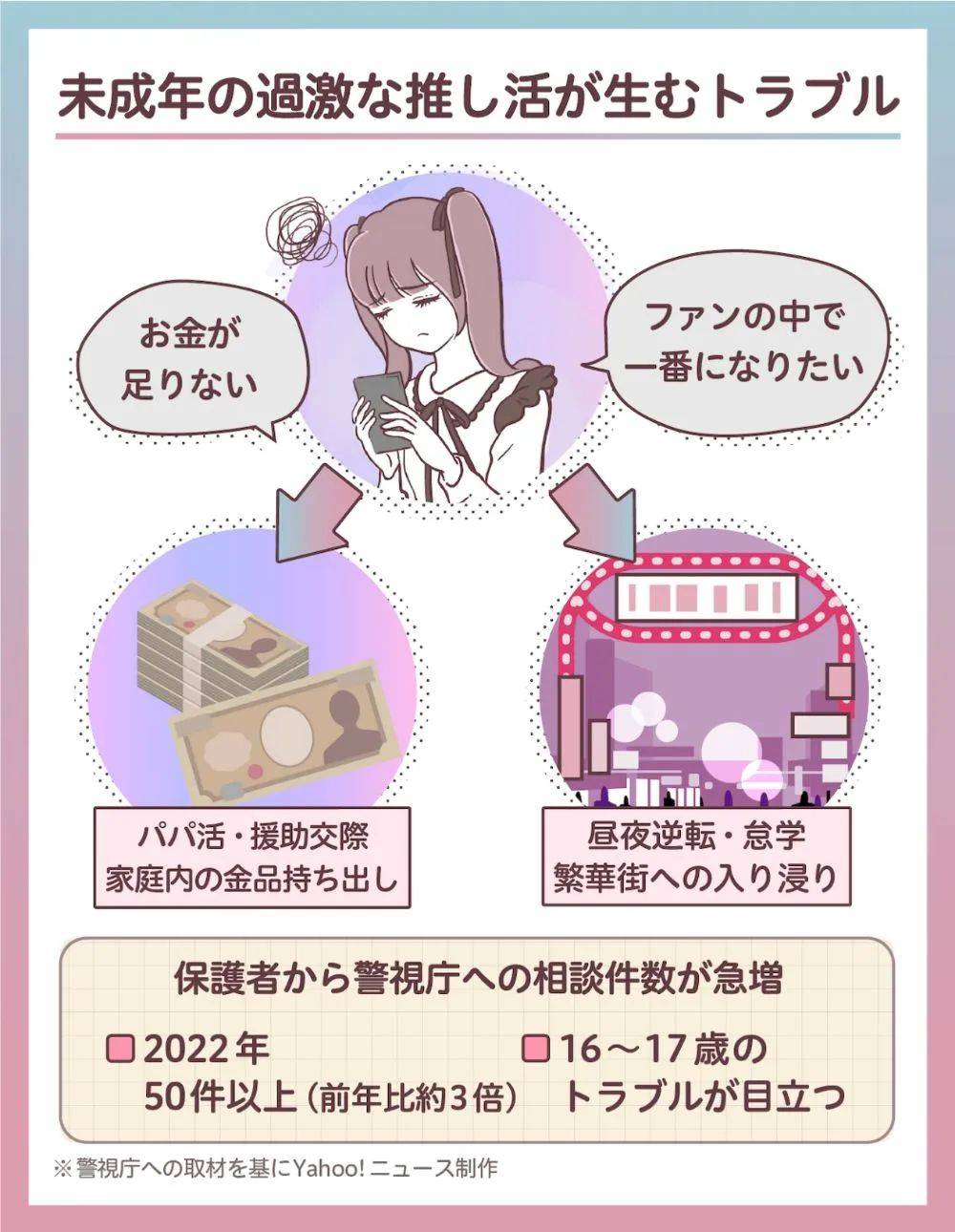
Hu Xiu· 2025-05-21 04:30
Core Insights - The phenomenon of "money-spending fandom" is increasingly prevalent among youth in East Asia, particularly in China and Japan, where teenagers are willing to spend significant amounts of money to support their idols, often leading to risky financial behaviors [2][12][15] Group 1: Youth Spending Behavior - In China, reports indicate that 43% of underage users watch live streams for over 2 hours, triggering an average of 5.8 tipping actions during that time [2] - A 17-year-old student in China tipped a streamer 450,000 yuan (approximately 45,000 USD) using a platform loophole [2] - In Japan, some teenage girls have spent over 1 million yen (approximately 50,000 RMB) on underground idols, with rare cases reaching up to 100 million yen (approximately 5 million RMB) [2][12] Group 2: Underground Idol Culture - "Underground idols" are performers who do not debut through major agencies and often engage with fans in smaller venues, creating a more intimate fan experience [5][8] - The interaction with underground idols includes various paid activities, such as photo sessions and personal meetings, which can cost between 50 to 100 RMB per session [9] - Some idol groups implement a points system where fans can exchange their spending for unique experiences, further incentivizing high expenditure [9] Group 3: Financial Exploitation and Risks - Many young fans resort to "papa-katsu," a practice where they meet older men for financial support, often leading to risky situations [3][12] - The financial motivations behind these interactions are often masked as emotional connections, with idols using manipulative tactics to encourage spending [10][12] - The blurred lines of legality surrounding "papa-katsu" make it difficult to regulate, as the practice can exist in a gray area of the law [17][19] Group 4: Psychological Factors - Many young girls engaging in these practices often come from backgrounds lacking emotional support, leading them to seek validation and affection from idols [13][24] - The competitive nature of fandom creates a culture of comparison among fans, driving them to spend more to prove their loyalty [14][24] - The emotional investment in idols can lead to a narrow worldview, where the idol becomes the sole source of validation and support [13][24] Group 5: Societal Implications - The growth of the "pushing activity" culture in Japan has created a substantial market, with approximately 13.83 million active participants spending an average of over 250,000 yen (approximately 12,500 RMB) annually [15] - The media's portrayal of "papa-katsu" and related activities often normalizes these behaviors, making it easier for young girls to justify their actions [19][21] - The lack of effective legal frameworks and societal awareness allows these exploitative practices to persist, posing significant risks to vulnerable youth [19][25]