
水文现代化

Search documents
新春走基层 | “智”守黄河水
Xin Lang Cai Jing· 2026-02-14 05:04
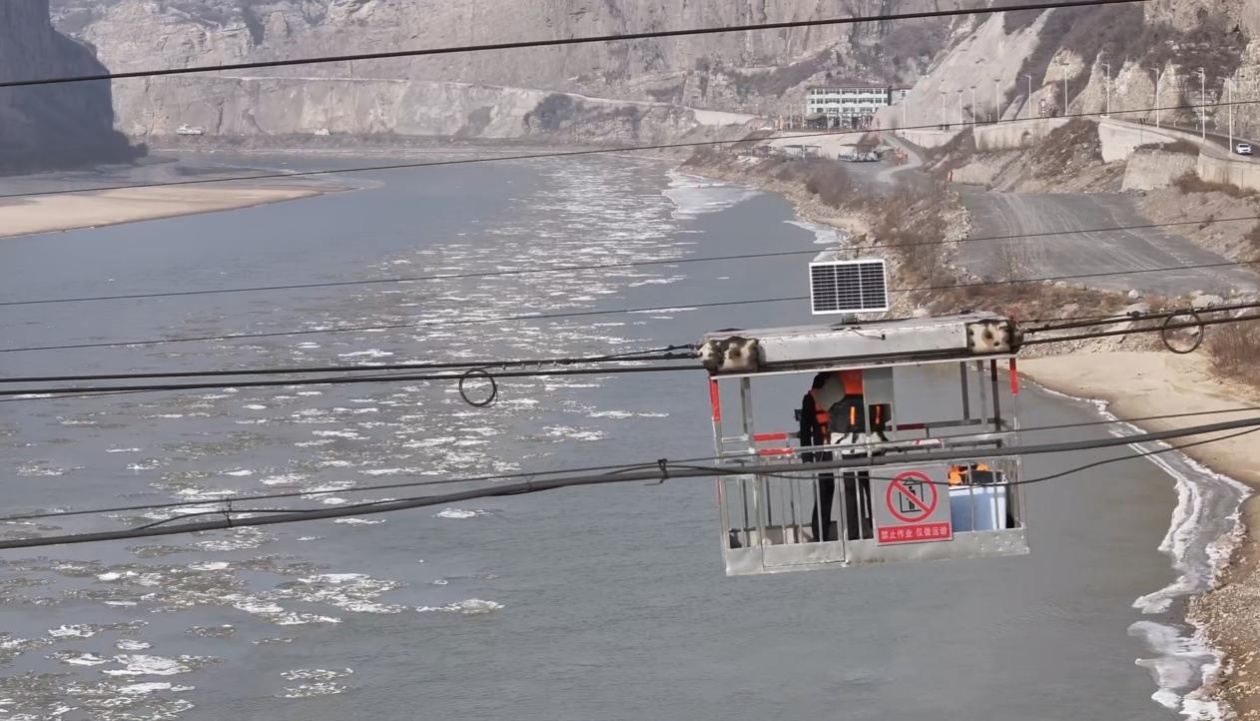
Core Viewpoint - The Longmen Hydrological Station, established in 1934, is undergoing a significant transformation towards intelligent monitoring, enhancing its operational efficiency and data accuracy while continuing to safeguard the Yellow River [1][18]. Group 1: Station Overview - The Longmen Hydrological Station is a crucial control station for the Yellow River, located on a cliff, and is the only hydrological station built in such a manner [1]. - The station has undergone six relocations throughout its history, indicating its adaptability and importance in monitoring the river [5]. Group 2: Technological Advancements - Modern equipment such as video flow measurement systems and unmanned boats have replaced traditional methods, allowing for more accurate and efficient data collection [8][9]. - The introduction of the Yellow River Hydrological Digital System has enabled real-time monitoring and data visualization across multiple hydrological stations [16]. Group 3: Operational Changes - The station's operational approach has shifted from reliance on cable cars for measurement tasks to fully automated systems, significantly reducing the need for manual labor [3][8]. - During non-flood periods, the station requires only 3 to 4 personnel for monitoring, compared to 13 during emergency situations [19]. Group 4: Workforce and Training - The average age of the workforce at the station is 32, with a significant number of young professionals contributing to the modernization efforts [18]. - The station emphasizes the importance of knowledge transfer between experienced workers and younger staff to maintain traditional skills alongside modern technology [21].

守江河安澜 担时代重任
Xin Hua Ri Bao· 2025-12-25 21:20
Core Viewpoint - The article emphasizes the importance of modernizing water management in Jiangsu, aligning with national strategies to enhance disaster prevention, resource allocation, and public safety in water-related issues [1][2]. Group 1: Strategic Direction - The article highlights the need for Jiangsu's water management to align with national governance modernization and the "14th Five-Year Plan" which calls for the construction of a modern water network and improved disaster response capabilities [1]. - It stresses the importance of integrating water management into broader national and provincial water network initiatives, showcasing a commitment to modernizing water management practices [2]. Group 2: Operational Focus - Jiangsu's water management is focused on enhancing monitoring and early warning systems for extreme weather and water events, utilizing advanced technologies such as radar rainfall measurement and drone surveillance [3]. - The article notes that the province has achieved a "12 consecutive excellent" rating in the strictest water resource management assessments, indicating effective resource management and optimization [3]. Group 3: Ecological and Technological Advancements - Continuous monitoring and data support have enabled Jiangsu to maintain safe summer conditions in Taihu Lake for 18 consecutive years, reflecting improvements in water quality and ecological monitoring capabilities [3]. - The article mentions the establishment of a smart decision-making system for flood and drought prevention, indicating advancements in automation and intelligent management within the water sector [3].
海河水利委员会编制完成现代化水文测站典型设计
Shui Li Bu Wang Zhan· 2025-05-07 05:32
Core Points - The article discusses the completion of the "Typical Design" for the modernization of hydrological monitoring stations by the Haihe Water Resources Commission, aimed at establishing a modern rainwater monitoring and forecasting system in the Haihe River Basin [1][2] - The design emphasizes the need for high-standard, fully automated, and intelligent hydrological monitoring stations that cater to the specific characteristics of different regions within the Haihe River Basin [2] Group 1 - The "Typical Design" serves as a reference for the modernization of hydrological monitoring stations during the 14th Five-Year Plan and beyond, providing replicable cases and technical routes [1] - The design principles include "demand-driven, site-specific strategies, advanced practicality, and unified standards," focusing on enhancing forecasting, early warning, and management capabilities [1][2] Group 2 - The Haihe Water Resources Commission categorizes existing and planned hydrological monitoring stations into four types: mountainous, plain, channel, and sluice stations, with tailored monitoring solutions for each type [2] - The modernization efforts aim to achieve full automation in data collection, comprehensive monitoring coverage, multi-channel information transmission, high-standard infrastructure, visualized monitoring results, and intelligent management of the stations [2]