
求真精神

Search documents
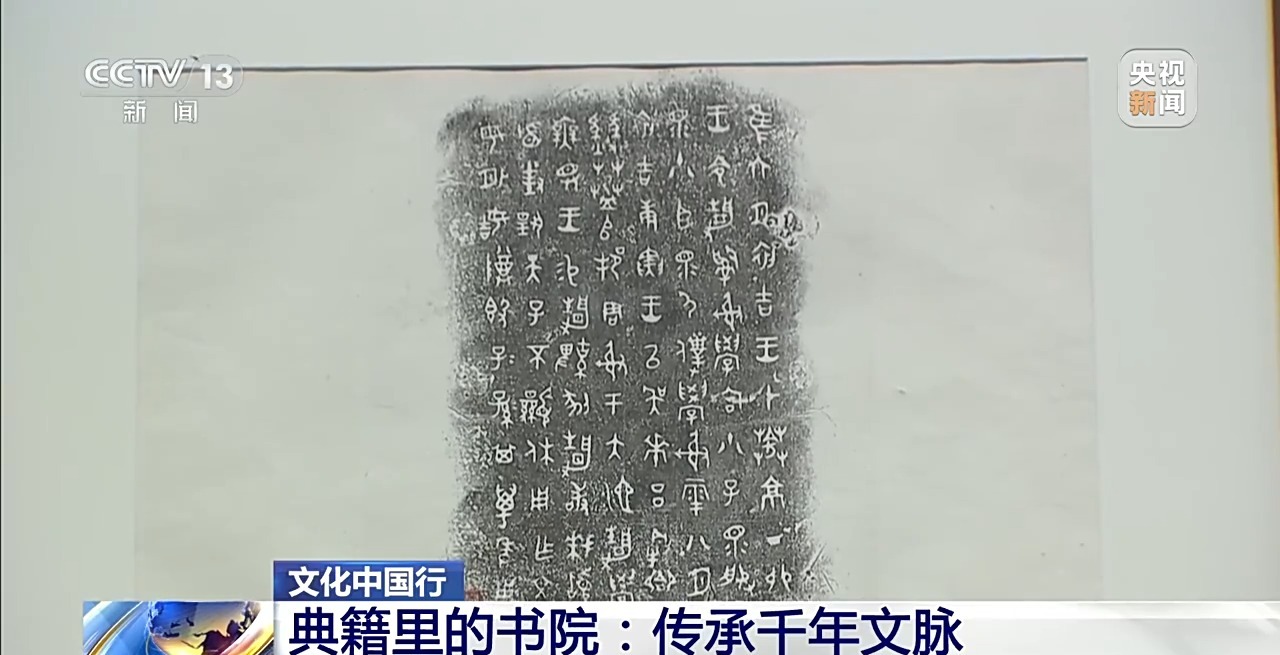
文化中国行丨弦歌不辍 看典籍里的书院如何传承千年文脉
Yang Shi Xin Wen Ke Hu Duan· 2026-02-08 12:55
Core Viewpoint - The ancient Chinese academy is a unique cultural and educational institution that has played a significant role in the transmission of Chinese civilization over the centuries [1][11]. Group 1: Historical Development - The academy originated in the Tang Dynasty with the establishment of the Jixian Academy by Emperor Xuanzong, which had multiple functions including writing, collecting books, and lecturing [5]. - During the Song Dynasty, the academy evolved alongside Neo-Confucianism, becoming an educational institution with core functions of teaching, collecting books, printing, and ritual activities [6]. - The Ming Dynasty saw a resurgence of academies influenced by Wang Yangming's "Heart Learning," leading to a trend towards popularization and community involvement [8]. - The Qing Dynasty marked a period of unprecedented prosperity for academies, particularly during the Yongzheng era when provincial academies were established [8]. Group 2: Cultural Significance - The academy transcended the dimension of an educational institution, reflecting the national spirit and showcasing the resilience of civilization [11]. - Notable figures in Chinese history, such as Li Bo and Li She, contributed to the establishment of famous academies like the Bailudong Academy, which became a center for learning and cultural exchange [10]. - The academy served as a vital platform for scholars to engage in academic debates, such as the discussions between Zhu Xi and Lu Jiuyuan, which shaped the framework of Neo-Confucianism [10]. Group 3: Modern Recognition - The National Library of China emphasizes the importance of ancient academies as key carriers of excellent traditional culture and advocates for a spirit of scholarly pursuit and truth-seeking [13].

霞客足迹映邕江
Xin Lang Cai Jing· 2026-02-01 00:44
Core Perspective - The article reflects on the journey of Xu Xiake in 1637, emphasizing his exploration of geography and human connections, showcasing the blend of nature and civilization in Nanning, and highlighting his profound personal experiences during his travels [1][2][3][4][5][6][7]. Group 1: Journey and Exploration - Xu Xiake's journey to Nanning is depicted as a blend of geographical documentation and humanistic exploration, capturing the essence of the landscape and its cultural significance [2]. - The geographical features of Nanning, including its mountains and rivers, are described as integral to the city's identity, reflecting a harmonious relationship between nature and urban life [2][4]. - The exploration is marked by Xu's meticulous observations and interactions with the environment, showcasing his dedication to understanding the land [5][6]. Group 2: Personal Connections and Experiences - Xu's stay at Chongshan Temple is highlighted as a significant emotional experience, where he faced the death of his companion, reflecting on themes of friendship and the weight of human connections [3]. - His actions to honor his deceased friend, including retrieving remains and navigating bureaucratic challenges, illustrate a deep commitment to personal integrity and respect for life [3]. - The narrative emphasizes Xu's character as not only a geographer but also a person of profound moral values, showcasing the human side of his explorations [3][7]. Group 3: Legacy and Impact - The article discusses the lasting impact of Xu Xiake's journey on the cultural and geographical understanding of Nanning, noting that his observations remain relevant even after 400 years [7]. - Xu's spirit of inquiry and dedication to truth in geographical studies is presented as a model for future generations, emphasizing the importance of firsthand exploration and critical thinking [6][7]. - The enduring legacy of Xu's travels is framed as a source of inspiration, encouraging a continuous curiosity about the world and a commitment to understanding both physical and spiritual landscapes [7].
知觉·叙事·诗意
Xin Lang Cai Jing· 2026-01-03 00:40
Core Viewpoint - "Lion Boy 2" serves as a milestone sequel in domestic realistic animation films, continuing the focus on social reality and traditional culture while exploring new dimensions in technology, narrative, and themes [1] Group 1: Perceptual Layer - The film utilizes 3D animation technology to create a strong sense of realism and immersive experience through high-precision modeling of Shanghai landmarks such as Yuyuan Garden and Oriental Pearl Tower [2] - The film features a self-developed muscle system and optical motion capture technology, achieving smooth and precise martial arts action, enhancing the visceral impact of fight scenes [2] - Sound design closely integrates with visuals, creating a multi-sensory world that blurs the lines between live-action and animation [2] Group 2: Narrative Layer - The story is set in Shanghai in 2009, leveraging the city's cultural context to provide a foundation for traditional cultural narratives in a globalized setting [3] - The narrative structure intentionally departs from Hollywood conventions by reconstructing character relationships without romantic elements, focusing instead on partnership and shared struggles [3][4] - The film employs parallel montage to convey emotions subtly, allowing for rich interpretation without falling into clichés [3] Group 3: Poetic Layer - The film embodies the spirit of "seeking truth," reflecting the Chinese ethos of pragmatism, resilience, and self-improvement, particularly through the character's dedication to martial arts [5][6] - It addresses the mechanisms of online public opinion and the phenomenon of cyberbullying, emphasizing the pursuit of truth and integrity in the face of adversity [5] - The film's philosophical and ethical underpinnings highlight the cultural significance of Chinese martial arts, culminating in a narrative that transcends mere competition to focus on spiritual struggle [6] Conclusion - "Lion Boy 2" progressively guides the audience from sensory immersion to cultural recognition through technological innovation, narrative construction, and thematic refinement, indicating that realistic animation is not a mere replication of reality but an artistic revelation of contemporary issues and cultural identity [6]