汽车央企战略性重组

Search documents
汽车“国家队”合并风云突变
Hua Er Jie Jian Wen· 2025-06-06 09:10
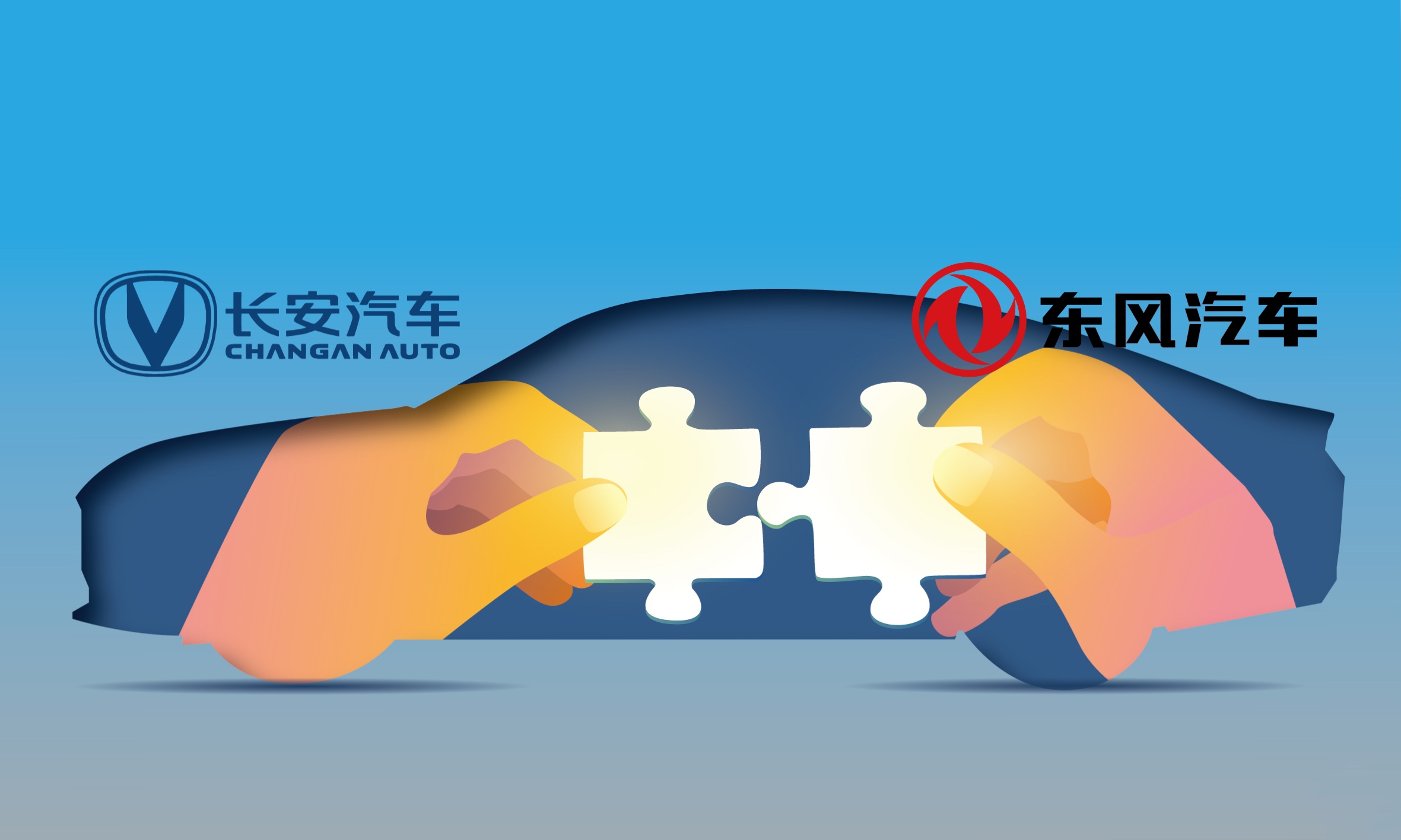
Core Viewpoint - The restructuring of Dongfeng and Changan, two major automotive "national teams," has reached a turning point, with Changan announcing a separation of its automotive business into a new central enterprise under direct supervision of the State-owned Assets Supervision and Administration Commission (SASAC) [2][4]. Group 1: Restructuring Developments - The previously announced "Dongfeng + Changan" restructuring plan has been temporarily shelved, as Dongfeng's controlling shareholder has stated it will not involve related asset and business restructuring for now [3][4]. - The initial expectation was that the merger would create a super automotive group with annual sales exceeding 5 million vehicles, potentially surpassing BYD as the largest car manufacturer in China [4]. Group 2: Challenges in Integration - Key challenges in the integration include the issue of "voice" post-restructuring, with concerns that Dongfeng would dominate while Changan would be integrated, given Dongfeng's higher administrative level and market perception [4][5]. - Dongfeng has long relied on joint ventures for revenue, with over 60% of profits coming from partnerships like Dongfeng Nissan and Dongfeng Honda, while Changan has focused on independent brands, achieving an 82% revenue share from its own brands last year [5]. Group 3: Strategic Implications - The current pause in restructuring is viewed as a strategic adjustment rather than a termination, as the SASAC aims to create globally competitive automotive groups through resource integration [5][6]. - The automotive industry is experiencing a wave of mergers and acquisitions as a natural progression towards maturity, with the need for strategic flexibility highlighted amid changing market conditions [6][8]. Group 4: Historical Context and Future Outlook - Successful historical mergers, such as General Motors' acquisitions, demonstrate the potential benefits of strategic consolidation, while failures like the Renault-Nissan-Mitsubishi alliance serve as cautionary tales [7][8]. - The future of the automotive market in China is expected to see a shift from "wild growth" to "integrated efforts," emphasizing the importance of collaboration among national teams to enhance competitiveness [8].



官方确认!“整车央企将战略性重组”
21世纪经济报道· 2025-03-30 00:20
Group 1 - The State-owned Assets Supervision and Administration Commission (SASAC) plans to strategically restructure central automotive enterprises to enhance industry concentration and create a world-class automotive group with global competitiveness and independent core technologies [2] - SASAC encourages central automotive enterprises to deepen various forms of cooperation with other companies to improve core competitiveness and market share, while also promoting integration into the global innovation network [2] - In 2024, the direct investment in new energy vehicles by the three major automotive central enterprises is expected to increase by 35% year-on-year, with over 70% of the total investment allocated to key resources in "three electrics" (battery, motor, and electronic control) being independently controlled [2] Group 2 - The National Development and Reform Commission (NDRC) aims to address the issue of disorderly competition in the automotive industry, which has led to profit sacrifices and negative impacts on technological innovation and product quality [3] - NDRC will strengthen market monitoring, industry self-discipline, and public opinion guidance to maintain fair competition and ensure product quality and safety standards are met [3] - The commission emphasizes that fair and orderly market competition is essential for promoting technological progress and will work with relevant departments to report typical cases of unfair competition [3]