
泛化安全概念

Search documents
承认怕崩盘!美财长给中国灌“迷魂汤”,撕下伪装,暴露致命软肋
Sou Hu Cai Jing· 2026-02-16 04:37
Group 1 - The core message from U.S. Treasury Secretary Yellen is that U.S.-China relations are in a "comfortable position," indicating a desire for fair competition without full decoupling [1][2][4] - Yellen's statements are viewed as a tactical move by the Trump administration to create a false sense of goodwill ahead of future high-level interactions, aiming to stabilize market expectations [4][6] - The U.S. is preparing for further confrontations with China, and Yellen's remarks serve to project an image of rationality and stability to the international community [6][11] Group 2 - Yellen's emphasis on "regaining sovereignty" in strategic industries like rare earths signals a shift towards a more aggressive stance, elevating the discussion from economic to political terms [14][16][20] - The term "de-risking" has been adopted by the Biden administration and continues under the Trump administration, indicating a strategic approach to U.S.-China economic relations [24][26] - The U.S. aims to reduce dependency on China in critical areas while maintaining cooperation in less significant sectors, blurring the lines between "de-risking" and "decoupling" [26][28][30] Group 3 - The Trump administration's approach allows for significant flexibility in defining what constitutes a "risk," potentially leading to arbitrary regulatory measures against China [30][32] - The current U.S. strategy appears to be one of maintaining the status quo while buying time for its industrial strategy, rather than seeking immediate escalation in trade disputes [32][34] - The Chinese response should be to remain firm and clear about its red lines, countering U.S. tactics with concrete measures [34]

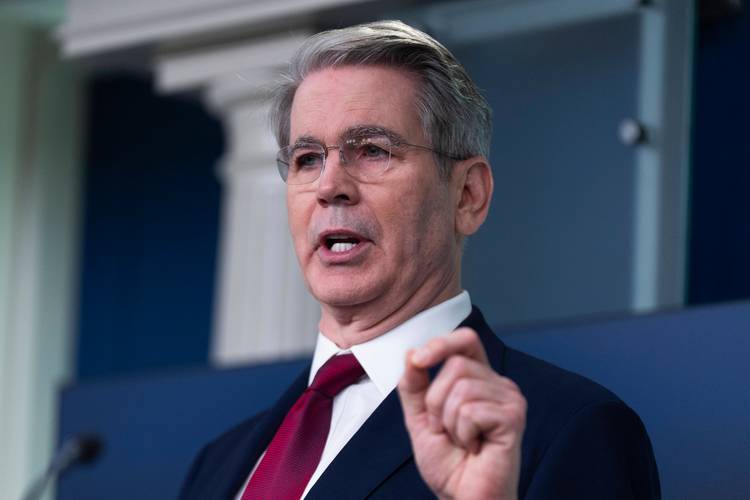
外交部:希望美方停止泛化安全概念,停止炒作所谓“中国威胁”,停止抹黑干扰中国对外正常经贸合作
Huan Qiu Wang· 2025-08-13 10:27
Core Viewpoint - The Chinese government dismisses claims that Chinese companies are establishing port networks globally for espionage and military purposes, labeling such statements as "anxiety selling" and urging the U.S. to stop exaggerating security concerns and undermining China's normal economic cooperation [1]. Group 1 - Chinese officials criticize U.S. narratives about Chinese companies controlling global trade through port networks [1] - The Chinese government calls for an end to the U.S. portrayal of a "China threat" [1] - The response emphasizes the importance of normal economic cooperation between China and other countries [1]