泛能源大数据

Search documents
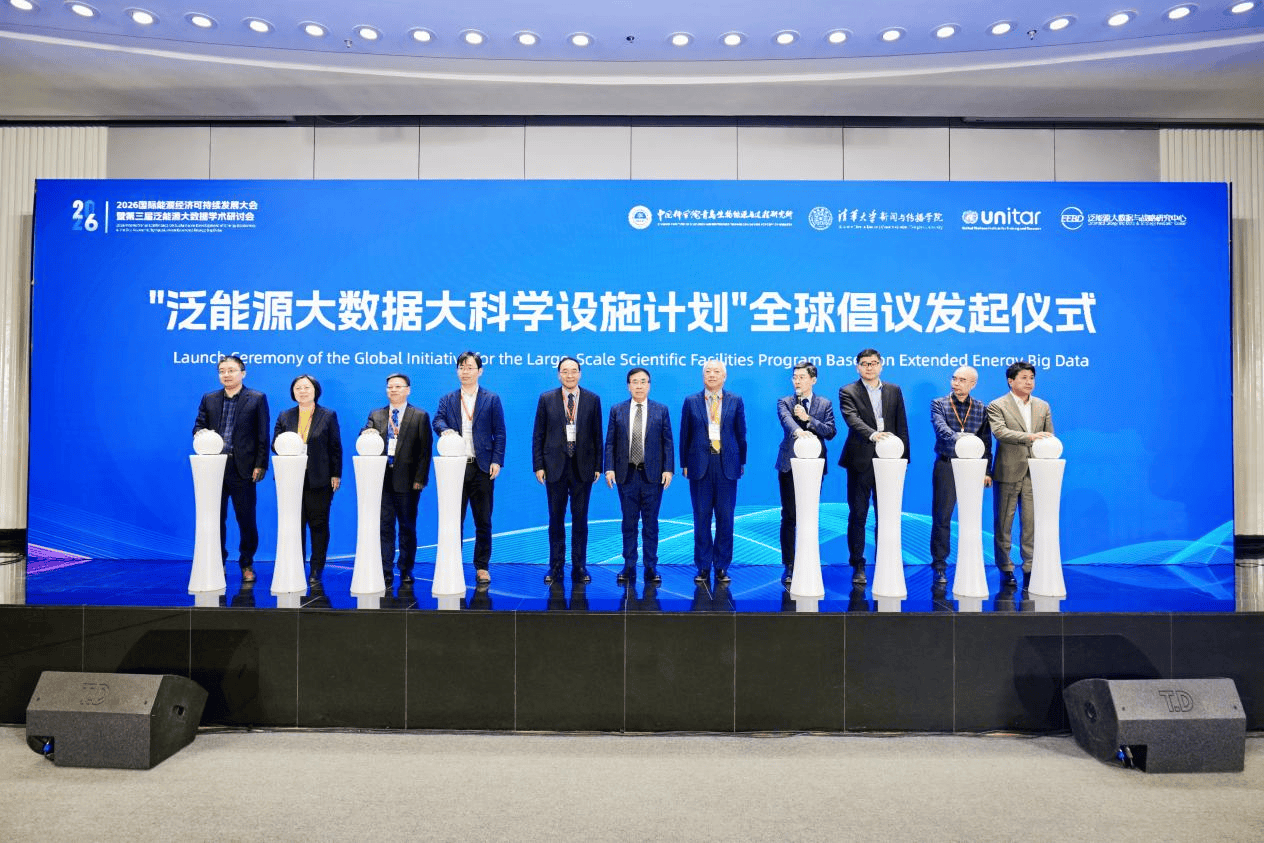
构建能源治理“国家大脑” 打造绿色发展“中国标尺” ——“泛能源大数据大科学设施计划”启动倡议在京发起
Xin Lang Cai Jing· 2026-02-02 01:28
Core Viewpoint - The conference held at Tsinghua University on January 28, 2026, launched the "Pan-Energy Big Data and Big Science Facility Plan," aimed at reshaping energy governance and providing scientific decision-making support for China's energy security, international green trade barriers, and achieving carbon neutrality goals [1][9]. Group 1: Energy Governance and Strategic Planning - The "Pan-Energy Big Data" initiative emphasizes an integrative system view of energy as a core hub across multiple dimensions of society, addressing complex systemic challenges posed by energy security and geopolitical dynamics [2][10]. - The plan aims to create a "Smart Decision Laboratory" that utilizes vast data and artificial intelligence to simulate policy and technology evolution paths, thereby providing precise scientific basis for national energy strategy formulation [2][10]. Group 2: Green Evaluation Standards and Technological Innovation - The integration of Geographic Information Systems (GIS) and Life Cycle Assessment (LCA) has led to the development of a "spatiotemporal coupling" evaluation system that covers the entire energy life cycle, breaking down barriers between energy technology, ecological environment, and socio-economics [3][11]. - The launch of the "Regional Green Low-Carbon Transition Path Design Platform (EPSEO)" and the "International Sustainable Development Information Disclosure Platform (GSID)" aims to provide intelligent transition roadmaps for local governments and fill gaps in public service for international information disclosure [3][11]. Group 3: Industrial Chain Collaboration and Green Development - The "China Green Manufacturing" initiative was launched to leverage pan-energy big data, aiming to connect leading enterprises in the industrial chain and promote large-scale green manufacturing [4][12]. - This initiative is seen not only as a carbon reduction effort but also as a means to establish a self-controlled technology and evaluation system, supporting the transition from "Made in China" to "Green Manufacturing in China" [4][12]. Group 4: Global Climate Governance and Communication - The energy transition is framed as a profound social change and an international communication campaign, necessitating a deep integration of cutting-edge technology and effective communication [5][14]. - A memorandum of international cooperation was signed between the Qingdao Institute of Energy and the United Nations Institute for Training and Research (UNITAR) to build a bridge for international talent cultivation and share China's energy transition narrative on the global stage [5][14].
“泛能源大数据大科学设施”建设倡议正式发起
Xin Lang Cai Jing· 2026-02-01 04:54
Core Insights - The initiative for the "Pan-Energy Big Data Scientific Facility" aims to address the dual pressures of green transformation and energy security through a systematic approach to complex challenges in the energy sector [1][4] - This facility is designed to integrate advanced technologies such as IoT, AI, digital twins, and supercomputing to provide data-driven insights for energy, economic, social, and environmental interactions [1][2] Group 1: Facility Overview - The facility is not a traditional physical experiment but a networked, intelligent, and open scientific infrastructure focused on "Pan-Energy Big Data" [1] - It aims to create a national decision-making experimental platform that can simulate various scenarios and assess risks, thereby avoiding "synthetic fallacies" in real-world decision-making [2] Group 2: Technological Integration - The facility will enhance existing technologies by integrating energy flow, material flow, information flow, and value flow into a complex network model, creating a dynamic national-level "digital twin" [2] - The launch of platforms for regional green low-carbon transition and international sustainable development information disclosure reflects the initial application of this integrated approach [2] Group 3: Industry Collaboration - The "China Green Manufacturing Ambition Navigation Plan" was initiated to leverage Pan-Energy Big Data, linking leading enterprises in the industry to promote green manufacturing practices [3] - This initiative aims to establish a self-controlled carbon footprint accounting and green evaluation system, enhancing China's influence in international green rule-making [3] Group 4: Cross-Disciplinary Approach - The conference highlighted the need for a deep integration of technological strength and communication capabilities in energy transition efforts [3] - A memorandum of cooperation was signed between the Qingdao Institute of Bioenergy and Process Research and the United Nations Training and Research Institute to build an international talent cultivation and knowledge-sharing platform [3] Group 5: Strategic Importance - The construction of this complex system simulation facility represents a shift from traditional disciplinary approaches to a multi-disciplinary coupling, aiming for proactive simulation rather than reactive assessment [4] - This initiative is expected to position China strategically in global climate governance and sustainable development, contributing to the goal of becoming an energy powerhouse and achieving harmonious coexistence between humanity and nature [4]
为全球可持续发展贡献“中国方案” 2026国际能源经济可持续发展大会在清华大学举行
Sou Hu Cai Jing· 2026-01-29 14:14
Core Insights - The conference on January 28, 2026, at Tsinghua University focused on the theme of building an energy-centered governance system to promote global sustainable development [3][4] - The event highlighted the importance of interdisciplinary approaches, integrating energy with economic, social, ecological, and technological data to support energy transition and sustainable development [2][3] Group 1: Conference Overview - The "Global Initiative for the Pan-Energy Big Data Scientific Facility" was launched during the conference, aiming to create a collaborative platform for global research in pan-energy big data [5] - The conference served as a high-level academic event coinciding with China's 14th Five-Year Plan and the critical phase of the UN's 2030 Sustainable Development Goals [3][4] Group 2: Key Contributions and Discussions - Academician Jiang Peixue emphasized the need for a combination of top-level strategy, cutting-edge technology, industrial practice, and effective communication to achieve energy transition and sustainable development [3] - The concept of "Pan-Energy Big Data" was introduced as a means to address complex challenges in energy security and green development, integrating various disciplines and technologies [4][5] Group 3: International Collaboration and Future Plans - Mihoko Kumamoto from UNITAR acknowledged China's contributions to global sustainable development and called for international collaboration to tackle climate challenges [4] - The conference initiated the "China Green Manufacturing" initiative to promote large-scale green manufacturing through collaboration with leading enterprises [5]