
流失文物追索

Search documents
东西问丨段勇:被日本掠夺的唐鸿胪井碑为何是中国流失国宝的“头号追索目标”?
Xin Lang Cai Jing· 2026-02-10 12:49
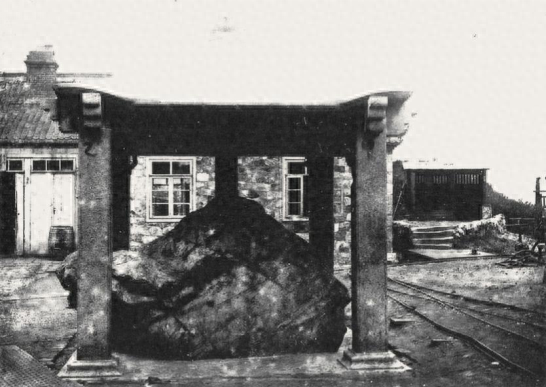
Core Viewpoint - The Tang Honglujing Stele, a significant cultural artifact from the Tang Dynasty, is considered China's "number one target for repatriation" due to its historical value and the circumstances of its looting by Japan during the Russo-Japanese War [3][10]. Group 1: Historical Significance - The Tang Honglujing Stele, inscribed in 714 AD, serves as a direct historical evidence of the relationship between the Tang Dynasty and the Bohai Kingdom, reflecting China's governance over its northeastern territories [4]. - The stele weighs 9.5 tons, making it one of the most substantial lost cultural treasures, symbolizing national unity and territorial integrity for China [10]. Group 2: Repatriation Efforts - The recent publication of "The Complete Collection of Tang Honglujing Stele Archives" compiles extensive documentation and evidence of the stele's illegal acquisition by Japan, reinforcing China's claim for its return [8][10]. - The ongoing efforts to repatriate the stele have garnered support from both Chinese and Japanese scholars, indicating a shared moral stance on the issue among the citizens of both nations [6][10]. Group 3: International Legal Framework - The repatriation of cultural artifacts is supported by international agreements such as the 1954 Hague Convention and the 1970 UNESCO Convention, which emphasize the illegality of cultural property acquired through war [11]. - Despite some progress in the repatriation of colonial artifacts by Western countries, Japan has lagged in aligning with contemporary international norms regarding the return of looted cultural heritage [11].


中国海外文物研究中心主任谈流失日本唐鸿胪井碑:这是头号流失国宝
Xin Lang Cai Jing· 2026-01-19 06:51
Core Viewpoint - The publication of "Tang Honglu Well Stele Archive Document Compilation" has reignited public interest in the "Tang Honglu Well Stele," which has been lost in Japan for over a century, highlighting its significant historical, political, and cultural value to China [1][11]. Group 1: Publication Details - The "Tang Honglu Well Stele Archive Document Compilation" systematically organizes all existing images, rubbings, and related documents of the stele, providing a comprehensive resource for further research and repatriation efforts [3][5]. - The book includes 63 photographs, 93 pages of original documents, 34 related articles, and 122 academic papers, totaling 11.96 million words, making it the most detailed academic compilation on the stele to date [7]. Group 2: Historical Context and Significance - The Tang Honglu Well Stele, erected in 714 AD, serves as a crucial historical artifact that confirms the governance of the northeastern region of China by the Tang Dynasty, representing a significant political and cultural symbol [3][11]. - The illegal removal of the stele by Japanese forces in 1908 is emblematic of the broader issue of cultural artifacts lost during periods of conflict and colonialism, with approximately 150 million artifacts currently held overseas, 10% of which are considered illegally obtained [11][9]. Group 3: Research and Repatriation Efforts - Recent research has clarified misconceptions regarding the timeline and circumstances of the stele's removal, identifying the specific period and location of its current status in Japan [15]. - The ongoing repatriation efforts are supported by international conventions and growing moral pressure from the global community, with recent successful returns of artifacts from countries like Germany and the UK to Nigeria [8][9]. Group 4: Future Implications - The repatriation of the Tang Honglu Well Stele is seen as a critical step towards rectifying historical injustices and fostering better relations between China and Japan, contributing to a new order of international cultural heritage exchange [17].
长沙子弹库战国帛书《五行令》《攻守占》入藏湖南省博物馆
Yang Guang Wang· 2025-10-14 00:43
Core Viewpoint - The return of the "Wuxing Ling" and "Gongshou Zhan" texts from the Changsha bullet depot marks a significant achievement in the protection of Chinese cultural heritage and demonstrates the country's commitment to safeguarding its civilizational roots [1] Group 1: Cultural Heritage - The "Wuxing Ling" and "Gongshou Zhan" texts are part of the earliest known silk manuscripts in China, discovered in 1942 in a Chu tomb in Changsha [1] - Their successful return is highlighted as a model case of international cooperation in the pursuit of repatriating lost cultural artifacts [1] Group 2: Preservation Efforts - The texts have undergone an environmental adaptation observation period and are now stored in a controlled environment with constant temperature and humidity for proper preservation [1] - The Hunan Provincial Museum plans to initiate non-destructive testing and utilize technological methods for scientific restoration and comprehensive digital archiving of the manuscripts [1]