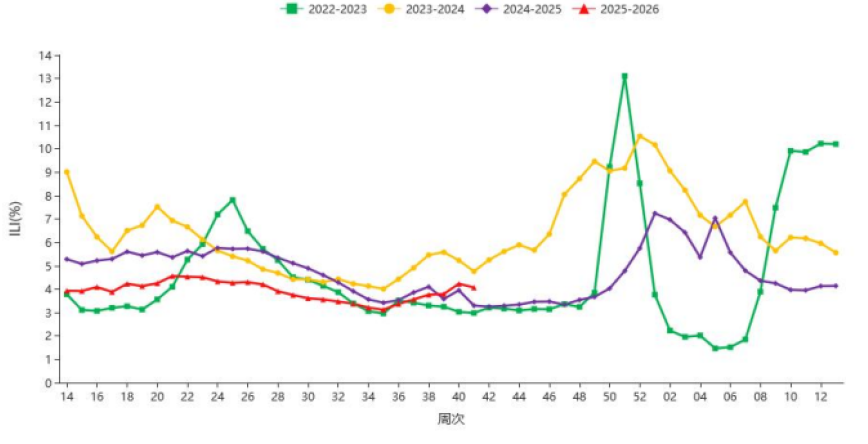
流感季提前

Search documents
英国今年流感季“异常提前”
Xin Hua Wang· 2025-10-31 03:01
Core Insights - The flu season in the UK has started unusually early this year, with a significant increase in cases across all age groups, particularly among minors [1] Group 1: Flu Season Overview - The UK Health Security Agency reported that the flu virus is widely circulating in the community, with activity levels exceeding baseline [1] - The positivity rate for flu tests across the UK has risen to an average of 8.2% for the week ending October 26, up from 6.1% the previous week [1] Group 2: Impact on Minors - The positivity rate for flu virus among minors aged 5 to 14 has surged to 30.8%, a significant increase from 20% the prior week [1] - The sharp rise in infections among minors indicates a broader community spread of the virus [1] Group 3: Hospitalization and Recommendations - There has been an increase in hospitalizations due to flu, reflecting the growing impact of the virus [1] - The epidemiological advisor, Alex Allen, has recommended that eligible individuals schedule flu vaccinations [1]
今年流感季或提前到来,毒株与去年不同,医生提醒
Qi Lu Wan Bao· 2025-10-23 09:21
Core Viewpoint - The flu season in China is expected to arrive earlier this year, with an increase in flu activity reported in southern provinces, and a different strain of the virus predicted to circulate, leading to a potential rise in infection rates [1][5]. Group 1: Flu Season Trends - The flu season may start earlier this year, as indicated by reports from Japan and several European countries experiencing an increase in flu cases [5]. - The dominant flu strain this year is predicted to be H3N2, contrasting with last year's H1N1, which may result in lower immunity among the population [5]. - Extreme weather conditions in various regions of China, particularly sudden cold snaps, are likely to weaken respiratory defenses, facilitating flu outbreaks [5]. Group 2: Symptoms and Differences - Flu symptoms are characterized by a sudden onset of high fever (39-40°C), severe body aches, and fatigue, with a typical duration of 7-10 days, distinguishing it from the common cold [6][7]. - Common cold symptoms are generally milder, with lower fever and shorter duration (3-5 days) [7]. Group 3: Recommendations for High-Risk Groups - High-risk individuals, including children under 5, seniors over 65, pregnant women, and those with chronic diseases, are advised to get vaccinated before the peak flu season, ideally between September and November [14]. - Maintaining good hygiene practices, such as regular handwashing and wearing masks in crowded places, is recommended to mitigate flu risks [10][11][12]. Group 4: Nutritional and Lifestyle Recommendations - A balanced diet rich in essential nutrients, including vitamins C, A, D, E, zinc, and protein, is crucial for enhancing immune function [16][18]. - Adequate sleep (7-8 hours) and maintaining a regular sleep schedule are emphasized as vital for immune health [20][21][23].