海冰灾害

Search documents
渤海辽东湾海域进入严重冰期
Ren Min Ri Bao· 2026-01-22 22:06
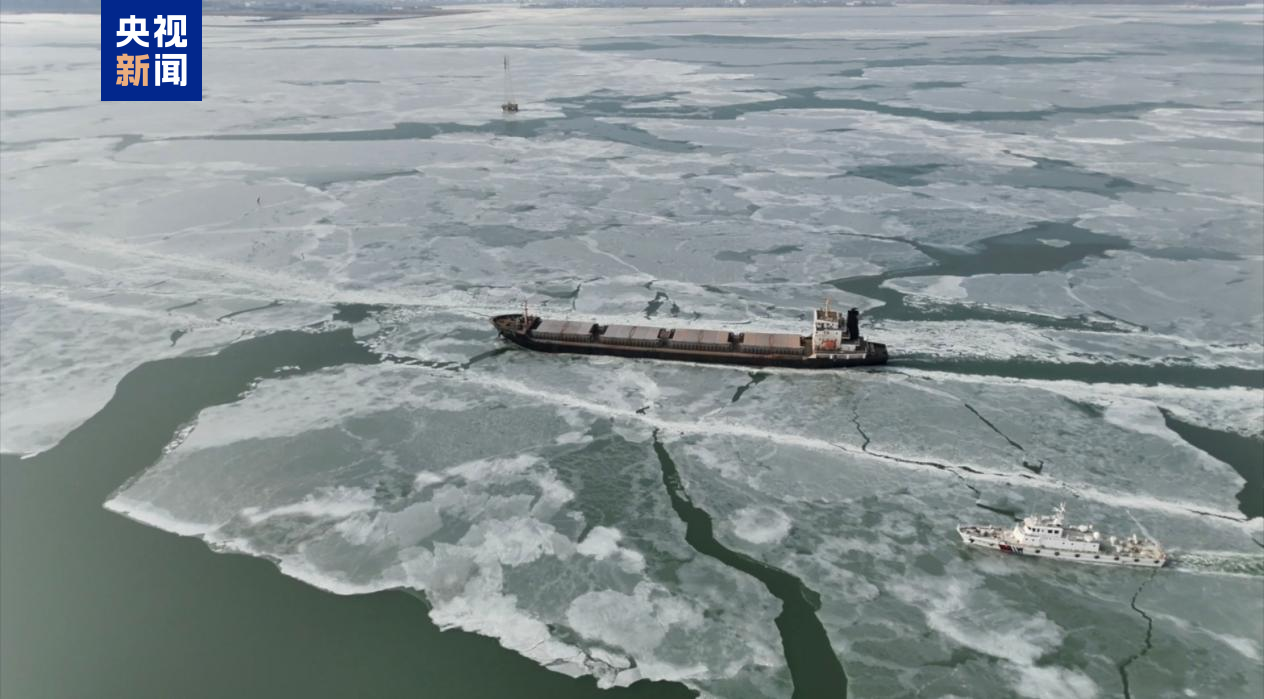
Core Viewpoint - The severe cold weather in Liaoning Province has led to significant ice formation in the Liaodong Bay, impacting various marine activities and infrastructure [1] Group 1: Weather Impact - Liaoning Province has experienced extreme cold, with temperatures dropping below -30 degrees Celsius in some areas [1] - The Liaodong Bay entered a severe ice period on January 19, with the maximum distance of floating ice from the shore reaching 58 nautical miles [1] - The total ice area in Liaodong Bay has reached 12,953 square kilometers, accounting for 42.33% of the bay's total area, which is heavier than the same period in the last decade [1] Group 2: Effects on Marine Activities - The ice conditions are expected to affect marine aquaculture, fishing ports, shipping, oil and gas production, and inhabited islands to varying degrees [1] - High-density thick ice may obstruct shipping lanes and ports, while ice drift poses risks to fishing vessels and aquaculture rafts [1] - Offshore oil platforms, wind power, and photovoltaic structures are at risk of collision and damage from floating ice [1] Group 3: Monitoring and Research Initiatives - The North Sea Bureau of the Ministry of Natural Resources has initiated a comprehensive survey of sea ice in the Bohai and Yellow Seas for the winter of 2026 [1] - The "Polar" icebreaker is heading to the core ice area of Liaodong Bay to conduct a comprehensive survey covering sea ice, meteorology, hydrology, and ecology [1] - A multi-dimensional sea ice observation network has been established, integrating marine stations, vessels, drones, video points, radar, and satellites [1]
超1万平方公里 辽东湾海冰进入今冬严重冰期
Yang Shi Xin Wen· 2026-01-21 02:07
Core Insights - The article discusses the impact of a cold wave in Liaoning Province, where temperatures have dropped below -20°C, leading to severe ice conditions in the Bohai Sea and Liaodong Bay [1] - The area has experienced significant sea ice formation, with an ice area of 10,090 square kilometers, covering over 32% of the Liaodong Bay surface [1] - The rapid development of sea ice poses various challenges to maritime activities, including shipping, port operations, offshore oil and gas extraction, aquaculture, fishing, and transportation for island residents [1] Industry Impact - Maritime departments in areas like Panjin and Jinzhou are implementing graded vessel scheduling and enhancing ice monitoring in key water areas to ensure safe navigation [1] - Coordination with ports involves deploying powerful icebreakers to provide continuous ice navigation assistance for incoming and outgoing vessels, ensuring the efficient transport of essential goods such as coal, grain, and crude oil [1]