海水养殖

Search documents
中国银行威海分行投放1亿元贷款赋能海洋牧场建设
Xin Lang Cai Jing· 2026-03-27 06:25
Core Viewpoint - China Bank's Weihai Branch has successfully provided a 100 million yuan project loan to a local key seawater aquaculture enterprise, aiming to support the development of the marine economy and assist Rongcheng in establishing a national-level marine ranch demonstration area [1][2] Group 1: Loan Details - The loan amount is 100 million yuan, aimed at enhancing the marine economy and supporting the establishment of a national marine ranch demonstration area in Rongcheng [1][2] - The enterprise receiving the loan has extensive experience in seawater aquaculture, utilizing a shallow sea multi-nutrient ecological farming model, integrating seed breeding, ecological farming, and deep processing [2] Group 2: Industry Impact - Rongcheng, located at the easternmost tip of the Shandong Peninsula, has become a significant base for cultivating marine delicacies such as kelp, sea cucumbers, and abalones, with marine fisheries and ecological farming as pillar industries [2] - The project is expected to effectively boost local employment and promote collaborative development within the industry chain [2] Group 3: Financial Support Strategy - China Bank's Weihai Branch has formed a specialized service team to address the financing needs of the enterprise, customizing credit solutions and streamlining approval processes to ensure efficient project implementation [2] - The bank is committed to enhancing financial support in marine-related sectors and plans to innovate products and services such as marine usage rights mortgages and industry chain finance [2]

坚持实事求是同题共答远近结合在推动问题整改及海水养殖产业高质量发展中为全省作示范
Xin Lang Cai Jing· 2026-02-04 17:29
Core Viewpoint - The provincial government is actively addressing ecological environment issues related to seawater aquaculture through various measures, achieving preliminary results in the rectification efforts [1][2]. Group 1: Project Development - The provincial secretary conducted on-site inspections of the coastal forest restoration and seawater aquaculture wastewater treatment projects, emphasizing the importance of adhering to timelines and ensuring quality completion of the projects [1]. - Key areas of focus include the construction of centralized drainage projects and the planning of seawater aquaculture industrial parks [1]. Group 2: Ecological Protection and Industry Upgrading - The government stresses the importance of ecological environment protection, advocating for a steadfast commitment to ecological governance and the establishment of a collaborative mechanism to integrate resources across the province [2]. - Aiming for a transformation and upgrading of the seawater aquaculture industry, the government promotes a model of "leading enterprises + cooperatives" to enhance organizational structure and optimize breeding practices [2]. - The goal is to achieve a balance between economic, social, and ecological benefits, setting a benchmark for high-quality development in the seawater aquaculture sector [2].
宁波鄞州:以顶层设计与科技赋能探索养殖尾水治理新模式
Feng Huang Wang Cai Jing· 2026-01-27 07:53
Core Viewpoint - Ningbo's Yinzhou District is addressing challenges in marine aquaculture wastewater management through an innovative ecological governance system, enhancing environmental sustainability and operational efficiency [1][5]. Group 1: Governance Framework - The district has established a collaborative governance structure involving government leadership, departmental cooperation, enterprise operation, and farmer participation to enhance ecological management [2]. - A unified management model has been implemented in Zhanqi Town, integrating small-scale farmers into a professional aquaculture center, which has facilitated the consolidation of 1,700 acres for centralized wastewater treatment [2]. - An accountability system for wastewater discharge has been introduced, ensuring transparency and comprehensive monitoring of the entire wastewater management process [2]. Group 2: Technological Integration - A systematic renovation of 78 aquaculture ponds has been initiated, including the installation of independent water intake and discharge systems [3]. - The wastewater treatment area has been divided into six functional zones, employing various technologies for multi-level purification, including physical sedimentation and biological treatment [3]. - A smart operation and maintenance system has been established, utilizing a comprehensive monitoring network to ensure real-time water quality management and operational efficiency [3]. Group 3: Environmental and Economic Impact - Treated wastewater consistently meets stringent standards, with total nitrogen levels below 1.0 mg/L and total phosphorus below 0.4 mg/L, significantly reducing nutrient pollution in coastal waters [4]. - The integration of nutrient recycling through biological treatment has created economic opportunities for aquaculture operators, contributing to a sustainable "pollution control and value addition" cycle [4]. - The governance model developed in Yinzhou is adaptable and has inspired neighboring regions to explore tailored solutions for their specific aquaculture conditions [4]. Group 4: Smart Regulation - The implementation of digital monitoring and public information systems has enhanced regulatory efficiency, transitioning from traditional management to a modern, precise governance approach [4]. - The comprehensive digital oversight allows for traceability and accountability in wastewater management, significantly improving regulatory accuracy and effectiveness [4].
渤海辽东湾海域进入严重冰期
Ren Min Ri Bao· 2026-01-22 22:06
Core Viewpoint - The severe cold weather in Liaoning Province has led to significant ice formation in the Liaodong Bay, impacting various marine activities and infrastructure [1] Group 1: Weather Impact - Liaoning Province has experienced extreme cold, with temperatures dropping below -30 degrees Celsius in some areas [1] - The Liaodong Bay entered a severe ice period on January 19, with the maximum distance of floating ice from the shore reaching 58 nautical miles [1] - The total ice area in Liaodong Bay has reached 12,953 square kilometers, accounting for 42.33% of the bay's total area, which is heavier than the same period in the last decade [1] Group 2: Effects on Marine Activities - The ice conditions are expected to affect marine aquaculture, fishing ports, shipping, oil and gas production, and inhabited islands to varying degrees [1] - High-density thick ice may obstruct shipping lanes and ports, while ice drift poses risks to fishing vessels and aquaculture rafts [1] - Offshore oil platforms, wind power, and photovoltaic structures are at risk of collision and damage from floating ice [1] Group 3: Monitoring and Research Initiatives - The North Sea Bureau of the Ministry of Natural Resources has initiated a comprehensive survey of sea ice in the Bohai and Yellow Seas for the winter of 2026 [1] - The "Polar" icebreaker is heading to the core ice area of Liaodong Bay to conduct a comprehensive survey covering sea ice, meteorology, hydrology, and ecology [1] - A multi-dimensional sea ice observation network has been established, integrating marine stations, vessels, drones, video points, radar, and satellites [1]
行进的海岸线丨向深远海“掘金” 丰实“粤海粮仓”
Yang Guang Wang· 2025-12-20 12:39
Core Insights - The article highlights the development of deep-sea aquaculture in Jieyang, Guangdong, showcasing the establishment of modern marine ranches that enhance production capacity and reduce labor costs [1][2][10] - The integration of offshore wind power and aquaculture is emphasized, with projects like the "Longgonghao" marine ranch utilizing marine resources efficiently and creating a symbiotic relationship between energy production and fish farming [4][7][10] Group 1: Deep-Sea Aquaculture Development - The deep-sea aquaculture project in Jieyang has initiated the use of 13 fish cages, primarily for breeding grouper and golden pomfret, since its launch in August [1][2] - The project is designed to produce significant quantities of marine products annually, optimizing the fishery industry structure and generating economic value while enhancing ecological and social benefits [2] Group 2: Technological Integration and Efficiency - The "Longgonghao" project features a modern structure with a capacity of over 70,000 cubic meters and incorporates a 5G smart fishery management system, which reduces costs and enhances operational efficiency [4][7] - The project utilizes clean water from offshore wind farms, creating a dual-purpose space that supports both energy generation and aquaculture, thereby maximizing resource utilization [7] Group 3: Strategic Development Goals - Jieyang aims to transition its marine fisheries from nearshore to deep-sea operations, planning four modern marine ranch areas in the Huai Lai sea region to develop a new model of "deep-sea aquaculture platform + wind-fish integration" [10] - The Guangdong "14th Five-Year" plan emphasizes building a strong marine economy, promoting modern marine ranches, and developing a comprehensive marine industry chain that includes breeding, processing, and equipment manufacturing [10]

只有想不到,没有做不到!山东有哪些经略深蓝的“金点子”?
Ren Min Wang· 2025-12-20 05:47
Group 1 - The core viewpoint emphasizes the vibrant development of Shandong's marine economy, highlighting innovation as a key driver for high-quality growth in the sector [1] - The marine production value of Shandong is projected to reach 1,801.18 billion yuan in 2024, accounting for 17.1% of the national marine economy total, positioning it as a "blue engine" for high-quality development [1] - The transition from "scale growth" to "quality improvement" in the marine economy is identified as a crucial factor for regional economic development [1] Group 2 - Shandong's approach to marine development balances protection and exploitation, achieving a 93.6% rate of good water quality in coastal waters by 2024, which supports the ecological foundation for high-quality marine economic growth [2] - Innovative projects such as the first factory-based seawater hydrogen production project in China and the successful cultivation of "space reed" in coastal saline-alkali land demonstrate the synergy between ecological protection and economic development [2] - The narrative of modern marine development in China is characterized by innovation and responsibility, aiming to transform the blue ocean into a golden treasure trove [2]
“中国版五渔村”:连家船民安置村的“彩虹”蜕变
Yang Guang Wang· 2025-12-16 09:33
Core Viewpoint - The article highlights the transformation of Xiadangwei Village in Ningde City, Fujian Province, into a vibrant tourist destination, often referred to as the "Chinese version of the Five Lands," through a blend of traditional fishing culture and modern tourism development [1][2]. Group 1: Village Transformation - Xiadangwei Village, known for its colorful houses and coastal scenery, has evolved from a small fishing village into a new cultural tourism landmark, attracting significant tourist interest [1][2]. - The village's development strategy is inspired by the Italian Five Lands, focusing on integrating traditional charm with modern aesthetics [1]. - A comprehensive renovation project initiated in 2023 aims to enhance the village's ecological environment and improve the appearance of old houses, with completion expected in 2024 [1]. Group 2: Economic Impact - The village is home to over 1,400 residents, primarily engaged in sea-based livelihoods, with a focus on cultivating seaweed, specifically 2,200 acres of dragon beard seaweed, yielding approximately 2,000 tons annually [2]. - The annual net income for the village, driven by sea product cultivation, approaches 10 million yuan, with individual family incomes exceeding 100,000 yuan post relocation from traditional fishing boats [2]. Group 3: Tourism Development - The village promotes a "fishing + tourism" model, offering unique experiences such as fishing raft activities and seafood cooking classes, which have significantly increased visitor numbers [3]. - The village has seen a surge in tourist traffic during peak seasons, indicating a successful integration of tourism with local culture [3]. - Future plans include enhancing accommodation and cultural facilities to further develop the village's appeal as a tourist destination [3].
渤海辽东湾进入海冰期
Zhong Guo Zi Ran Zi Yuan Bao· 2025-12-10 02:07
Core Viewpoint - The recent drop in air and sea temperatures in the Bohai Sea's Liaodong Bay has led to the onset of sea ice, marking the beginning of the ice season for this winter [1] Group 1: Impact on Aquaculture and Fishing Industry - The North Sea Forecast and Disaster Reduction Center has advised the aquaculture industry to prepare for the harvesting of aquatic products due to the formation of sea ice [1] - The severe ice conditions expected in mid-January 2026 will significantly impact marine aquaculture and fishing activities [1] Group 2: Maritime Operations and Transportation - Small wooden fishing boats are advised to prepare for ice prevention measures and to dock early to avoid ice-related issues [1] - Maritime transportation, oil extraction, and port operations must closely monitor ice conditions and forecasts to ensure safety and operational continuity [1] Group 3: Community Preparedness - Residents of coastal islands are urged to prepare essential supplies for living and production in anticipation of the ice conditions [1] - The forecast indicates that the maximum extent of sea ice could exceed 60 nautical miles, with a floating ice coverage area surpassing 10,000 square kilometers, affecting various sectors [1]
一问一答|海洋经济税收优惠政策问答,请查收!
蓝色柳林财税室· 2025-12-02 08:47
Group 1 - The article discusses tax incentives introduced by the government to support the steady development of the marine economy [2] - Agricultural producers selling self-produced agricultural products are exempt from value-added tax [2] - Enterprises engaged in deep-sea fishing can enjoy exemption from corporate income tax if they hold the necessary licenses from the Ministry of Agriculture [3] Group 2 - Income from marine aquaculture projects is subject to a reduced corporate income tax rate, not exempt [4] - Crew members on deep-sea fishing vessels can benefit from personal income tax reductions based on their time spent at sea, effective until December 31, 2027 [4] - Fishing and aquaculture vessels are exempt from vehicle and vessel tax [5]

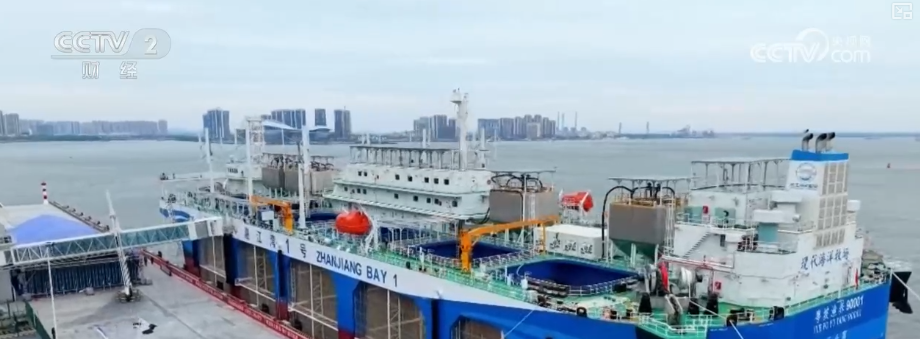
创新成果众多!智慧化养殖平台赋能 我国海水养殖业迈向深远海
Yang Shi Wang· 2025-11-20 06:04
Core Insights - The "Zhanjiang Bay No. 1" floating aquaculture platform is the world's first of its kind, marking a significant advancement in China's marine aquaculture industry [1][9] - This platform is designed for deep-sea aquaculture, featuring advanced technology and a large capacity for sustainable fish farming [4][7] Group 1: Platform Specifications - "Zhanjiang Bay No. 1" measures 154 meters in length and 44 meters in width, with a total aquaculture water volume of 80,000 cubic meters [4] - It is equipped with 12 independent aquaculture zones, allowing for the simultaneous farming of multiple fish species, with an annual production capacity ranging from 2,000 to 5,000 tons [4] - The platform has a design lifespan of 20 years [4] Group 2: Technological Innovations - The platform employs a large-scale intensive aquaculture model suitable for deep-sea environments, with a transition capability of up to 1,000 nautical miles [7] - It operates in water depths exceeding 20 meters and incorporates systems for green energy self-supply, intelligent feeding, and real-time monitoring, enabling comprehensive smart management throughout the entire lifecycle of the aquaculture process [7] Group 3: Industry Impact - The delivery of "Zhanjiang Bay No. 1" signifies a pivotal step for China's marine aquaculture sector, facilitating the transition to deep-sea farming and providing essential technological support for the development of modern marine ranching [9]