海洋热含量

Search documents
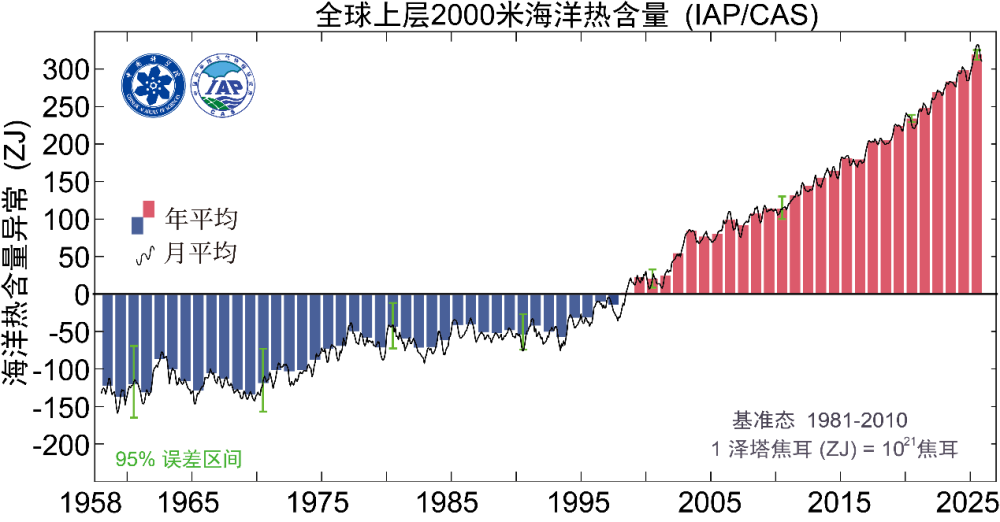
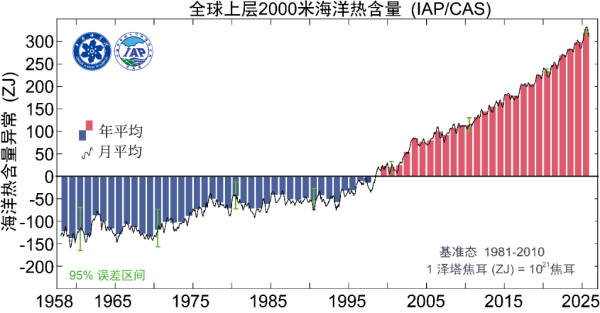
【新华社】全球海洋上层2000米热含量连续9年刷新有观测记录以来最高值
Xin Hua She· 2026-01-12 02:41
Core Insights - The international research team, consisting of 56 scientists from 31 research institutions, released a report indicating that the global ocean's upper 2000 meters of heat content reached a record high for the ninth consecutive year in 2025, highlighting a clear trend of global warming [1] - The report also noted that the global average sea surface temperature ranked as the third highest in history, with a slight decrease compared to 2024, primarily influenced by the La Niña event [1] Group 1: Ocean Heat Content - In 2025, the global ocean's upper 2000 meters heat content continued to set historical records, marking a trend of annual increases over the past nine years [1] - The warming rate of the ocean has significantly accelerated since the 1990s, with 57% of the global ocean area reaching local historical top five heat content levels in 2025, particularly in critical regions such as the Southern Ocean, North Indian Ocean, tropical and South Atlantic, and the Mediterranean Sea [1] Group 2: Impact on Ecosystems and Sea Level - The ongoing ocean warming has profound effects on marine ecosystems and human societies, including reduced dissolved oxygen levels, increased risks of marine heatwaves, and coral bleaching, which heighten pressures on fisheries and coastal sustainability [2] - The additional ocean heat content has contributed approximately 2.49 millimeters to global average sea level rise through thermal expansion, exacerbating risks for low-lying coastal areas and infrastructure [2] - These changes indicate that ocean warming is a significant factor in the increasing risks of extreme weather and disasters driven by ongoing energy imbalances in the Earth's system [2]

专家:2025年我国近海热含量显著偏高
中国能源报· 2026-01-11 04:11
Core Viewpoint - The article highlights the significant increase in ocean heat content in China's coastal waters by 2025, which is expected to lead to a higher frequency of marine disasters such as typhoons due to global warming and human activities [1][2]. Group 1: Ocean Heat Content and Its Implications - Ocean heat content is a critical indicator of global warming, with over 90% of the heat from human activities absorbed by the oceans. In 2025, China's coastal ocean heat content reached its second-highest level on record, with the South China Sea hitting a historical peak [2][4]. - The continuous rise in ocean heat content is attributed to multiple factors, primarily the imbalance caused by greenhouse gas emissions, which leads to regional climate factors exacerbating the warming [4]. Group 2: Increased Frequency of Extreme Weather Events - The elevated heat content in the South China Sea is linked to an increase in the frequency of marine disasters, including typhoons and storm surges [5]. - Higher sea temperatures intensify evaporation, providing more energy and moisture for typhoons, which can rapidly escalate from strong tropical storms to super typhoons. This heat concentration can alter atmospheric circulation patterns, affecting typhoon paths and increasing the likelihood of them impacting regions like Guangdong and Fujian [7]. Group 3: Ecological Impact of Rising Ocean Temperatures - The accumulation of ocean heat poses a destructive threat to ecosystems. Warmer waters alter fish migration patterns, leading to the decline of traditional fishing grounds and a shift in species distribution [10]. - Coral reefs face severe threats from ocean warming, which can cause coral bleaching and mortality. The loss of coral reefs, vital for biodiversity, further exacerbates the crisis in fishery resources and diminishes natural coastal defenses against storm surges [12]. Group 4: Long-term Climate Change and Mitigation - The ongoing rise in ocean heat content serves as a clear warning signal regarding climate imbalance, potentially triggering a series of chain reactions, including accelerated sea-level rise and increased extreme weather events [12][14]. - There is an urgent need to address long-term climate change trends and accelerate carbon reduction efforts to mitigate the escalating risks of disasters [14].

全球海洋上层2000米热含量连续9年刷新有观测记录以来最高值
Xin Lang Cai Jing· 2026-01-09 08:21
Core Insights - The international research team, consisting of 56 scientists from 31 research institutions, reported that the global ocean heat content in the upper 2000 meters reached a record high for the ninth consecutive year in 2025, indicating a clear trend of global warming [1] - The global average sea surface temperature ranked third highest in history, with a slight decrease compared to 2024, primarily influenced by the La Niña event [3] Group 1: Ocean Heat Content - The ocean has absorbed over 90% of the heat from human-induced global warming, making ocean heat content a stable and reliable indicator of global warming [1] - In 2025, 57% of the global ocean area reached local historical top five heat content levels, particularly in critical regions such as the Southern Ocean, North Indian Ocean, tropical and South Atlantic, and the Mediterranean Sea [1] Group 2: Impacts on Ecosystems and Sea Level - The ongoing warming of the ocean has profound effects on marine ecosystems and human society, including reduced dissolved oxygen levels, increased risk of marine heatwaves, and coral bleaching [3] - The added ocean heat content contributed approximately 2.49 millimeters to global average sea level rise, exacerbating risks for low-lying coastal areas and coastal infrastructure [3]