
海洋变暖

Search documents
气候资讯|1月全球前沿气候科学研究&极端天气气候事件
Xin Lang Cai Jing· 2026-01-24 01:05
Group 1: Global Temperature Trends - The World Meteorological Organization confirmed that 2025 continued the trend of record-high global temperatures, with 2026 likely to remain at elevated levels [1] - The Copernicus Climate Change Service reported that 2025 was the third hottest year on record, with a three-year average global temperature exceeding pre-industrial levels by over 1.5 degrees Celsius for the first time [11] - The long-term global warming level is estimated to be approximately 1.4 degrees Celsius higher than pre-industrial levels [11] Group 2: Extreme Weather Events - The northern hemisphere is experiencing extreme weather, including severe snowstorms in Russia's Kamchatka Peninsula and the northeastern United States, as well as cold waves in Europe and heavy snowfall in Japan [1][5][7] - Australia faced a heatwave in early January 2026, with temperatures exceeding 40 degrees Celsius, leading to wildfires and power supply issues [13][15] - Continuous heavy rainfall in southern Africa has resulted in hundreds of deaths and significant flooding in Mozambique, South Africa, and Zimbabwe [21][22] Group 3: Ocean and Climate Impact - The global ocean's upper 2000 meters of heat content reached a record high for the ninth consecutive year, indicating a clear trend of ocean warming [19] - The warming oceans are affecting marine ecosystems and human societies, contributing to lower dissolved oxygen levels and increasing risks of marine heatwaves and coral bleaching [19] - The melting of the Greenland ice sheet may lead to regional sea level declines around Greenland due to land rebound, presenting new challenges for local infrastructure and food security [24] Group 4: Coral Reefs and Microbial Dynamics - Research indicates that coral reefs influence the composition and activity of surrounding microbial communities, shaping energy and nutrient flows in marine ecosystems [15] Group 5: Climate Research Initiatives - A new project named "Ice Memory" aims to store alpine ice core samples in Antarctica for future research, preserving historical climate data and the impact of human activities on climate [26][28]


2025年中国近海热含量偏高
Zhong Guo Zi Ran Zi Yuan Bao· 2026-01-15 06:26
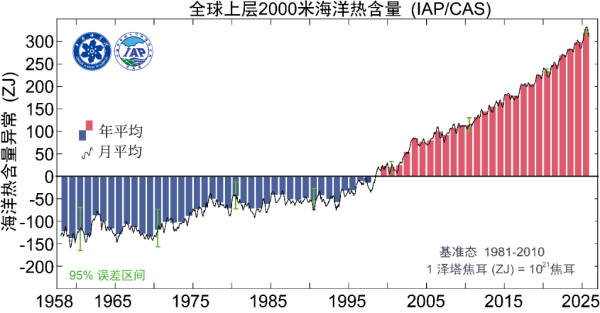
Core Insights - The ocean heat content in China's coastal waters is significantly higher than the historical average, with the South China Sea reaching a record high, indicating a concerning trend in marine conditions [1][2] - The increase in sea temperature and heat content has led to a rise in the frequency of marine disasters, including typhoons and storm surges, impacting coastal regions [2] Group 1: Ocean Heat Content - In 2025, the ocean heat content in China's coastal waters is notably elevated, with the South China Sea exceeding the historical peak by 2.02 ZJ (1 ZJ = 1×10^21 joules) [1] - The heat content in the Bohai Sea and northern Yellow Sea, southern Yellow Sea, and East China Sea is higher than the historical average by 11 EJ, 33 EJ, and 169 EJ respectively, indicating a warming trend across all regions [1] Group 2: Sea Surface Temperature - The average sea surface temperature in China's coastal waters for 2025 is projected to be 21.05 degrees Celsius, which is 0.76 degrees Celsius higher than the historical average, despite being 0.45 degrees Celsius lower than in 2024 [1] - The Bohai Sea and northern Yellow Sea show the most significant warming, with temperatures 0.9 degrees Celsius above the historical average, while the southern Yellow Sea, East China Sea, and South China Sea are higher by 0.81 degrees Celsius, 0.75 degrees Celsius, and 0.58 degrees Celsius respectively [1] Group 3: Impact of Ocean Warming - Ocean warming is linked to an increase in extreme weather events, such as intensified typhoons and marine heatwaves, posing risks to life and property [2] - In 2025, there were 19 storm surge events along China's coast, exceeding the ten-year average of 15, with 10 of these being classified as disastrous, also above the ten-year average of 7.1 [2] - The direct economic losses from marine disasters in 2025 were significantly higher than the ten-year average, highlighting the growing impact of ocean warming on coastal economies [2] Group 4: Monitoring and Forecasting - The National Marine Environmental Forecasting Center will continue to monitor the abnormal changes in nearshore sea temperature and heat content, providing timely updates and warnings to support disaster prevention and marine economic development [2]
2025年中国近海热含量偏高 导致海洋灾害频次增多
Zhong Guo Zi Ran Zi Yuan Bao· 2026-01-15 01:49
Core Insights - The ocean heat content in China's coastal waters is significantly higher than the historical average, with the South China Sea reaching a record high, indicating a concerning trend in marine conditions [1] - The increase in sea temperature and heat content has led to a rise in the frequency of marine disasters, including typhoons and storm surges, impacting coastal regions [2] Group 1: Ocean Heat Content - In 2025, the ocean heat content in China's coastal waters is 2.02 ZJ higher than the historical average, with the South China Sea breaking historical records [1] - The Bohai Sea and northern Yellow Sea, southern Yellow Sea, and East China Sea show heat content increases of 11 EJ, 33 EJ, and 169 EJ respectively, indicating a warming trend across all regions [1] Group 2: Sea Surface Temperature - The average sea surface temperature in China's coastal waters for 2025 is 21.05 degrees Celsius, which is 0.76 degrees Celsius higher than the historical average, despite being 0.45 degrees Celsius lower than in 2024 [1] - The Bohai Sea and northern Yellow Sea exhibit the most significant warming, with temperatures 0.9 degrees Celsius above the historical average, while the southern Yellow Sea, East China Sea, and South China Sea are 0.81, 0.75, and 0.58 degrees Celsius higher respectively [1] Group 3: Impact of Ocean Warming - Ocean warming has led to an increase in extreme weather events, with 19 storm surge events recorded in 2025, surpassing the ten-year average of 15 events [2] - The number of disastrous storm surge events reached 10 in 2025, exceeding the ten-year average of 7.1 events, indicating a growing risk to life and property [2] - Direct economic losses from marine disasters in 2025 are significantly higher than the ten-year average, highlighting the financial impact of these environmental changes [2] Group 4: Monitoring and Future Outlook - The National Marine Environmental Forecasting Center will continue to monitor the abnormal changes in nearshore sea temperature and heat content, providing timely updates and warnings to support disaster prevention and marine economic development [2]
【新华社】全球海洋上层2000米热含量连续9年刷新有观测记录以来最高值
Xin Hua She· 2026-01-12 02:41
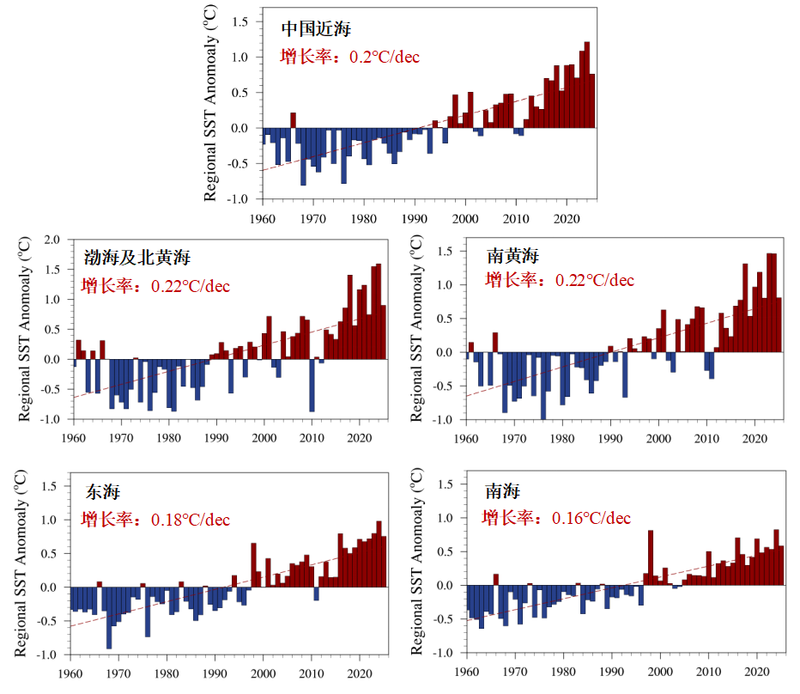
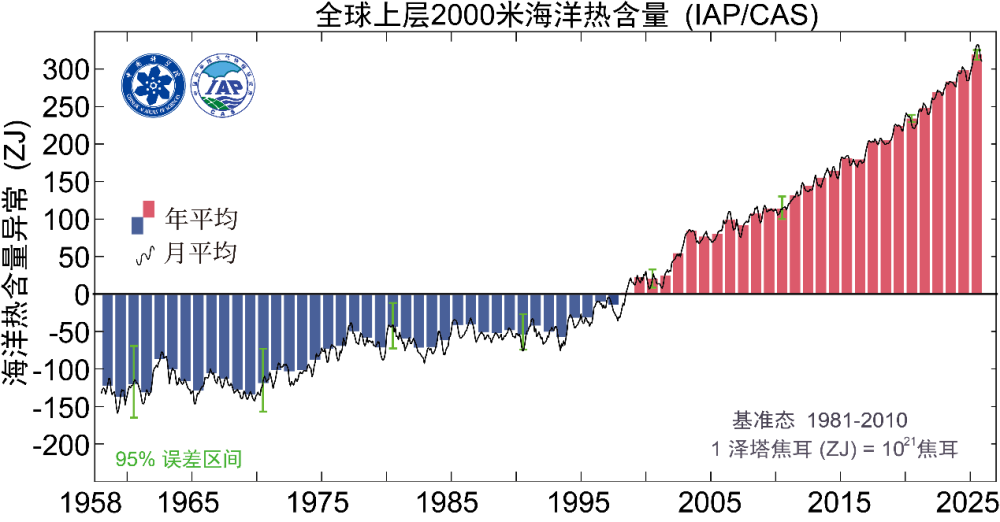
Core Insights - The international research team, consisting of 56 scientists from 31 research institutions, released a report indicating that the global ocean's upper 2000 meters of heat content reached a record high for the ninth consecutive year in 2025, highlighting a clear trend of global warming [1] - The report also noted that the global average sea surface temperature ranked as the third highest in history, with a slight decrease compared to 2024, primarily influenced by the La Niña event [1] Group 1: Ocean Heat Content - In 2025, the global ocean's upper 2000 meters heat content continued to set historical records, marking a trend of annual increases over the past nine years [1] - The warming rate of the ocean has significantly accelerated since the 1990s, with 57% of the global ocean area reaching local historical top five heat content levels in 2025, particularly in critical regions such as the Southern Ocean, North Indian Ocean, tropical and South Atlantic, and the Mediterranean Sea [1] Group 2: Impact on Ecosystems and Sea Level - The ongoing ocean warming has profound effects on marine ecosystems and human societies, including reduced dissolved oxygen levels, increased risks of marine heatwaves, and coral bleaching, which heighten pressures on fisheries and coastal sustainability [2] - The additional ocean heat content has contributed approximately 2.49 millimeters to global average sea level rise through thermal expansion, exacerbating risks for low-lying coastal areas and infrastructure [2] - These changes indicate that ocean warming is a significant factor in the increasing risks of extreme weather and disasters driven by ongoing energy imbalances in the Earth's system [2]
2025年中国近海热含量达历史第二高,南海热含量创历史新高
Xin Jing Bao· 2026-01-09 09:19
Core Insights - In 2025, China's coastal ocean heat content is significantly higher than the historical average, with the South China Sea reaching a record high, and overall coastal heat content ranking second historically [1][2] Group 1: Ocean Heat Content - The ocean heat content in China's coastal waters is 6.06 ZJ higher than the historical average (1981-2010), an increase of 3.0 ZJ from 2024, second only to the 2008 record of 6.16 ZJ [1] - The South China Sea shows a notable increase, with heat content 2.02 ZJ above the historical average, marking a rise of 0.53 ZJ from 2024, surpassing previous records [1] - Other regions such as Bohai Sea, Yellow Sea (North and South), and East China Sea also exhibit significant increases in heat content, with deviations of 11 EJ, 33 EJ, and 169 EJ respectively [1] Group 2: Sea Surface Temperature - The average sea surface temperature in China's coastal waters for 2025 is 21.05°C, which is 0.76°C higher than the historical average, despite being 0.45°C lower than in 2024 [2] - The Bohai Sea and northern Yellow Sea show the most significant warming, with temperatures 0.9°C above the historical average, while southern Yellow Sea, East China Sea, and South China Sea are 0.81°C, 0.75°C, and 0.58°C higher respectively [2] Group 3: Impact of Ocean Warming - Ocean warming is linked to an increase in extreme weather events, including more frequent typhoons and marine heatwaves, posing risks to life and property [3] - In 2025, there were 19 storm surge events along the coast, exceeding the ten-year average of 15.0, with 10 of these being classified as disaster-level [3] - The direct economic losses from marine disasters in 2025 were significantly higher than the ten-year average [3] Group 4: Monitoring and Forecasting - The National Oceanic Environment Forecast Center will continue to monitor the situation in 2026 and provide timely updates and warnings to support disaster prevention and marine economic development [4]
全球海洋上层2000米热含量连续9年刷新有观测记录以来最高值
Xin Lang Cai Jing· 2026-01-09 08:21
Core Insights - The international research team, consisting of 56 scientists from 31 research institutions, reported that the global ocean heat content in the upper 2000 meters reached a record high for the ninth consecutive year in 2025, indicating a clear trend of global warming [1] - The global average sea surface temperature ranked third highest in history, with a slight decrease compared to 2024, primarily influenced by the La Niña event [3] Group 1: Ocean Heat Content - The ocean has absorbed over 90% of the heat from human-induced global warming, making ocean heat content a stable and reliable indicator of global warming [1] - In 2025, 57% of the global ocean area reached local historical top five heat content levels, particularly in critical regions such as the Southern Ocean, North Indian Ocean, tropical and South Atlantic, and the Mediterranean Sea [1] Group 2: Impacts on Ecosystems and Sea Level - The ongoing warming of the ocean has profound effects on marine ecosystems and human society, including reduced dissolved oxygen levels, increased risk of marine heatwaves, and coral bleaching [3] - The added ocean heat content contributed approximately 2.49 millimeters to global average sea level rise, exacerbating risks for low-lying coastal areas and coastal infrastructure [3]
最新研究:海洋变暖到2300年或致59%南极冰架消失
Zhong Guo Xin Wen Wang· 2025-11-03 11:36
Core Insights - A recent study published in the journal "Nature" indicates that up to 59% of Antarctic ice shelves may face the risk of disappearance by 2300 under high emission scenarios, potentially leading to a global sea level rise of up to 10 meters [1][2] - The research highlights the urgency of maintaining low emissions to protect Antarctic ice shelves and coastal regions, as ice loss is significantly reduced in scenarios where warming is kept below 2°C [1][2] Group 1 - The study's model shows that under a low emission scenario, only 1/64 of ice shelves would be at risk of failing by 2300, with risks increasing after 2250 [2] - In contrast, under a high emission scenario approaching 12°C by 2300, 38 (59%) Antarctic ice shelves would be unable to survive, leading to a potential sea level rise of 10 meters [2] - The majority of ice shelf retreat is expected to accelerate starting in 2085, peaking around 2170, with ocean warming identified as the primary driving factor [2] Group 2 - The authors of the study consider their estimates of ice shelf disappearance under high emission scenarios to be conservative, as collapse may also be triggered by damage, cracks, and disintegration [2] - To mitigate future sea level rise and protect the structural integrity of Antarctic ice shelves and ice caps, prioritizing low emission pathways is essential [2] - Further research is needed to gather more data on ocean-ice interactions to enhance future modeling of Antarctic ice shelf stability [2]