深海资源勘探

Search documents
中国大洋90航次A段返航
Zhong Guo Zi Ran Zi Yuan Bao· 2026-01-20 03:55
Core Viewpoint - The successful completion of the scientific research mission of the China Ocean 90 voyage A segment highlights China's commitment to deep-sea resource exploration and marine environmental research, providing essential technical support and data assurance for international seabed management contracts [1] Group 1: Mission Overview - The voyage lasted 158 days and was guided by the China Ocean Affairs Administration, organized by the Second Institute of Oceanography, Ministry of Natural Resources [1] - The mission included systematic investigations in key areas such as deep-sea resource exploration, marine environmental research, and advanced equipment applications [1] Group 2: Research and Data Collection - The research team conducted comprehensive surveys of contract area resources and environments, obtaining a significant amount of baseline data and samples [1] - High-resolution topographic data updates and coverage of mining site areas were achieved during the mission [1] - Detailed near-bottom acoustic and optical surveys were implemented in multiple environmental reference areas, providing foundational data for regional resource understanding, benthic biodiversity research, and environmental impact monitoring [1] Group 3: International Collaboration - The mission included the first joint marine scientific investigation between China and the Cook Islands, conducting various comprehensive survey operations within the Cook Islands' exclusive economic zone [1] - Initial understanding of the environmental and resource distribution characteristics in the survey area was established [1] - A joint voyage open day event was held to enhance communication and cooperation in deep-sea scientific research and seabed mineral resources between the two parties [1]
“海洋地质六号”发现了哪些深海宝藏?画面公布
Huan Qiu Wang· 2025-12-10 02:38
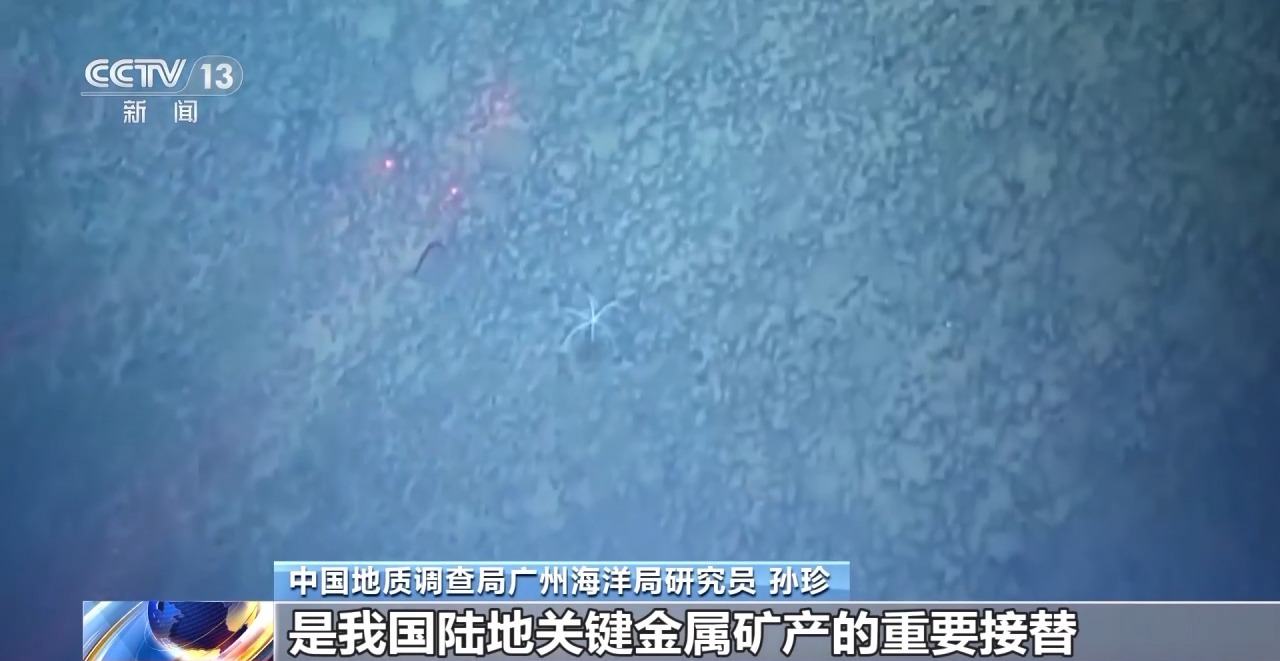
Core Insights - The "Marine Geological No. 6" research vessel has successfully completed its 15th deep-sea geological survey, with significant scientific results released, including unique underwater footage and important data on polymetallic nodules found at depths of 4,000 to 6,500 meters [1][2] Group 1: Deep-Sea Resources - Polymetallic nodules are identified as a widely distributed and resource-rich deep-sea mineral resource, crucial for ensuring resource security in China [3] - Each nodule serves as a historical record of over 30 million years of deep-sea environmental changes, providing insights into the marine environment and mineralization processes [3] Group 2: Deep-Sea Ecosystems - Deep-water corals, which thrive in lightless cold-water environments, are essential for providing habitats for various marine life and serve as indicators for studying ancient marine climates and ecological conditions [4] - Deep-sea sponges contribute to unique deep-sea ecosystems and hold potential for research in marine compounds and biomedicine [4][6] Group 3: Electromagnetic Profiling - The survey included the first electromagnetic profiling of the Pacific deep trench, yielding high-quality data that can assist in future ocean drilling site selection [8][12] - The electromagnetic profile spans over 100 kilometers and reveals the electrical characteristics of underground rocks, aiding in understanding the geological structure and material composition [10][12] Group 4: Future Research and Development - The data obtained will support further geological investigations and the development of domestically produced deep-sea exploration equipment [12] - Plans are underway for a 10-year action plan for the "Dream" ocean drilling vessel, focusing on exploratory drilling tasks in the South China Sea to promote significant original research outcomes [13]