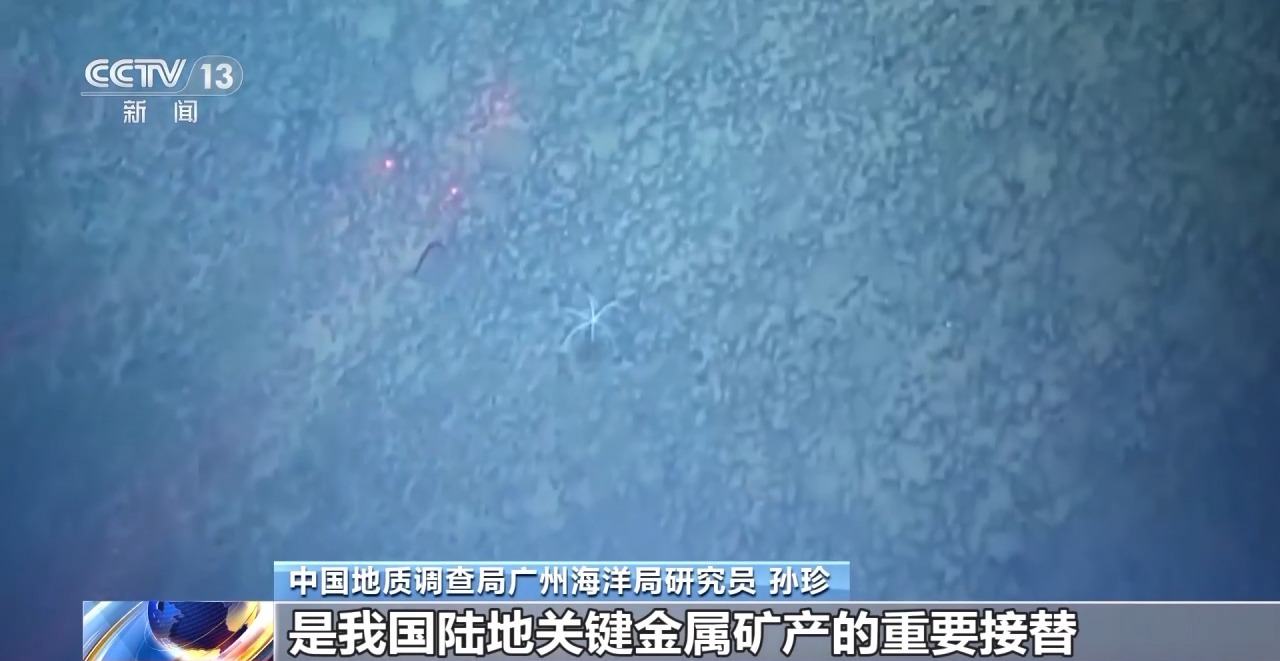
海洋地质六号科考船

Search documents
在海底捡“特产”!看看“海洋地质六号”带回了啥?
Xin Lang Cai Jing· 2026-01-31 05:00
Core Insights - The "Marine Geological No. 6" research vessel has successfully completed a 95-day expedition in the Pacific Ocean, covering 12,673 nautical miles, and has returned with significant scientific findings, including polymetallic nodules that have been resting on the seabed for 30 million years [8][9][10] - The expedition utilized advanced technology, including a self-developed deep-sea remotely operated vehicle and an autonomous underwater robot, to conduct high-precision sampling and video recording at depths of up to 4,900 meters [9][10] - The research has implications for understanding deep-sea environmental changes over millions of years and offers insights into global climate change [10][12] Research Achievements - The expedition collected polymetallic nodules, which are rich in metals such as cobalt, nickel, copper, and manganese, and are considered important for enhancing mineral resource security [10][11] - A significant achievement was the electromagnetic profile measurement at a depth of 7,663 meters, setting a record for the deepest measurement in China, which provides insights into the Earth's internal structure and plate tectonics [11][12] - The research team successfully identified a "cold-hot confrontation" zone approximately 50 kilometers below the seabed, revealing critical information about the geological layers beneath the ocean floor [11][12] Biological Discoveries - The expedition also focused on deep-sea biological resources, discovering unique microorganisms and deep-sea corals that have potential applications in biomedicine and food processing [12][13] - The deep-sea corals serve as indicators of ancient marine climates, while deep-sea sponges may contain compounds that could lead to breakthroughs in disease treatment [12][13] - The data collected will support future ocean drilling projects aimed at uncovering answers related to the origins of life and climate evolution [13]

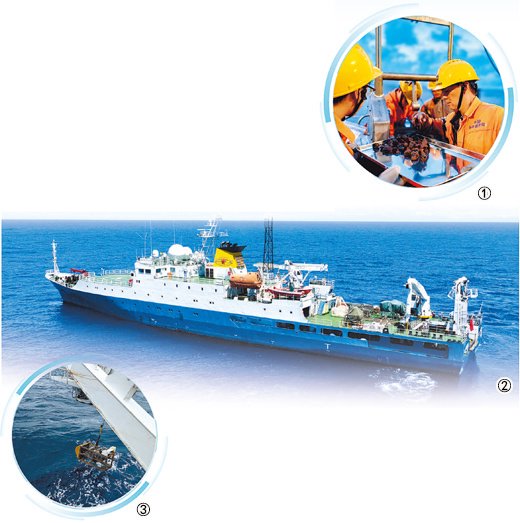
上天→破冰→深潜,逐梦星辰大海!我国科技自立自强注入“硬核”动力
Yang Shi Wang· 2025-12-11 07:11
Group 1 - The core achievement of the mission was the successful launch of 9 satellites, including the UAE 813 satellite and the Jixing Gaofen 07B01 satellite, using the Lijian-1 rocket [3] - The Lijian-1 rocket has entered a phase of mass production and high-density launches, facilitated by the establishment of dedicated launch facilities [3] - The rocket's vertical launch device can execute a new launch within 10 days after a previous launch, indicating improved operational efficiency [5][8] Group 2 - The "Xuelong" and "Xuelong 2" vessels are currently engaged in unloading operations near Zhongshan Station, facing challenges due to thick sea ice [9][11] - The "Xuelong" vessel successfully navigated through difficult ice conditions, while the "Xuelong 2" vessel also faced significant obstacles but managed to reach the unloading point [13] - The "Haiyang Dizhi 6" research vessel has published new scientific findings, including deep-sea environmental data and the discovery of a polymetallic nodule resource-rich area, contributing to research on deep-sea geology and ecosystems [19]
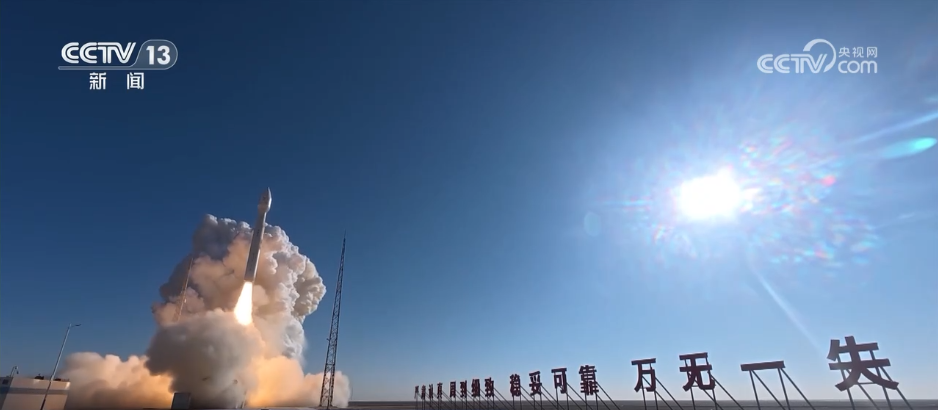
“海洋地质六号”最新成果发布
中国能源报· 2025-12-10 09:57
Core Viewpoint - The "Ocean Geological No. 6" research vessel has successfully completed its 15th deep-sea geological survey mission, with multiple scientific achievements officially released [1]. Group 1: Mission Overview - The 15th mission's second phase began on August 29 this year, lasting 95 days and covering a total distance of 12,673 nautical miles [3]. - The mission collected valuable data and samples, including deep-sea marine environmental data, seawater samples, seabed sediments, polymetallic nodules, and deep-sea biological samples [3]. Group 2: Technological Advancements - The mission marked the first use of domestically developed 6,000-meter deep-sea remotely operated vehicles and autonomous underwater robots in the Pacific deep-water area, achieving excellent application results [5]. - A significant achievement was the first electromagnetic profile measurement in the Pacific abyss, which provides high-quality electromagnetic observation data for future ocean drilling site selection [8]. Group 3: Future Plans - The "Ocean Geological No. 6" research vessel is scheduled to return to the Pacific in the first half of 2026 for more in-depth basic geological and environmental geological scientific investigations [7].
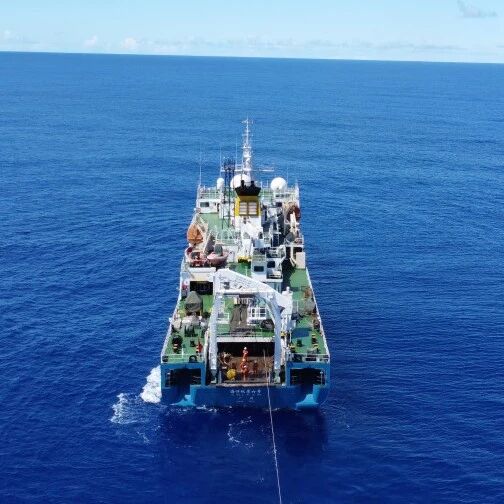
“海洋地质六号”科考船第15航次任务成果发布
Yang Shi Wang· 2025-12-10 07:54
Core Insights - The "Marine Geological No. 6" research vessel has successfully completed the second phase of its 15th voyage, with multiple scientific achievements announced on December 10 [1] Group 1: Mission Overview - The second phase of the 15th voyage began on August 29 and lasted for 95 days, covering a total distance of 12,673 nautical miles [3] - The mission collected valuable data and samples, including deep-sea marine environment data, seawater samples, seabed sediments, polymetallic nodules, and deep-sea biological samples [3] Group 2: Technological Advancements - The mission marked the first use of domestically developed 6,000-meter deep-sea remotely operated vehicles and autonomous underwater robots in the Pacific deep-water area, achieving excellent application results [5] - Significant progress was made in the application of key technologies and equipment for deep-sea exploration [3] Group 3: Resource Discovery - A new resource-rich area of polymetallic nodules was discovered during the seabed mineral geological survey, expanding the resource space for seabed metal minerals [5] - Polymetallic nodules are primarily found at depths of 4,000 to 6,500 meters in deep-sea basins, with diameters ranging from 3 to 10 centimeters, composed mainly of iron-manganese oxides and hydroxides, and rich in key metal elements such as cobalt, nickel, copper, and manganese [7] Group 4: Future Plans - The "Marine Geological No. 6" research vessel is scheduled to return to the Pacific in the first half of 2026 for more in-depth basic geological and environmental geological scientific investigations [7]
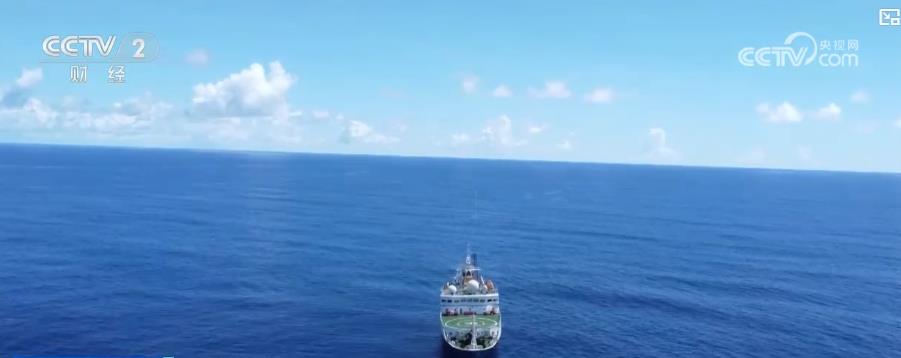
“海洋地质六号”发现了哪些深海宝藏?画面公布
Huan Qiu Wang· 2025-12-10 02:38
Core Insights - The "Marine Geological No. 6" research vessel has successfully completed its 15th deep-sea geological survey, with significant scientific results released, including unique underwater footage and important data on polymetallic nodules found at depths of 4,000 to 6,500 meters [1][2] Group 1: Deep-Sea Resources - Polymetallic nodules are identified as a widely distributed and resource-rich deep-sea mineral resource, crucial for ensuring resource security in China [3] - Each nodule serves as a historical record of over 30 million years of deep-sea environmental changes, providing insights into the marine environment and mineralization processes [3] Group 2: Deep-Sea Ecosystems - Deep-water corals, which thrive in lightless cold-water environments, are essential for providing habitats for various marine life and serve as indicators for studying ancient marine climates and ecological conditions [4] - Deep-sea sponges contribute to unique deep-sea ecosystems and hold potential for research in marine compounds and biomedicine [4][6] Group 3: Electromagnetic Profiling - The survey included the first electromagnetic profiling of the Pacific deep trench, yielding high-quality data that can assist in future ocean drilling site selection [8][12] - The electromagnetic profile spans over 100 kilometers and reveals the electrical characteristics of underground rocks, aiding in understanding the geological structure and material composition [10][12] Group 4: Future Research and Development - The data obtained will support further geological investigations and the development of domestically produced deep-sea exploration equipment [12] - Plans are underway for a 10-year action plan for the "Dream" ocean drilling vessel, focusing on exploratory drilling tasks in the South China Sea to promote significant original research outcomes [13]