深空探索生命保障技术

Search documents
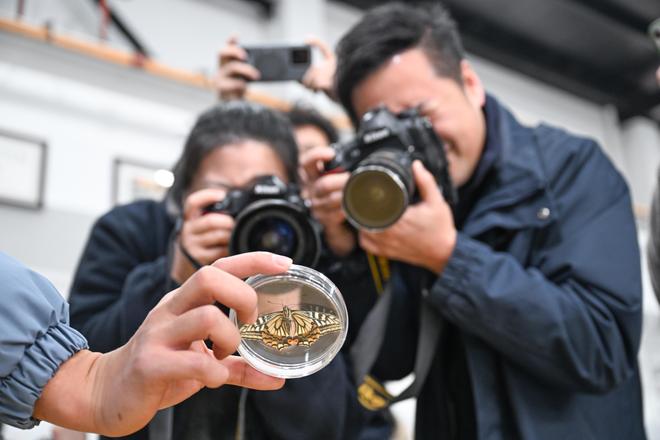
重庆大学太空生命试验取得新进展:“太空蝴蝶”破蛹飞翔
Xin Lang Cai Jing· 2026-02-02 12:49
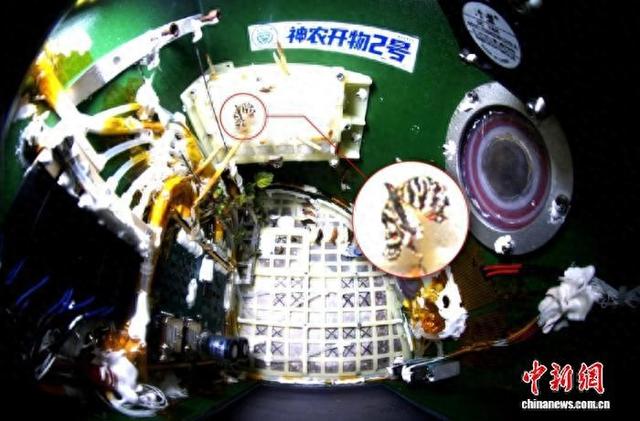
Core Insights - The "Shennong Kaiwu No. 2" small space ecosystem experiment payload successfully launched and initiated its in-orbit testing, showcasing a butterfly emerging from its chrysalis in a microgravity environment [1][3] - This experiment represents a significant advancement in understanding the dynamic relationships between animals, plants, and microorganisms in a closed ecological system, contributing valuable data for future life support systems in deep space exploration [3] Group 1: Experiment Details - The payload, weighing only 8.3 kg and utilizing magnesium alloy materials, includes butterfly pupae, plant seeds, mature plants, and microorganisms, forming a self-sustaining ecosystem [1] - The successful emergence of the butterfly demonstrates the ability of complex organisms to complete critical life cycle stages in a closed, unassisted space environment [3] Group 2: Future Implications - The research team plans to monitor the behavior, life cycle, and the balance of gases, water, and nutrients within the micro-ecosystem, providing theoretical and technical parameters for future life support technologies [3] - This experiment marks a shift from previous space life science studies that primarily focused on plant cultivation and simpler organisms, thus advancing the research on the interrelationships among animals, plants, and microorganisms in space [3]

“太空蝴蝶”破蛹展翅验证地球生命韧性
Xin Hua She· 2026-02-02 12:39
Core Insights - A butterfly has successfully emerged from a cocoon in a small space ecological system developed by Chongqing University, marking a significant milestone in space biology research [1][3] Group 1: Experiment Overview - The "Shennong Kaiwu 2" small space ecological system was launched aboard the Kuaizhou-11 Yao-8 rocket on December 13, 2025, initiating its in-orbit testing mission [1] - Recent data from the Chongqing University research team indicates that the technical parameters such as pressure, temperature, and humidity within the closed cabin are stable and normal [1] Group 2: Technical Challenges and Innovations - The research team overcame technical challenges related to the corrosion of magnesium alloys in high humidity environments, creating a lightweight yet sturdy payload with a total mass of only 8.3 kilograms [3] - The design of the payload follows Earth's ecological cycle logic, establishing a complete prototype of a micro-ecological cycle [3] Group 3: Ecological System Functionality - The closed-loop system operates autonomously, where plants produce oxygen and food for the butterfly, while microorganisms efficiently process biological waste to maintain stable gas composition within the cabin [3] - The successful emergence of the butterfly in a microgravity environment demonstrates the resilience of Earth life and provides valuable insights for future deep space exploration life support technologies [3] Group 4: Future Research Directions - Future research will focus on in-orbit verification of structural endurance, component adaptability to space environments, and the long-term integrity of the closed cabin [3]