
迪迩五号

Search documents
“太空蝴蝶”破蛹展翅,太空生命生存试验翻新篇
Guan Cha Zhe Wang· 2026-02-04 12:35
Core Viewpoint - The successful launch and operation of the "Shennong Kaiwu 2" small space ecological system experiment by Chongqing University marks a significant advancement in understanding life sustainability in extreme space environments, particularly through the successful metamorphosis of a butterfly in microgravity conditions [3][8][9]. Group 1: Experiment Overview - The "Shennong Kaiwu 2" payload was launched on December 13, 2025, aboard the "Dier 5" space experiment device, successfully entering low Earth orbit and commencing its in-orbit testing [3]. - The experiment demonstrated stable technical indicators such as pressure and temperature within the sealed cabin, and notably, a butterfly successfully hatched and flew in microgravity [3][8]. Group 2: Technological Innovations - The experiment utilized a small cargo spacecraft developed by Ziwei Technology, capable of carrying over 300 kilograms and featuring a cargo space of 1.8 cubic meters, which allows for the management of over 100 payloads in orbit [5]. - The design of the "Shennong Kaiwu 2" payload adopted a low-cost commercial development model, with over 90% of components being industrial-grade, significantly reducing development and launch costs [5]. Group 3: Ecological System Design - The "Shennong Kaiwu 2" serves as a controlled ecological life support system (CELSS) with a total mass of only 8.3 kg and an internal usable space of 14.2 liters, constructed from magnesium alloy to withstand extreme conditions [7]. - The system incorporates a three-chain material circulation model involving plants (producers), butterflies (consumers), and microorganisms (decomposers), effectively maintaining gas composition stability within the sealed cabin [7]. Group 4: Research Implications - The successful hatching of the butterfly represents a significant milestone in the study of complex life support systems, advancing the understanding of the dynamic relationships between animals, plants, and microorganisms in space [8][9]. - Future research will focus on verifying the long-term operational capabilities of the ecological system, including structural durability, component adaptability to space conditions, and the sealed cabin's integrity [9].

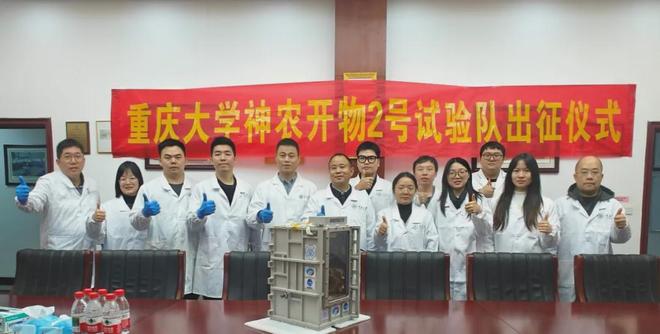
这只太空蝴蝶来自重庆
Xin Lang Cai Jing· 2026-02-03 17:46
Core Insights - A butterfly that completed its life cycle in space, referred to as the "space butterfly," has garnered attention, marking a significant advancement in space ecological research by the Chongqing University team [2][3] - The experiment aims to establish a closed-loop ecological system involving plants, butterflies, and microorganisms, simulating a self-sustaining material cycle [3] Group 1: Research Objectives and Achievements - The primary goal of the "Shennong Kaiwu No. 2" experiment is to observe not just the butterfly's metamorphosis but to create a functional ecosystem with plants and microorganisms [3] - The selected plants include oil, fiber, medicinal, and fruit crops, addressing diverse needs from basic supply to food and medicine [3] - The successful development of the butterfly in space signifies a breakthrough in the field of life support systems for future lunar or Martian bases [3] Group 2: Technical Innovations - The "Shennong Kaiwu No. 2" payload has undergone significant upgrades, with a total weight of 8.3 kg and a chamber volume of 14.2 liters, compared to the previous payload for the Chang'e 4 mission, which weighed under 3 kg and had a volume of about 1 liter [4] - Innovations in materials, such as the use of magnesium alloy, have enabled a lightweight design while maintaining structural integrity and sealing [4] Group 3: Energy and Environmental Management - The team optimized the design to utilize natural sunlight through light conduits, enhancing plant growth while minimizing energy consumption [5] - An advanced environmental monitoring system collects critical data on temperature, humidity, oxygen and carbon dioxide levels, pressure, and light intensity, providing essential information for future life support systems [5] Group 4: Cost-Effective Design Philosophy - The design philosophy emphasizes simplicity and cost control, with over 90% of components being industrial-grade, avoiding complex active temperature control systems [6] - The use of passive protection methods and optimized sealing structures has reduced the need for additional gas tanks and pressure control systems, significantly lowering costs [6] Group 5: Collaboration with Commercial Space Enterprises - The success of the "space butterfly" experiment exemplifies the integration of academic research with commercial space enterprises, enhancing resource efficiency and reducing costs [7] - The collaboration allows for a modular and standardized approach, compressing development cycles and costs while providing valuable experience for commercial space companies [7] Group 6: Future Implications for Space Research - The new paradigm of "research-driven demand supported by commercial power" is expected to lower the barriers and costs for space experiments, promoting a collaborative approach between state and private sectors [8] - This shift aims to accelerate the transition from a state-led model of space research to one that includes contributions from universities, research institutions, and innovative enterprises, fostering a vibrant ecosystem for low-cost, high-efficiency space experiments [8]
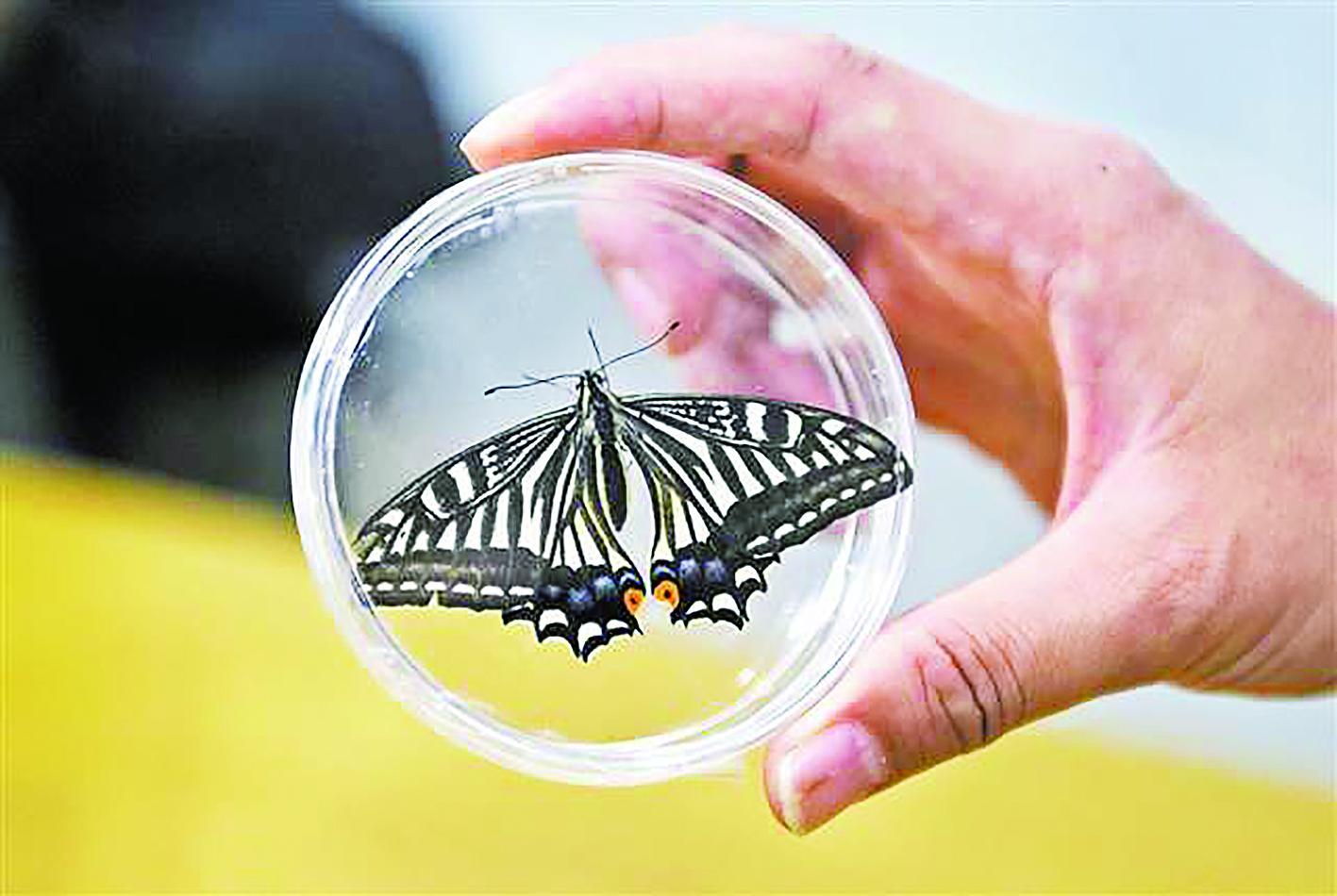
重庆大学太空生命试验取得新进展:“太空蝴蝶”破蛹飞翔
Xin Lang Cai Jing· 2026-02-02 12:49
Core Insights - The "Shennong Kaiwu No. 2" small space ecosystem experiment payload successfully launched and initiated its in-orbit testing, showcasing a butterfly emerging from its chrysalis in a microgravity environment [1][3] - This experiment represents a significant advancement in understanding the dynamic relationships between animals, plants, and microorganisms in a closed ecological system, contributing valuable data for future life support systems in deep space exploration [3] Group 1: Experiment Details - The payload, weighing only 8.3 kg and utilizing magnesium alloy materials, includes butterfly pupae, plant seeds, mature plants, and microorganisms, forming a self-sustaining ecosystem [1] - The successful emergence of the butterfly demonstrates the ability of complex organisms to complete critical life cycle stages in a closed, unassisted space environment [3] Group 2: Future Implications - The research team plans to monitor the behavior, life cycle, and the balance of gases, water, and nutrients within the micro-ecosystem, providing theoretical and technical parameters for future life support technologies [3] - This experiment marks a shift from previous space life science studies that primarily focused on plant cultivation and simpler organisms, thus advancing the research on the interrelationships among animals, plants, and microorganisms in space [3]
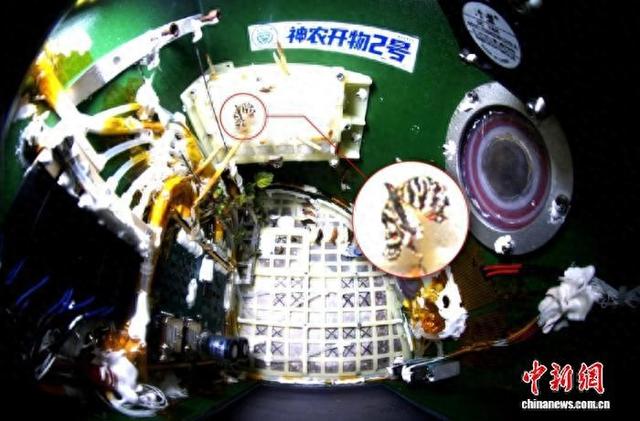
我国成功开展航天器柔性传感关键软硬件技术联合在轨试验
Ke Ji Ri Bao· 2025-12-13 13:14
Core Insights - The successful launch of the "Zhong-Ha Agile Remote Sensing Payload" and "Space Unmanned Intelligent Experiment Cabin" marks a significant breakthrough in the integration of flexible electronics technology with aerospace engineering [1][2] - The mission aims to enhance ecological monitoring capabilities in Central and West Asia, supporting the Belt and Road Initiative with more precise space-based monitoring services [2] Group 1: Technological Innovations - The "Zhong-Ha Agile Remote Sensing Payload" utilizes flexible electronics technology to achieve precise attitude perception and error compensation through lightweight conformal integration processes [1] - The "Space Unmanned Intelligent Experiment Cabin" features low-power lightweight AI information processing technology, enhancing key information transmission capabilities by over 10 times on low-computing platforms [2] Group 2: Collaborative Efforts - The project is a result of collaboration between the Flexible Electronics National Key Laboratory and the Aerospace Flight Dynamics Technology National Key Laboratory, establishing the "Flexible Electronics Intelligent Aerospace Joint Innovation Center" [2] - The successful implementation of the mission demonstrates China's capability to meet major national aerospace demands using flexible electronics technology [2]
商业航天迈入万亿元级“预定轨道”
Xin Hua Wang· 2025-08-12 05:38
Core Viewpoint - The successful launch of the Long March 8 rocket marks a significant milestone for China's commercial space industry, indicating the establishment of a complete industrial chain from satellite manufacturing to commercial launch services [1][2]. Industry Development - The definition of commercial space in the 2025 government work report has shifted from a "new growth engine" to an "emerging industry," reflecting the strategic importance and rapid industrialization of the sector [2][3]. - The market size of China's commercial space industry is expected to exceed 2.5 trillion yuan by 2025, with ongoing international cooperation [4]. Technological Advancements - Significant breakthroughs in commercial space technology have been achieved, including the successful launch of the Hainan commercial space launch site and advancements in reusable rocket technology [5][6]. - The focus on reusable rockets and high-thrust engines is expected to reshape the competitive landscape of the industry, with a surge in product launches anticipated in the coming years [6]. Investment and Financing - Recent financing activities in the commercial space sector, including several rounds of funding for various companies, highlight strong local government support and the strategic value of the industry [8][9]. - The capital market is expected to see a queue of commercial space companies preparing for IPOs in the next 2 to 3 years, driven by clear market demand and technological advancements [9]. Future Outlook - The emphasis on "safe and healthy development" in the government work report suggests a shift towards high-quality growth in the commercial space sector, with a focus on sustainable expansion and technological innovation [10]. - The market share is likely to concentrate among leading companies as the industry matures, with significant advancements in satellite networking and reusable rocket technology [10].