
清洁交通

Search documents
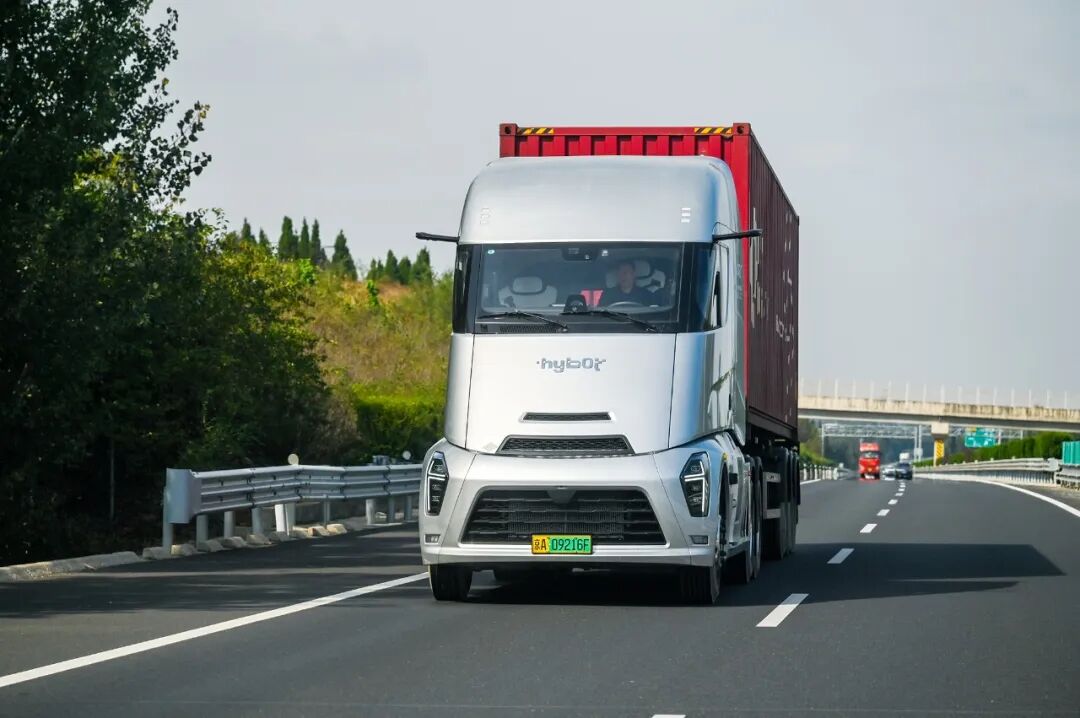
批量!谁家氢能重卡车队发车北京?
Xin Lang Cai Jing· 2026-01-04 01:19
Core Insights - The article highlights the successful launch of a fleet of hydrogen-powered heavy trucks by Haipote, marking a significant advancement in the commercial vehicle sector focused on hydrogen energy [2][6]. Group 1: Operational Milestones - Haipote has been selected again for the "Beijing Fuel Cell Vehicle Demonstration Application Project," taking on the responsibility of operating 28 fuel cell heavy trucks across multiple provinces [2][6]. - The fleet consists of 8 H49 and 20 F49 hydrogen heavy trucks, which are noted for their high efficiency and long range [2][6]. Group 2: Technological Advancements - The H49 model is recognized as the world's first hydrogen fuel cell logistics truck developed from the ground up, with a hydrogen consumption rate of only 7.1 kg per 100 km and a weight of just 10 tons, achieving a range of over 600 km [2][6]. - Continuous technological innovation has allowed the H49 to achieve fuel costs lower than diesel trucks under similar operating conditions, providing a significant Total Vehicle Operating (TVO) advantage [2][6]. Group 3: Business Model and Sustainability - Haipote's unique "vehicle + energy + N" integrated business model effectively addresses the challenges faced by pure electric heavy trucks in northern regions during winter, offering a reliable green solution for long-distance transportation [2][6]. - The company has engaged in deep scenario collaborations with leading firms like JD Logistics and IKEA, optimizing its business model through practical operations, enhancing adaptability and sustainability [2][6]. Group 4: Commitment to Clean Transportation - The hydrogen truck fleet symbolizes a commitment to clean transportation, with Haipote steadily transforming its strategic vision into reality, promoting a zero-carbon, efficient, and sustainable future for the logistics industry [4][8].

哥伦比亚加速电动汽车充电基础设施建设
Shang Wu Bu Wang Zhan· 2025-11-27 16:20
Core Viewpoint - The Colombian Ministry of Mines and Energy has announced new policies aimed at accelerating the development of the national electric vehicle charging network, making Colombia an attractive destination for charging infrastructure investment [1] Group 1: Policy Changes - New regulations allow charging operators to enter the unregulated electricity market without power and monthly consumption limits [1] - Electricity used for electric vehicle charging will be exempt from a 20% contribution fee, reducing operational costs [1] Group 2: Technical Standards - All public charging stations for electric and plug-in hybrid vehicles must be equipped with at least one Type 2 interface and one CCS Combo 2 interface [1] - Existing public charging stations will have an 18-month transition period to complete upgrades [1] Group 3: Tax Incentives - Charging infrastructure projects can still benefit from tax incentives outlined in Laws 1715 and 2099, including exemptions from tariffs and VAT, accelerated depreciation, and income tax benefits [1] Group 4: Industry Impact - The Minister of Mines and Energy, Palma, stated that these incentive measures will help eliminate industry barriers and promote the development of clean transportation [1]