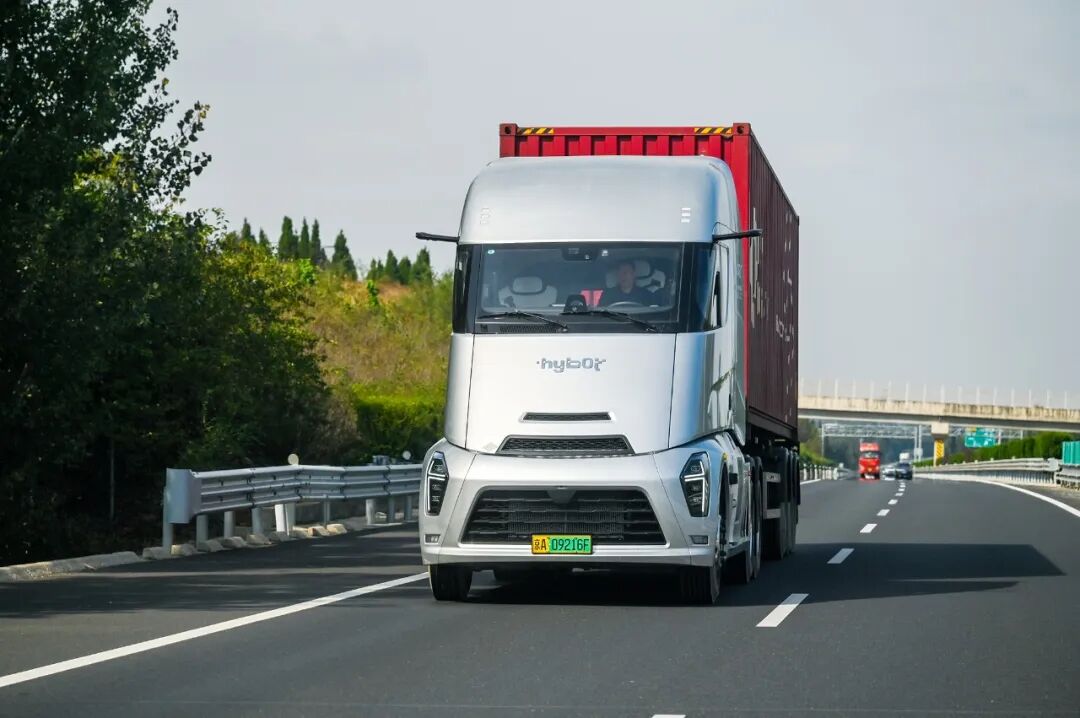
海珀特H49氢能重卡

Search documents
批量!谁家氢能重卡车队发车北京?
Xin Lang Cai Jing· 2026-01-04 01:19
Core Insights - The article highlights the successful launch of a fleet of hydrogen-powered heavy trucks by Haipote, marking a significant advancement in the commercial vehicle sector focused on hydrogen energy [2][6]. Group 1: Operational Milestones - Haipote has been selected again for the "Beijing Fuel Cell Vehicle Demonstration Application Project," taking on the responsibility of operating 28 fuel cell heavy trucks across multiple provinces [2][6]. - The fleet consists of 8 H49 and 20 F49 hydrogen heavy trucks, which are noted for their high efficiency and long range [2][6]. Group 2: Technological Advancements - The H49 model is recognized as the world's first hydrogen fuel cell logistics truck developed from the ground up, with a hydrogen consumption rate of only 7.1 kg per 100 km and a weight of just 10 tons, achieving a range of over 600 km [2][6]. - Continuous technological innovation has allowed the H49 to achieve fuel costs lower than diesel trucks under similar operating conditions, providing a significant Total Vehicle Operating (TVO) advantage [2][6]. Group 3: Business Model and Sustainability - Haipote's unique "vehicle + energy + N" integrated business model effectively addresses the challenges faced by pure electric heavy trucks in northern regions during winter, offering a reliable green solution for long-distance transportation [2][6]. - The company has engaged in deep scenario collaborations with leading firms like JD Logistics and IKEA, optimizing its business model through practical operations, enhancing adaptability and sustainability [2][6]. Group 4: Commitment to Clean Transportation - The hydrogen truck fleet symbolizes a commitment to clean transportation, with Haipote steadily transforming its strategic vision into reality, promoting a zero-carbon, efficient, and sustainable future for the logistics industry [4][8].

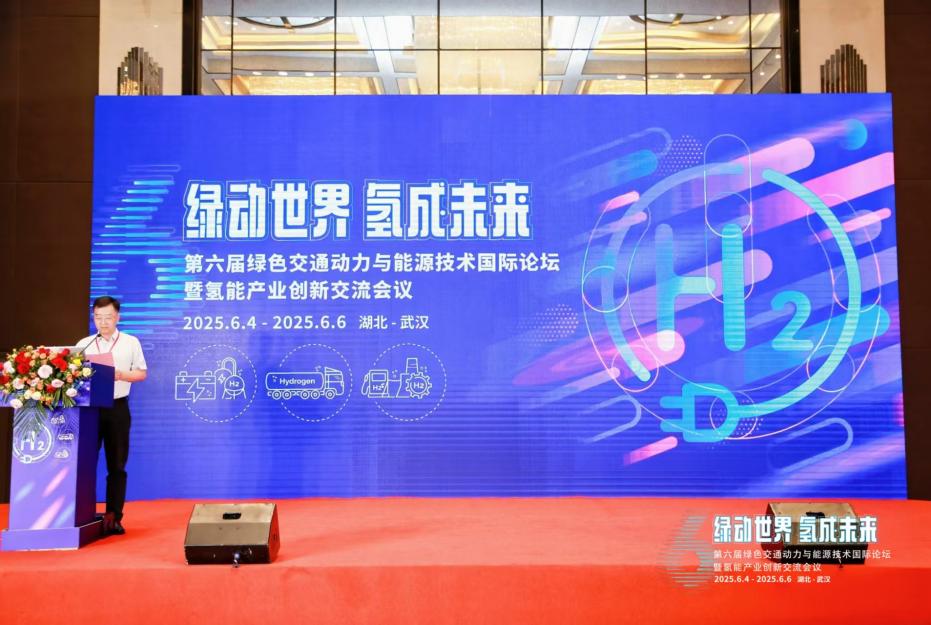
第六届绿色交通动力与能源技术国际论坛成功举办
Zhong Guo Qi Che Bao Wang· 2025-06-08 02:28
Core Viewpoint - The hydrogen energy industry is experiencing significant growth, with a focus on innovative technologies and collaborative efforts among industry leaders to drive development and application in China [1][3]. Industry Overview - The sixth International Forum on Green Transportation Power and Energy Technology, focusing on hydrogen energy, was held in Wuhan, attracting nearly 150 industry professionals from around 50 companies [3]. - Hydrogen energy is identified as a core pathway in the global energy structure transformation, essential for achieving carbon neutrality [4][5]. Technological Developments - Key discussions included advancements in hydrogen internal combustion engines, emphasizing their potential to meet stringent emission regulations while maintaining economic viability [5][6]. - The introduction of the first domestically developed hydrogen internal combustion engine generator set, achieving over 42% efficiency and utilizing hydrogen with a purity of only 90%, marks a significant milestone in the industry [10]. Market Trends - The hydrogen internal combustion engine is positioned as a cost-effective alternative to fuel cells, facilitating the broader adoption of hydrogen energy [5][11]. - The H49 hydrogen-powered heavy-duty truck, developed by Haipote, demonstrates low hydrogen consumption and long-range capabilities, indicating a strong market potential for hydrogen vehicles [11]. Collaborative Efforts - Strategic partnerships, such as the collaboration between Tsinghua University and Ai Hydrogen Technology, aim to advance modular magnesium-based hydrogen supply systems, highlighting the importance of industry cooperation [12]. - The forum featured roundtable discussions among experts, focusing on technological breakthroughs and the industrialization path for the hydrogen energy sector [13]. Innovation Showcase - A technology exhibition at the forum showcased cutting-edge solutions from leading companies and research institutions, emphasizing the need for a complete hydrogen energy ecosystem from production to utilization [14]. - The event underscored the importance of integrating various technologies and fostering collaboration across the hydrogen energy value chain to enhance competitiveness in the global market [14].