渔业绿色转型

Search documents
农业农村部:长江十年禁渔推动渔业绿色转型
Zhong Guo Xin Wen Wang· 2026-01-30 07:33
Core Viewpoint - The implementation of a ten-year fishing ban in the Yangtze River has positively influenced the green transformation of the fishing industry, ensuring sustainable aquatic resource management and enhancing the ecological system's service functions [1]. Group 1: Industry Development - The fishing ban has not adversely affected the effective supply of aquatic products in China, as the country has maintained its position as the world's largest producer of aquatic products for 36 consecutive years, with a total output expected to reach 73.576 million tons in 2024 [1]. - Aquaculture production has stabilized at over 80%, while freshwater catch has decreased to only 116,300 tons, accounting for less than 1.6% of total production [1]. - Research institutions have made breakthroughs in artificial breeding technologies for rare fish species, leading to improved quality and efficiency in the aquatic seedling industry [2]. Group 2: Market Operations - The production system for aquatic products in China is comprehensive, with coordinated development of freshwater aquaculture, marine aquaculture, and distant-water fisheries, ensuring a stable supply and diverse consumer choices [2]. - The market's adjustment capacity is robust, supported by ongoing improvements in cold chain logistics, processing capabilities, and market systems, which facilitate cross-regional distribution of aquatic products [2]. - The Ministry of Agriculture and Rural Affairs plans to guide the development of specialized industrial systems in the Yangtze River region, focusing on differentiated management goals while promoting the green transformation of related industries [2].
农业农村部副部长答21:长江十年禁渔推动渔业绿色转型
2 1 Shi Ji Jing Ji Bao Dao· 2026-01-30 05:10
Core Viewpoint - The Yangtze River's ten-year fishing ban has positively impacted the aquatic ecosystem and the fishing industry, promoting green transformation and sustainable development without affecting the supply of aquatic products in China [1][2]. Industry Development - The ban has led to advancements in artificial breeding technologies for rare fish species, enhancing the quality and efficiency of the aquatic seed industry [2]. - The structure of aquaculture is shifting towards high-quality species and green farming practices, resulting in a diverse and high-quality supply of aquatic products for consumers [2]. Market Operation - China's aquatic product production system is comprehensive, with coordinated development of freshwater aquaculture, marine aquaculture, and distant-water fisheries, ensuring sufficient market supply [2]. - Continuous improvements in cold chain logistics, processing capabilities, and market systems support the stable supply and regional distribution of aquatic products [2]. Future Directions - The Ministry of Agriculture and Rural Affairs plans to guide the development of specialized industrial systems along the Yangtze River, focusing on differentiated management goals for various types of lakes and reservoirs in non-fishing areas [2].
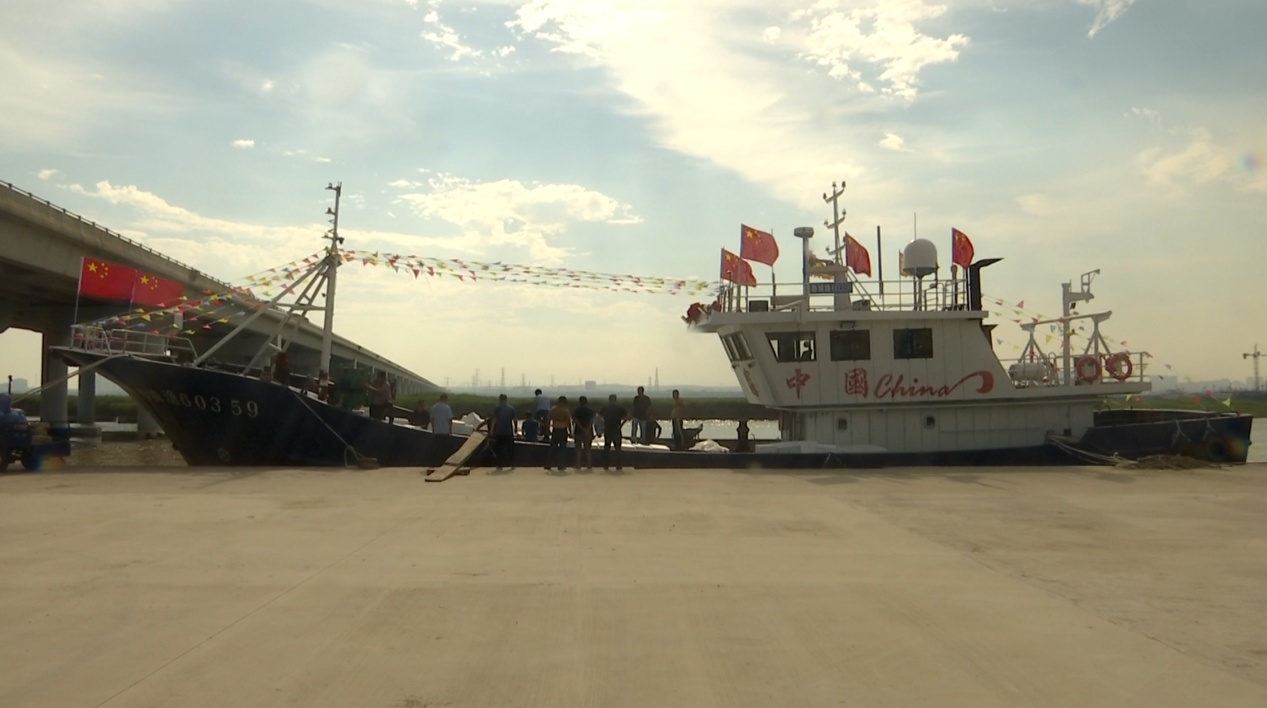
山东青岛新船启航举行公益放流活动
Yang Shi Wang· 2025-08-25 07:24
Group 1 - The event held in Qingdao aimed to promote marine ecological restoration and encourage fishermen to become "marine guardians" [1] - The release of over 5,000 yellow croaker fry into the Dagu River estuary marks a significant step in integrating traditional fishing practices with modern environmental concepts in Chengyang District [3] - The initiative is part of a broader strategy to transition to green fishing practices, optimize marine resources, and promote sustainable development of marine resources [5] Group 2 - The previous tradition of launching new fishing boats involved firecrackers for good luck, while this event emphasizes ecological compensation and resource conservation [3] - The collaboration among government, enterprises, and fishermen is essential for the success of the green transformation in fishing practices [5]