
潮汐式用工

Search documents
订单排到一周后 加价近100%也约不上!节前这个行业彻底“爆单”了
Guang Zhou Ri Bao· 2026-02-14 00:48
Core Viewpoint - The demand for housekeeping services has surged as the Spring Festival approaches, leading to significant price increases and difficulty in booking services [1][12][18]. Group 1: Price Trends - The base price for housekeeping services has increased from 40 yuan/hour to 60 yuan/hour, with some specialized cleaning tasks requiring an additional charge of 80 yuan/hour [1][9]. - Many online platforms report that the prices for daily cleaning services have risen by 50% to 100%, with some orders showing as "fully booked" even with additional charges [5][9]. - A specific example shows that a 2-hour housekeeping service, originally priced at 96 yuan, now requires an extra fee of 39 to 99 yuan during the Spring Festival period [5][12]. Group 2: Supply and Demand Dynamics - There is a significant shortage of available service personnel due to many workers returning home for the holiday, resulting in a "demand exceeds supply" situation [12][18]. - The search volume for "housekeeping" services has increased by over 158% in the past two weeks, with order volumes doubling compared to the same period last year [12]. - The market is experiencing a trend where service workers are selective about the orders they accept, preferring higher-paying and less labor-intensive jobs [12][18]. Group 3: Consumer Behavior and Alternatives - Consumers are increasingly willing to pay higher prices for housekeeping services, but many are finding that the actual earnings for workers are significantly lower than expected due to platform fees [14][15]. - Some consumers have turned to second-hand platforms for cheaper alternatives, often finding prices 40 yuan lower than official platforms, although service quality may vary [15][16]. - There is a suggestion for consumers to plan their bookings strategically, either by scheduling in advance or opting for services after the holiday to avoid inflated prices [16][18]. Group 4: Industry Insights - The current price surge is seen as a short-term imbalance between supply and demand, with expectations that prices will normalize after the holiday period [16][18]. - Industry experts suggest that to address the cyclical nature of demand, there should be a focus on establishing more flexible compensation structures and promoting professional training for workers [18].

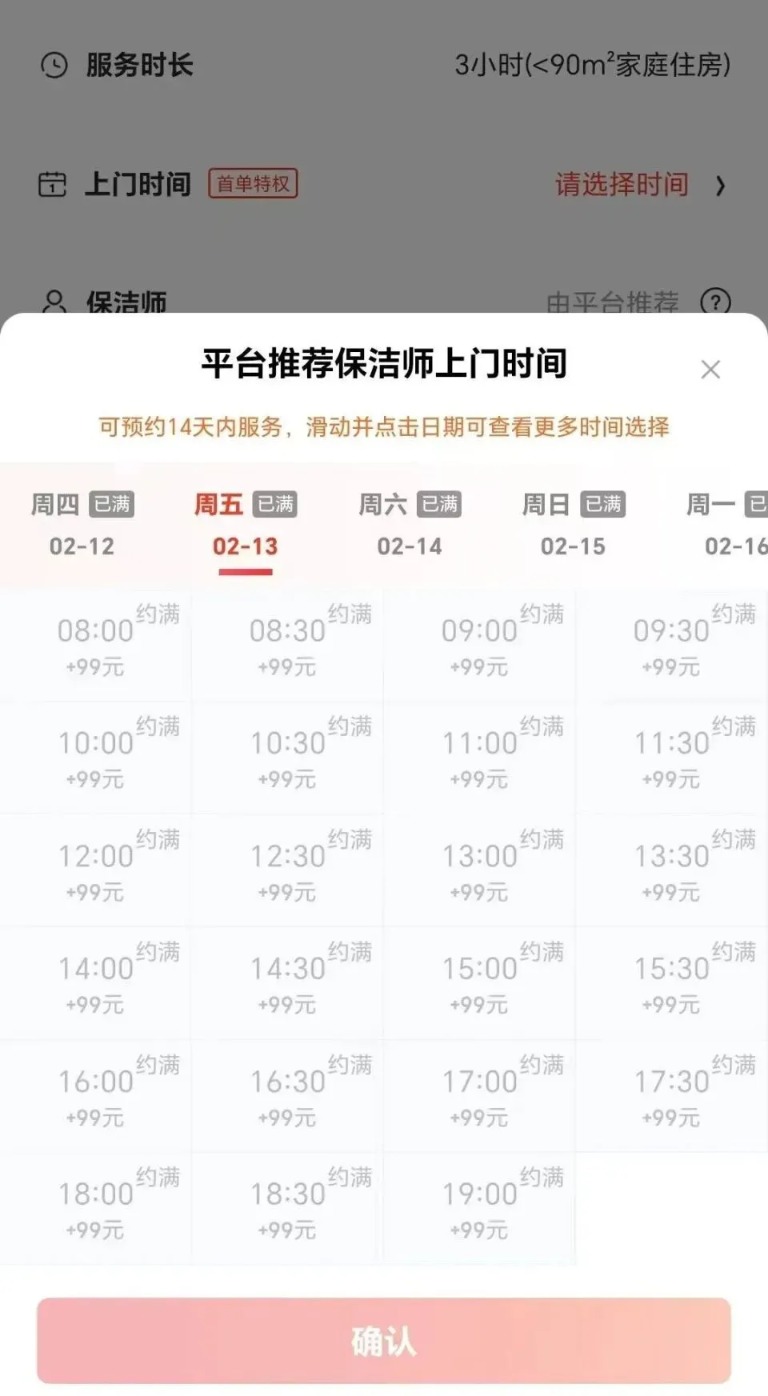
订单排到一周后,加价近100%也约不上!节前这个行业彻底“爆单”了
Guang Zhou Ri Bao· 2026-02-13 14:55
Core Insights - The demand for housekeeping services has surged as the Chinese New Year approaches, leading to significant price increases and service shortages [1][10][20] Group 1: Price Trends - The base price for housekeeping services has increased from 40 CNY/hour to 60 CNY/hour, with some specialized cleaning tasks requiring an additional charge of 80 CNY/hour [1] - Many online platforms have reported a price increase of 50% to 100% for daily cleaning services, with basic services priced around 150 CNY now requiring extra fees [6][10] - A specific example shows that a 2-hour housekeeping service, originally priced at 96 CNY, now incurs additional fees of 39 to 99 CNY during the peak season [6] Group 2: Service Availability - Many online platforms are fully booked for housekeeping services, with orders often scheduled a week in advance [5][6] - The high demand has led to a situation where even with additional payments, customers struggle to secure appointments, reflecting a severe supply-demand imbalance [10][20] Group 3: Labor Market Dynamics - The labor market for housekeeping services is tight, as many workers have chosen to return home for the holidays, resulting in a reduced workforce [13][20] - Workers are reportedly selective about the orders they accept, preferring higher-paying and less labor-intensive jobs [13] Group 4: Consumer Behavior - There has been a notable increase in searches for "housekeeping" services, with a 158% rise in the last two weeks and a 1.5 times increase compared to the same period last year [13] - Consumers are advised to plan ahead and consider scheduling services after the holiday period to avoid inflated prices [20] Group 5: Industry Challenges - The current price surge is seen as a short-term reaction to seasonal demand, with expectations that prices will normalize after the holiday [20] - Long-term solutions suggested include establishing more flexible compensation structures, enhancing professional training for workers, and promoting smart cleaning technologies to stabilize service availability throughout the year [20]
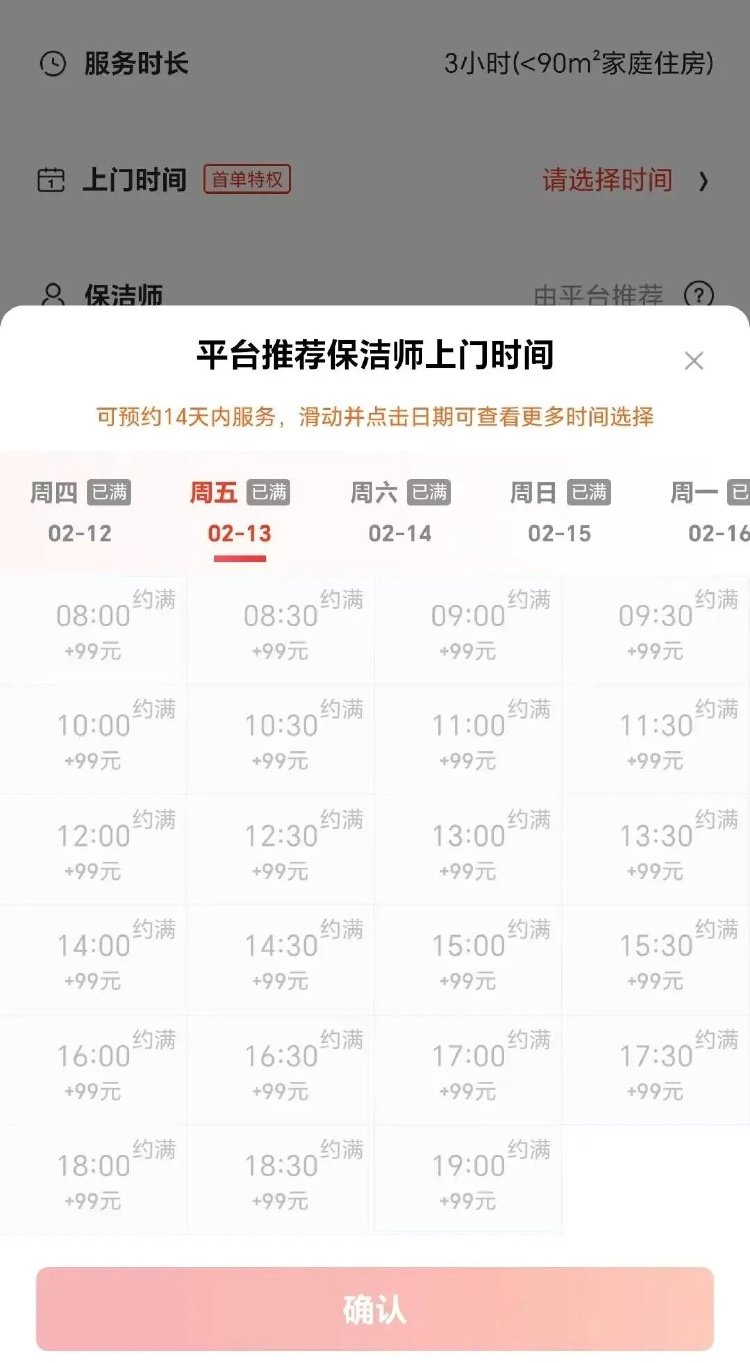
春节家政“一嫂难求”:保洁预约排至除夕,交易翻倍增长
Xin Jing Bao· 2026-02-10 09:09
Core Insights - The home cleaning service industry is experiencing a surge in demand ahead of the Spring Festival, with significant increases in booking volumes and prices due to traditional customs and a labor shortage [1][4][5] Industry Trends - The demand for home cleaning services in major cities like Beijing and Shanghai has increased by 52% year-on-year since January, with peak booking periods already sold out [3] - The keyword "home cleaning" saw a search volume increase of over 158% in the last two weeks, indicating a strong consumer interest [4] - The average daily wage for cleaning staff has risen from 350 yuan to 1000 yuan, reflecting the high demand and limited supply of workers [3][5] Consumer Behavior - The primary consumer demographic for home cleaning services is individuals aged 30-35, who account for nearly 27% of the market [4] - There is a growing preference for deep cleaning services, with 3-hour and 4-hour packages seeing order volume increases of over 50% [4] Market Dynamics - The total number of home service-related enterprises in China has reached approximately 2.93 million, with a significant growth rate over the past decade [3] - The majority of these enterprises are small, with nearly 80% having registered capital below 2 million yuan [3] Future Outlook - Experts predict a rapid decline in demand after the Spring Festival, with prices expected to normalize [5] - The industry faces challenges related to seasonal labor shortages and is encouraged to develop flexible compensation systems and professional training to sustain growth throughout the year [5]