炒货价格上涨

Search documents
炒货,已经比炒股还吓人了
36氪· 2026-01-26 11:16
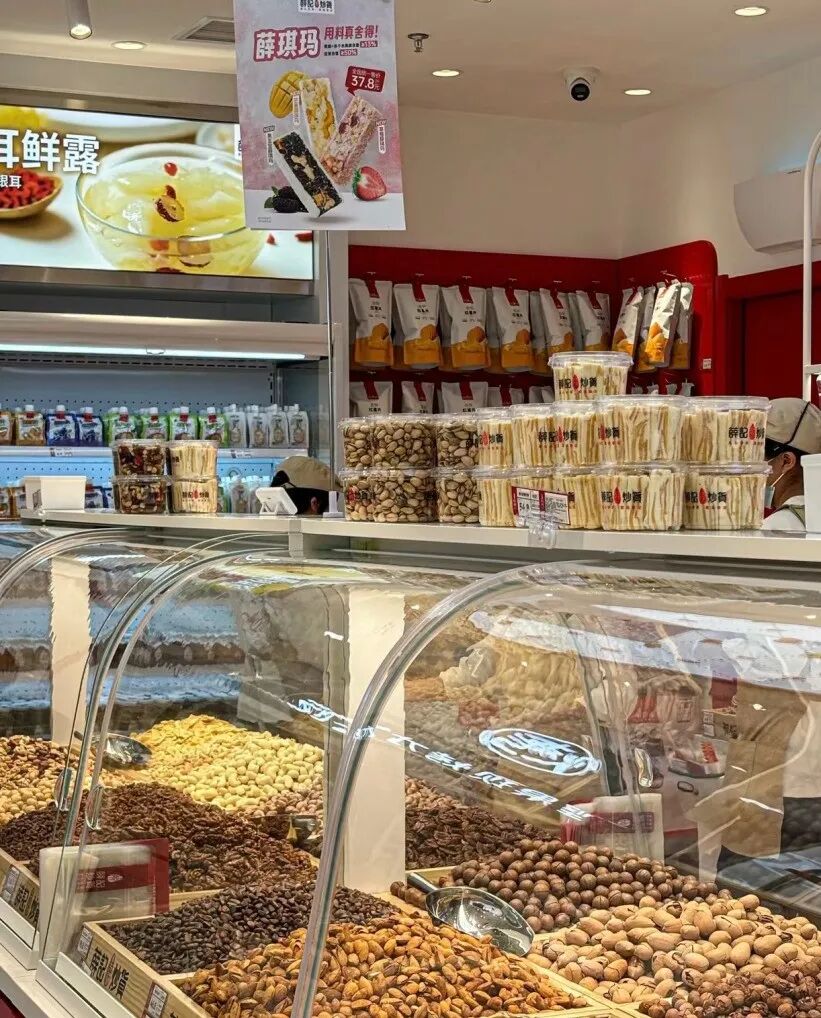
Core Viewpoint - The article discusses the rising prices of snack foods, particularly nuts and dried fruits, and compares modern snack shops to jewelry stores, highlighting a significant shift in consumer perception and spending behavior in this sector [3][38]. Group 1: Price Trends - Snack shops have transformed from casual places to high-end retail environments, with prices ranging from 30 yuan to 300 yuan per kilogram for various snacks [10][12]. - Specific examples of high prices include dried yellow peaches at 109.6 yuan/kg, dried mangoes at 113.6 yuan/kg, and mixed fruit yogurt crisps reaching 328 yuan/kg [20][21]. - The average price of nuts and snacks in China has been on the rise, with market data indicating a continuous increase in prices due to factors like raw material costs and market competition [60][62]. Group 2: Market Dynamics - The snack industry has seen a shift towards health, premium quality, and chain store formats, with brands like Xueji Snack leading this transformation by adopting systematic and digital approaches [45][46]. - The emergence of social media and influencer marketing has played a crucial role in popularizing certain snack products, leading to phenomena like the viral success of Xueji's milk dates [52][53]. - Despite the high prices, consumer spending on snacks remains robust, with over 80% of consumers spending between 20 to 100 yuan monthly on nuts and snacks, indicating a trend towards regular consumption [72]. Group 3: Consumer Behavior - Consumers are increasingly willing to pay higher prices for quality snacks, reflecting a shift towards premium and self-indulgent consumption patterns [75]. - There is a growing concern about product homogenization in the snack market, with 56.4% of consumers perceiving a lack of variety in offerings [79]. - The article suggests that while consumers may tolerate higher prices, any perceived overpricing could lead to backlash, as seen in other industries [81].

炒货,已经比炒股还吓人了
3 6 Ke· 2026-01-22 08:40
Core Insights - The perception of snack shops, particularly nut and dried fruit stores, has shifted dramatically, with prices now comparable to luxury goods like jewelry [1][3][20] - Consumers are increasingly shocked by the high prices of snacks, with some items costing as much as 300 yuan per kilogram [5][10][20] - The market for nuts and snacks is expected to grow significantly, with projections indicating a market size of over 300 billion yuan by 2024 [32][34] Price Trends - Snack prices have risen sharply, with examples showing dried fruits priced between 100 to 328 yuan per kilogram [10][20][31] - The average price of nuts in China has been on an upward trend, influenced by rising raw material costs and increased competition in the market [31][34] - Brands like Xueji and Qiwang have positioned themselves in the high-end market, with many products priced above 100 yuan per kilogram [22][31] Market Dynamics - The snack industry has undergone a transformation from traditional small shops to high-end, chain stores focusing on quality and presentation [22][28] - The rise of e-commerce and brands like Three Squirrels has contributed to the industry's growth, leading to a more competitive landscape [22][31] - Consumer behavior indicates a willingness to spend on high-quality snacks, with over 80% of consumers spending between 20 to 100 yuan monthly on nuts [34][35] Future Outlook - The potential for snacks to become luxury items is evident, given their longer shelf life and unique flavor profiles compared to other snack categories [32][34] - Despite rising prices, consumer demand remains strong, driven by a focus on quality and indulgence [35][36] - The industry faces challenges related to product differentiation and maintaining brand value as competition increases [39][41]