
沙果干

Search documents
炒货,已经比炒股还吓人了
36氪· 2026-01-26 11:16
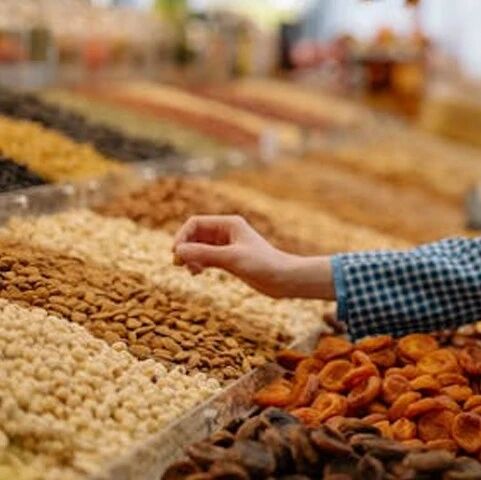
Core Viewpoint - The article discusses the rising prices of snack foods, particularly nuts and dried fruits, and compares modern snack shops to jewelry stores, highlighting a significant shift in consumer perception and spending behavior in this sector [3][38]. Group 1: Price Trends - Snack shops have transformed from casual places to high-end retail environments, with prices ranging from 30 yuan to 300 yuan per kilogram for various snacks [10][12]. - Specific examples of high prices include dried yellow peaches at 109.6 yuan/kg, dried mangoes at 113.6 yuan/kg, and mixed fruit yogurt crisps reaching 328 yuan/kg [20][21]. - The average price of nuts and snacks in China has been on the rise, with market data indicating a continuous increase in prices due to factors like raw material costs and market competition [60][62]. Group 2: Market Dynamics - The snack industry has seen a shift towards health, premium quality, and chain store formats, with brands like Xueji Snack leading this transformation by adopting systematic and digital approaches [45][46]. - The emergence of social media and influencer marketing has played a crucial role in popularizing certain snack products, leading to phenomena like the viral success of Xueji's milk dates [52][53]. - Despite the high prices, consumer spending on snacks remains robust, with over 80% of consumers spending between 20 to 100 yuan monthly on nuts and snacks, indicating a trend towards regular consumption [72]. Group 3: Consumer Behavior - Consumers are increasingly willing to pay higher prices for quality snacks, reflecting a shift towards premium and self-indulgent consumption patterns [75]. - There is a growing concern about product homogenization in the snack market, with 56.4% of consumers perceiving a lack of variety in offerings [79]. - The article suggests that while consumers may tolerate higher prices, any perceived overpricing could lead to backlash, as seen in other industries [81].

炒货,已经比炒股还吓人了
3 6 Ke· 2026-01-22 08:40
Core Insights - The perception of snack shops, particularly nut and dried fruit stores, has shifted dramatically, with prices now comparable to luxury goods like jewelry [1][3][20] - Consumers are increasingly shocked by the high prices of snacks, with some items costing as much as 300 yuan per kilogram [5][10][20] - The market for nuts and snacks is expected to grow significantly, with projections indicating a market size of over 300 billion yuan by 2024 [32][34] Price Trends - Snack prices have risen sharply, with examples showing dried fruits priced between 100 to 328 yuan per kilogram [10][20][31] - The average price of nuts in China has been on an upward trend, influenced by rising raw material costs and increased competition in the market [31][34] - Brands like Xueji and Qiwang have positioned themselves in the high-end market, with many products priced above 100 yuan per kilogram [22][31] Market Dynamics - The snack industry has undergone a transformation from traditional small shops to high-end, chain stores focusing on quality and presentation [22][28] - The rise of e-commerce and brands like Three Squirrels has contributed to the industry's growth, leading to a more competitive landscape [22][31] - Consumer behavior indicates a willingness to spend on high-quality snacks, with over 80% of consumers spending between 20 to 100 yuan monthly on nuts [34][35] Future Outlook - The potential for snacks to become luxury items is evident, given their longer shelf life and unique flavor profiles compared to other snack categories [32][34] - Despite rising prices, consumer demand remains strong, driven by a focus on quality and indulgence [35][36] - The industry faces challenges related to product differentiation and maintaining brand value as competition increases [39][41]
准备过年的年轻人,快被高端炒货吓哭了
36氪· 2026-01-16 14:41
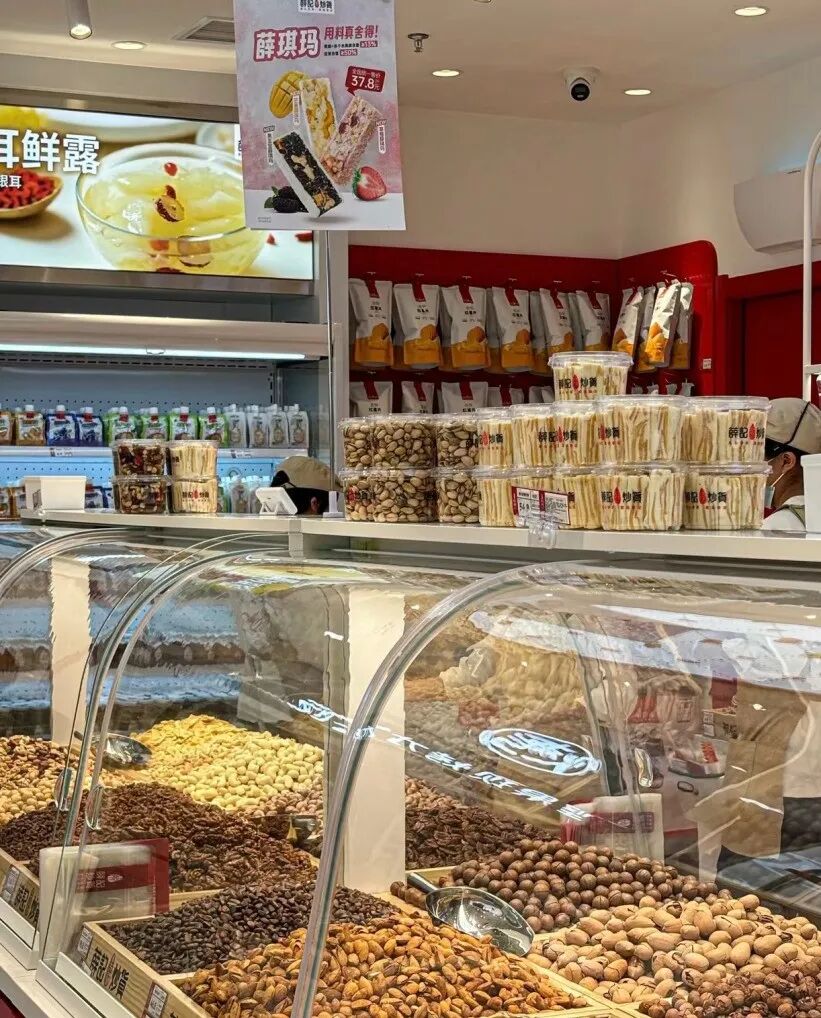
Core Viewpoint - The article discusses the transformation of traditional snack brands, particularly high-end roasted seeds and nuts, into luxury products, highlighting the impact on consumer spending and market dynamics [4][25][70]. Group 1: Market Dynamics - The average transaction price for high-end roasted snacks reached 68.3 yuan, a year-on-year increase of 14.7% [24]. - The market for high-end roasted snacks is rapidly growing, with projections indicating that the snack industry in China will approach 1.4 trillion yuan by 2024, with high-end roasted snacks gaining a larger market share [37]. - Brands like Xueji and Qiwang have expanded significantly, with Xueji opening over 1,000 stores and Qiwang exceeding 760 stores, indicating a strong growth trend [12][33]. Group 2: Brand Strategies - Xueji's transformation from a street vendor to a high-end store was facilitated by a 600 million yuan Series A financing round, which allowed for rapid expansion and a focus on high-margin products [30][31]. - Both Xueji and Qiwang have adopted premium pricing strategies, with products like Qiwang's nuts priced above 100 yuan per kilogram, reflecting a shift towards luxury branding [34][36]. - The brands utilize "atmosphere marketing" and "source tracing" to enhance perceived value, with Xueji emphasizing high-quality ingredients from specific regions [43][49]. Group 3: Consumer Behavior - Young consumers, despite having higher incomes, are increasingly cautious about spending on snacks, with many expressing disbelief at the high prices of roasted seeds and nuts [17][21]. - The article notes a shift in consumer perception, where traditional snacks are now viewed as luxury items, leading to a change in purchasing behavior during festive seasons [15][61]. - The high-end positioning of these brands appeals to middle-class consumers who seek to showcase their status through premium purchases, while budget brands target price-sensitive consumers [60][64]. Group 4: Competitive Landscape - The article contrasts high-end brands like Xueji with budget-friendly options that focus on low prices and high volume sales, highlighting the different strategies employed to capture market segments [58][66]. - Xueji's high-cost structure necessitates a focus on premium products, while budget brands benefit from lower operational costs and a focus on community-based sales [69][70]. - Both strategies have proven successful, but they face inherent risks, such as potential consumer fatigue with high prices or increased competition in the budget segment [70][71].
(乡村行·看振兴)连农学校里的新晋“网红”:400名乡土人才开启助农计划
Zhong Guo Xin Wen Wang· 2025-11-12 08:10
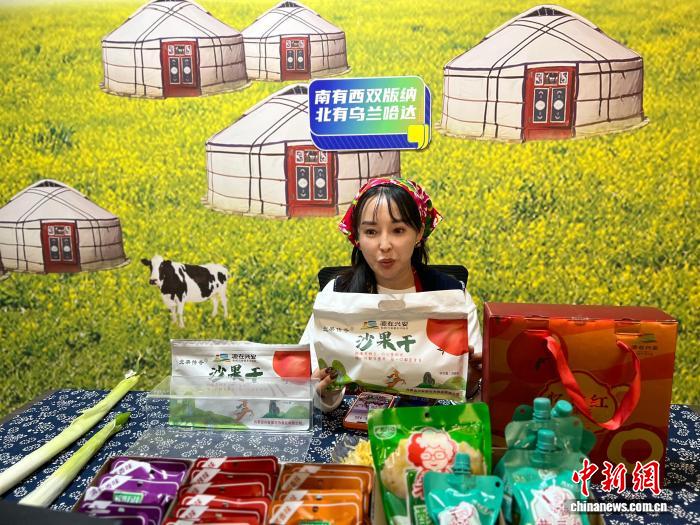
Core Viewpoint - The establishment of the "Lian Nong School" in Inner Mongolia aims to train local talents in live streaming to promote agricultural products, with 400 participants enrolled in the program within two months [1][3]. Group 1: Training and Development - The "Lian Nong School" has launched a training program for local talents, focusing on live streaming skills to assist farmers in selling their products [1][4]. - The school has successfully trained 400 individuals, forming a "Live Streaming Assistance Team" in Ulanhad Town, which includes local leaders and community members [7]. - The curriculum combines theoretical knowledge with practical operations, covering key aspects such as short video creation, account management, and live streaming sales [8]. Group 2: Success Stories - Yang Jing, a participant who previously owned a nail salon, transitioned to agricultural product sales through live streaming, achieving sales of 10,000 yuan in her first live session [3][4]. - The "Live Streaming Assistance Team" has conducted over 20 live streaming events, generating sales exceeding 50,000 yuan for various agricultural products [8]. Group 3: Future Goals - The school aims to establish a comprehensive e-commerce live streaming base in Sanhe Village, targeting the cultivation of over 150 active rural live streamers within two years, with a goal of generating over 20 million yuan in local agricultural and cultural tourism sales annually [5][8].
兴安让每一颗果子都走通“增值路”
Nei Meng Gu Ri Bao· 2025-09-30 02:12
Core Insights - The article highlights the successful integration of ecological restoration and farmer income growth through the development of the sand fruit industry in Xing'an League, with a total planting area of 146,700 acres and an annual output exceeding 60 million pounds [1][4] - The industry has established a comprehensive supply chain covering planting, processing, storage, and sales, significantly benefiting local farmers [1][2] Industry Development - The sand fruit industry in Xing'an League has seen a robust growth trajectory, with the establishment of a "company + base + farmer" model that enhances production, supply, and sales [2][4] - The industry has diversified its product offerings, including dried fruit, fruit wine, and juice, with an annual comprehensive output value surpassing 260 million yuan [4] Company Initiatives - Hengjia Fruit Industry Co., Ltd. has implemented an order recovery model, purchasing sand fruit from 463 farmers at prices 0.3 yuan higher than market rates, thereby increasing farmer income [1][2] - The company has acquired 4.6 million pounds of sand fruit and expects to reach a total acquisition of 6 million pounds by year-end, with a projected production value exceeding 11 million yuan [2] Technological Advancements - The establishment of advanced storage facilities, such as a 500-square-meter controlled atmosphere storage, has been crucial for maintaining the freshness and quality of sand fruit [3] - The introduction of new processing lines and storage facilities is set to enhance the production capacity and quality of sand fruit products [3][4] Marketing and Sales Strategy - The sand fruit products are gaining popularity through online sales channels, including e-commerce platforms and live streaming, as well as offline events like cultural festivals and agricultural expos [3] - The brand "Xing'an League Sand Fruit" is increasingly recognized, contributing to the overall brand influence and market reach [3][4]
兴安盟“两区一窗口”建设成就展示交流活动在京启动
Nei Meng Gu Ri Bao· 2025-04-30 02:30
Core Points - The event "National Unity Awareness Promotion Month" was launched in Beijing, featuring the Inner Mongolia region of Xingan League as the main guest city for the 2025 Beijing Chinese National Culture Week [1][2] - Xingan League aims to showcase its achievements in the "Two Areas and One Window" initiative, promoting ethnic unity and ecological protection through various cultural and agricultural exhibitions [2] Group 1 - The opening ceremony included performances by the Xingan League Ulan Muqi, showcasing traditional music and dance that reflect the spirit of the northern frontier [1] - The event features a Mongolian yurt-shaped exhibition hall where intangible cultural heritage representatives demonstrate traditional crafts such as Mongolian embroidery and birch bark production [1] - The exhibition also highlights green agricultural products from Xingan League, including beef, dried fruits, and rice, emphasizing the region's commitment to ecological preservation and green industry development [1] Group 2 - Xingan League is recognized as the birthplace of China's first provincial-level ethnic autonomous region and has been awarded the title of "National Ethnic Unity and Progress Demonstration League" twice [2] - The region has initiated the "National Unity Awareness Demonstration League" project, aiming to become a model area for ethnic unity and a showcase for China's approach to resolving ethnic issues [2] - The activities will run until May 3, featuring promotional events, cultural displays, and product exhibitions to enhance mutual understanding and cooperation between Xingan League and Beijing [2]