热力学第二定律

Search documents
百年物理难题“时间箭头”研究获重要理论突破
Xin Lang Cai Jing· 2025-12-25 16:20
Core Insights - The research team led by Professor Cai Qingyu from Hainan University has made significant progress in addressing the century-old scientific challenge of "time's arrow" and the principle of entropy increase, providing a theoretical foundation for the interpretation of these concepts from a quantum mechanics perspective [1][2] Group 1: Research Findings - The team revealed the irreversibility generated by quantum system correlations, which offers a breakthrough theoretical explanation for the long-standing contradiction between the reversible dynamics at the microscopic level and the observed macroscopic "arrow of time" [1] - A key "no-go theorem" was established, demonstrating that there is no universal physical operation in a closed quantum system that can completely eliminate correlations between arbitrary unknown quantum states [1] - The research created a unified theoretical framework that attributes irreversible phenomena, such as heat flow from high to low temperature and the evolution of isolated systems towards equilibrium, to the continuous generation of correlations that are difficult to reverse [1] Group 2: Expert Evaluation - Academician Sun Changpu from the Chinese Academy of Sciences highly praised the research, stating that it provides a solid theoretical basis for the interpretation of entropy increase and time's arrow from a quantum mechanics perspective, revealing the core role of quantum and classical correlations in physics [2]
意识在哪儿?
3 6 Ke· 2025-05-06 04:04
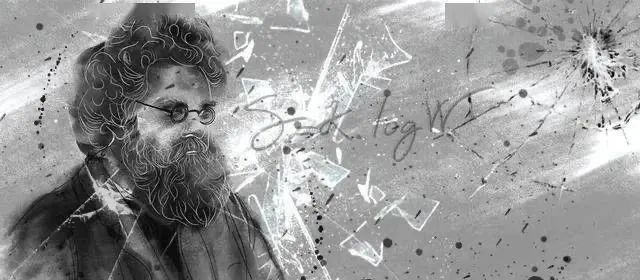
Group 1 - The concept of the Boltzmann Brain suggests that in an infinitely old and chaotic universe, random fluctuations could create a brain with complete memories and self-awareness without the need for a complex external world [1][2][3] - The probability of a Boltzmann Brain existing is argued to be higher than that of a low-entropy universe evolving into a complex structure, as the latter requires overcoming significant entropy increase [2][3] - This leads to the unsettling conclusion that human existence might be a fleeting phenomenon resulting from a random quantum fluctuation, challenging fundamental perceptions of reality [5][6] Group 2 - The discussion contrasts the Boltzmann Brain with Laplace's Demon, which represents determinism, suggesting that all thoughts and feelings are predetermined by physical laws [11][12] - Both perspectives imply that free will does not exist, whether through extreme randomness or absolute determinism [12][18] - Kant's philosophy attempts to reconcile these views by suggesting that true freedom exists beyond observable reality, yet this remains a scientific mystery [18][19] Group 3 - The insights from Boltzmann and Darwin regarding how order emerges from disorder provide a different perspective on evolution and consciousness [19][20] - Boltzmann's view redefines survival competition as a struggle for "negative entropy," indicating that life extracts order from its environment to maintain complexity [20] - This suggests that consciousness may be a product of evolutionary processes aimed at better perceiving the world and utilizing resources effectively [21][22] Group 4 - The exploration of consciousness requires a multidisciplinary approach, incorporating insights from cognitive science, philosophy, and neuroscience [40][42] - Various theories, such as Hofstadter's "strange loop," Turing's computationalism, and integrated information theory (IIT), challenge traditional notions of consciousness and its location [42][43][44] - These perspectives indicate that consciousness may not reside in a specific location but rather in the organization and flow of information within a system [46][47] Group 5 - The evolution of AI, particularly through models like the Boltzmann machine, reflects the potential for understanding consciousness through complex information processing [26][31][33] - The Boltzmann machine's design, which incorporates randomness and probabilistic learning, parallels the idea that consciousness may emerge from structured interactions within a chaotic environment [34][38] - This suggests that consciousness could be a result of cumulative processes rather than a singular miraculous event [38][39]