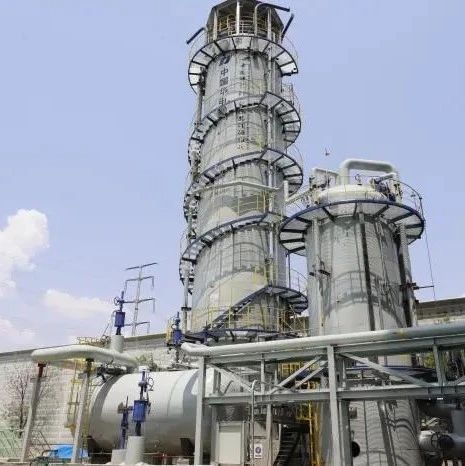
热电解耦

Search documents
东北负电价破局之路(上篇)——采暖革新破解热电绑定困局
Zhong Guo Dian Li Bao· 2026-02-27 00:39
Core Viewpoint - The article discusses the severe imbalance in electricity supply and demand in Northeast China, leading to unprecedented negative electricity prices during the 2026 Spring Festival, highlighting the urgent need for solutions to this issue [2][3]. Group 1: Causes of Negative Electricity Prices - The primary cause of negative electricity prices in Northeast China is the rigid coupling of heat and electricity production, which limits the ability to adjust electricity supply, exacerbated by the overlap of the heating season and high wind energy production [3]. - The reliance on coal-fired power plants for both electricity generation and heating creates a situation where electricity output must meet heating demands, resulting in a significant increase in minimum output requirements during the heating season [3]. Group 2: Solutions to the Imbalance - Activating demand-side potential through the promotion of commercial electric heating is crucial for resolving the supply-demand imbalance, allowing for the effective utilization of surplus electricity during peak wind energy production periods [4][5]. - By encouraging users to adopt electric heating, the market can transform negative electricity prices into a competitive advantage for clean heating solutions, thus addressing both electricity surplus and heating demand [4][5]. Group 3: Economic Viability of Electric Heating - The economic feasibility of commercial electric heating has been demonstrated, with significant improvements in building insulation standards allowing for sustainable operation without complex subsidies [6][7]. - In Shenyang, the cost of electric heating can be competitive, with average electricity prices for heating around 0.36 yuan per kilowatt-hour, indicating a positive economic cycle for electric heating businesses [6][7]. Group 4: Recommendations for Implementation - To address the long-term negative electricity prices, it is essential to implement a collaborative solution that includes both the decoupling of heat and electricity production and the large-scale promotion of user-side electric heating [8]. - Accelerating the technological transformation of heating units to decouple heat and electricity will enhance the adjustment capacity of coal-fired power plants, creating more space for renewable energy consumption [8].
煤电角色生变:“十四五”压舱石,“十五五”靠什么?
Zhong Guo Dian Li Bao· 2025-12-19 03:08
Core Insights - The article emphasizes the direction of clean, efficient, flexible, and reliable development in the coal power industry as outlined in the "New Generation Coal Power Upgrade and Transformation Action Plan (2025-2027)" [1] Group 1: System Upgrade - The plan aims for precise guidance based on regional differences and unit types, with goals to retrofit and build coal power units capable of rapid load adjustment by 2027 [2] - The transition from partial upgrades to comprehensive upgrades covering main and auxiliary systems is highlighted, with a focus on quality improvement rather than scale expansion [3] - The "Upgrade Parameters+" model proposed by the company targets aging subcritical units, aiming to enhance performance and extend operational life by 15 to 30 years [3] Group 2: Deep Peak Regulation - The plan sets clear technical indicators for existing and new coal units, requiring minimum output levels of 25% to 40% of rated capacity for existing units and aiming for lower levels for new units [5] - The integration of "thermal-electric decoupling" with long-duration energy storage is identified as a key solution to enhance unit flexibility while maintaining safety [6] - The estimated increase in unit cost for new generation coal power to achieve deep peak regulation is around 100 yuan per kilowatt, with manageable increases in operational costs [6]
熔盐储能:破局“以热定电”,助力煤电向调节性电源转型
Guotou Securities· 2025-11-30 15:32
Investment Rating - The report maintains an investment rating of "Outperform the Market - A" for the industry [5]. Core Insights - Molten salt energy storage is pivotal in transforming coal power from a base-load to a flexible power source, addressing the challenges posed by the increasing share of renewable energy and peak load pressures in the power system [1][16]. - The National Development and Reform Commission and the National Energy Administration have set requirements for coal power efficiency, including reducing minimum output for deep peak shaving to 20% and enhancing load change rates [1][16]. - The molten salt storage technology, particularly steam heating, is currently the mainstream approach due to its high compatibility with thermal power plants and engineering maturity [2][26]. Summary by Sections 1. Special Research - Molten salt energy storage aids in the transition of coal power to a flexible power source, overcoming the "heat determines electricity" dilemma [1][16]. - The technology's core is "thermal-electrical decoupling," allowing for energy storage during low demand and release during peak demand [1][16][22]. - The report highlights the successful operation of the Guoneng Suzhou power plant's molten salt storage project as a replicable model for coal power flexibility transformation [1][25]. 2. Market Information Tracking - Electricity prices in Jiangsu and Guangdong for December 2025 are reported at 339.58 RMB/MWh and 372.33 RMB/MWh, respectively, indicating a decrease in Jiangsu and a slight increase in Guangdong compared to benchmark prices [4][39]. - The average price of thermal coal in the Bohai Rim region is reported at 698 RMB/ton, remaining stable [41]. - The report notes a decline in natural gas prices, with Dutch TTF futures at 29 EUR/TWh and China's LNG at 11 USD/MMBtu [43][45]. 3. Industry Dynamics - The report emphasizes the significant growth in renewable energy installations, with a total capacity of 2.22 billion kW, accounting for nearly 60% of the national total [8]. - The introduction of new pricing mechanisms for electricity transmission and distribution aims to support the efficient utilization of renewable energy and reduce system operation costs [9]. - The ecological environment ministry's carbon emissions trading plan aims to incentivize advanced practices and penalize laggards in key industries [10]. 4. Investment Portfolio and Recommendations - The report suggests focusing on coal power companies with high price elasticity, such as Huaneng International and Huadian International, due to expected improvements in profitability [11]. - For hydropower, the report is optimistic about the fourth quarter outlook, recommending attention to companies like Yangtze Power and Sichuan Investment Energy [11]. - The report also highlights the potential for independent energy storage and virtual power plants under market-driven electricity pricing [12].
全国首个“20兆瓦时新型填充床储热系统”辅助调峰项目投运
中关村储能产业技术联盟· 2025-05-27 09:24
Core Viewpoint - The launch of China's first "20 MWh new filling bed thermal storage system" auxiliary peak shaving project marks a significant technological breakthrough in the flexible generation of coal-fired power plants, addressing the challenges of efficient thermal storage technology [2][4]. Group 1: Project Overview - The project is a strategic initiative by the Chinese Academy of Sciences and utilizes a newly developed spray filling bed thermal storage technology, breaking the traditional "heat determines electricity" model by decoupling heating and power generation [4]. - The first set of the 20 MWh spray filling bed thermal storage system has achieved breakthroughs in key technologies such as efficient large-capacity structural design and high-flow multi-phase heat exchange, improving heat transfer efficiency and significantly reducing the amount of heat transfer medium used [4]. Group 2: Impact on the Industry - The project will provide a new pathway for thermal power companies to explore the "thermal-electric decoupling" model, enhancing the peak shaving capability of coal-fired power plants and increasing the grid's ability to accommodate renewable energy [5]. - This innovative technology is expected to inject new momentum into the construction of new power systems by improving the efficiency of unit response to grid dispatching needs and assisting in load adjustment [5].