
片区共建

Search documents
从“一村独行”到“片区共兴”
Xin Lang Cai Jing· 2026-02-11 00:11
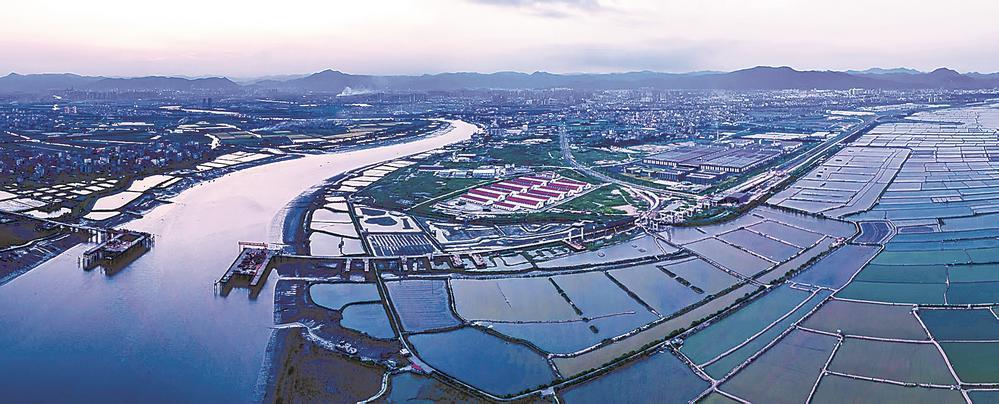
Core Viewpoint - The article discusses the innovative development model of "regional co-construction" in Huanjiang District, which integrates resources across villages to promote rural revitalization and economic growth through shared advantages and collaborative efforts [5][6][11]. Group 1: Regional Co-construction Model - Huanjiang District is implementing a new development model that breaks administrative boundaries and promotes cross-town cooperation, leading to resource sharing and complementary advantages among villages [5][6]. - The establishment of area-specific party committees has facilitated the integration of resources and improved connectivity, resulting in a coordinated development of cultural tourism and agriculture [6][7]. - The district has identified five major rural revitalization areas and 11 specialty industry areas, covering 120 administrative villages, ensuring structured collaboration and effective governance [6][7]. Group 2: Economic Impact and Resource Integration - The integration of resources has led to significant economic benefits, such as a 135% increase in annual rental income from tidal flats, demonstrating the effectiveness of the new management mechanisms [8][10]. - The establishment of a comprehensive rural revitalization center has enhanced product branding and market reach, with expectations of increasing e-commerce output by 20 million yuan [10]. - The development of a bamboo industry chain has created job opportunities for over 50 villagers, with collective annual income increases exceeding 200,000 yuan [10][11]. Group 3: Community Engagement and Support - The article highlights the role of community engagement in revitalization efforts, with local leaders facilitating partnerships between villages and external organizations, including educational institutions and businesses [12][13]. - The integration of various resources, including talent, funding, and technology, has created a new development pattern that supports sustainable rural growth [12][13]. - Collaborative projects between urban and rural areas have improved market access for agricultural products, enhancing the overall economic landscape of the region [13].

屏南:让文明可感 让乡风有形
Xin Lang Cai Jing· 2026-01-08 04:34
Core Viewpoint - The article highlights the innovative approaches taken by Pingnan County in Fujian Province to integrate spiritual civilization construction into rural life, particularly through a points-based system that encourages community participation and cultural revitalization [1][2][9]. Group 1: Points-Based System - The points system in Pingnan transforms abstract civilizational values into quantifiable actions, allowing villagers to earn points for participating in community activities, which can be exchanged for goods [2][3]. - The system has been widely adopted across various villages, with over 50 evaluations conducted in 2025, resolving more than 30 neighborhood disputes [5][4]. - This initiative has shifted the mindset from "mandatory participation" to "voluntary engagement," making civilizational efforts tangible and rewarding for the community [3][5]. Group 2: Cultural Revitalization through Ancestor Halls - The transformation of ancient ancestor halls into community centers has become a significant aspect of Pingnan's cultural revival, with these spaces now hosting various activities that promote legal awareness and cultural education [6][7]. - Five demonstration sites have conducted over 280 civilizational practice activities, serving more than 10,000 residents, thus redefining the role of these halls from mere worship sites to vibrant community hubs [7][8]. - The integration of modern functions into traditional spaces has enhanced community engagement and provided a platform for addressing local issues [6][8]. Group 3: Cultural and Economic Integration - The Dragon Pond area serves as a model for integrating cultural heritage with economic development, showcasing how traditional arts can attract tourism and boost local income [8][9]. - In 2025, the Dragon Pond area received over 1.3 million visitors, generating more than 1.3 billion yuan in tourism revenue, which has positively impacted local residents' disposable income [8][9]. - The initiative demonstrates that cultural construction and economic growth can coexist and mutually reinforce each other, providing a sustainable model for rural revitalization [9].