积分制

Search documents
撒营盘镇“积分制”绘就乡风文明新图景
Xin Lang Cai Jing· 2026-02-20 22:46
Core Viewpoint - The implementation of a points-based reward system in Zhaogui Village has successfully engaged villagers in community governance, transforming their participation from being compelled by officials to being motivated by personal incentives [1] Group 1: Points System Implementation - Since the introduction of the "points system" in 2022, Zhaogui Village has utilized party leadership to convert daily activities such as environmental hygiene, volunteer service, and promoting civilized behavior into quantifiable points [1] - In 2025, a total of 20,134 points were distributed, benefiting the villagers significantly [1] Group 2: Community Engagement and Recognition - Five exemplary party members led community service efforts, each earning 200 points [1] - Nine households were recognized for their "Green Beautiful Courtyards," contributing to the village's aesthetic appeal [1] - Twelve "Filial Piety" families demonstrated moral values through their actions, while 22 volunteers served a total of 32 times at the "Warm Heart Canteen" [1] - Seventy-five households frequently appeared on the environmental hygiene "Red List," showcasing their commitment to cleanliness [1] - Nine village groups collectively earned 6,354 points, reflecting strong community cohesion and collaboration [1] Group 3: Future Plans - The town of Sayinpan plans to further deepen the implementation of the "points system," integrating it with ecological protection, industrial development, and the promotion of rural civilization [1] - The initiative aims to use "small points" to foster "good rural customs" [1]
新春走基层 | 积分兑年猪 善治润乡村
Guang Xi Ri Bao· 2026-02-10 02:15
Group 1 - The core idea of the news is the implementation of a points-based reward system in rural governance, which has successfully engaged the community and improved local governance in Xiangbei Township, Yizhou City [1][2][3] - The points system rewards villages based on their performance in five core tasks related to rural construction and civilization, with clear scoring criteria and transparency in the evaluation process [2][3] - The initiative has transformed the traditional governance model from "cadres doing, villagers watching" to a more participatory approach where the entire community is involved in governance, leading to cleaner and more harmonious villages [2][3] Group 2 - The practice of using points to exchange for rewards, such as pigs and eggs, has been in place for three years and has shown significant positive effects on community engagement and morale [2] - Yizhou City is recognized as the birthplace of "Chinese villager autonomy," continuously exploring grassroots governance innovations, integrating party leadership with innovative mechanisms [3] - The successful implementation of this governance model in Xiangbei Township serves as a valuable example of effective rural governance in the new era, contributing to the overall improvement of rural life [3]
屏南:让文明可感 让乡风有形
Xin Lang Cai Jing· 2026-01-08 04:34
Core Viewpoint - The article highlights the innovative approaches taken by Pingnan County in Fujian Province to integrate spiritual civilization construction into rural life, particularly through a points-based system that encourages community participation and cultural revitalization [1][2][9]. Group 1: Points-Based System - The points system in Pingnan transforms abstract civilizational values into quantifiable actions, allowing villagers to earn points for participating in community activities, which can be exchanged for goods [2][3]. - The system has been widely adopted across various villages, with over 50 evaluations conducted in 2025, resolving more than 30 neighborhood disputes [5][4]. - This initiative has shifted the mindset from "mandatory participation" to "voluntary engagement," making civilizational efforts tangible and rewarding for the community [3][5]. Group 2: Cultural Revitalization through Ancestor Halls - The transformation of ancient ancestor halls into community centers has become a significant aspect of Pingnan's cultural revival, with these spaces now hosting various activities that promote legal awareness and cultural education [6][7]. - Five demonstration sites have conducted over 280 civilizational practice activities, serving more than 10,000 residents, thus redefining the role of these halls from mere worship sites to vibrant community hubs [7][8]. - The integration of modern functions into traditional spaces has enhanced community engagement and provided a platform for addressing local issues [6][8]. Group 3: Cultural and Economic Integration - The Dragon Pond area serves as a model for integrating cultural heritage with economic development, showcasing how traditional arts can attract tourism and boost local income [8][9]. - In 2025, the Dragon Pond area received over 1.3 million visitors, generating more than 1.3 billion yuan in tourism revenue, which has positively impacted local residents' disposable income [8][9]. - The initiative demonstrates that cultural construction and economic growth can coexist and mutually reinforce each other, providing a sustainable model for rural revitalization [9].
闻喜县社区服务中心汇聚社会治理“众力量”
Xin Lang Cai Jing· 2025-12-10 06:48
Core Viewpoint - The article highlights the innovative community governance practices in Wenxi County, emphasizing the importance of resident participation and collaboration among local businesses to enhance community services and social cohesion [1][2][3]. Group 1: Community Engagement Initiatives - The "Community Benefit Home" program allows residents to earn points through volunteer services, which can be exchanged for goods, fostering a sense of ownership and responsibility among community members [1][3]. - The introduction of a "WeChat public account" for community activities has transformed service delivery from a one-way push to a two-way interaction, allowing residents to actively participate in planning and executing community events [2][3]. Group 2: Business Involvement - Local businesses are encouraged to participate in community governance, with initiatives such as awarding "Party Building Alliance Merchant" titles to businesses with party members, enhancing their social responsibility [3][4]. - The collaboration between community services and local businesses has resulted in mutual benefits, where businesses contribute to community events while gaining customer loyalty and brand recognition [4][5]. Group 3: Social Services and Volunteerism - The establishment of a "1 Yuan Haircut" service for elderly residents not only addresses their basic needs but also stimulates community involvement and volunteerism, showcasing the potential of grassroots initiatives [5]. - The community's approach to governance emphasizes empowering residents and creating a supportive environment where everyone can contribute, reflecting a broader social governance model [5].
以数字技术促乡村善治(现场评论)
Ren Min Ri Bao· 2025-09-11 22:02
Core Viewpoint - The article highlights the transformation in rural governance in Sichuan's Tianjiao Village, where a digital platform called "Chuan Shanzhi" empowers villagers to actively participate in decision-making and governance, leading to improved accountability and efficiency among village officials [1][2]. Group 1: Digital Governance Transformation - The "Chuan Shanzhi" platform allows villagers to initiate agendas and evaluate officials, marking a shift from traditional governance where officials made decisions without much input from the community [1]. - Villagers are now actively involved in maintaining local infrastructure, such as repairing roads, and are recognized for their contributions through a points system that can be exchanged for rewards [1][2]. - The platform encourages habitual participation among villagers, transforming initial engagement driven by rewards into a sustained commitment to governance [2]. Group 2: Technological Empowerment - The article emphasizes the importance of technology in enhancing grassroots governance, suggesting that digital tools can streamline processes and improve the effectiveness of participation systems [2][3]. - It warns against superficial implementation of digital governance, advocating for genuine engagement with community needs and feedback to ensure the platform's relevance and effectiveness [3]. - Examples from various regions illustrate how digital tools can facilitate community involvement and address local issues promptly, showcasing the potential of technology in rural revitalization [3].
村民组队“积分” 乡村治理“升级”(“融”观中国)
Ren Min Ri Bao Hai Wai Ban· 2025-08-10 22:48
Core Viewpoint - The article discusses the implementation and impact of the "Chuan Shan Zhi" digital platform in rural governance in Sichuan Province, emphasizing its role in enhancing community engagement and modernizing rural management through digital technology [6][9]. Group 1: Digital Platform Implementation - The "Chuan Shan Zhi" platform, a public WeChat mini-program, was launched in May 2023 and has since been adopted by 28,000 villages in Sichuan, serving 8.66 million residents by July 1, 2023 [9]. - The platform incorporates a points system to encourage participation, where villagers earn points for completing tasks, which can be redeemed for rewards, thus gamifying rural governance [10][11]. Group 2: Community Engagement and Governance - The platform allows villagers to raise issues directly with village leaders, fostering a more interactive and responsive governance model, as evidenced by the "villager speaking" feature that has accumulated 120,000 discussion topics [12][13]. - The integration of a points system has led to a shift in dynamics, where villagers now often direct village leaders on tasks, enhancing accountability and transparency in governance [13]. Group 3: Socio-Economic Development - The platform not only focuses on governance but also aims to promote local industries by showcasing village specialties and activities, thereby linking social governance with economic development [14]. - Future plans include using points earned to fund services that support local industry, such as product design and tourism development, contributing to the overall revitalization of rural areas [14].


村民“包”了!化州新塘村“颜值”飙升有妙招 | 众说百千万⑥
Nan Fang Nong Cun Bao· 2025-07-16 02:31
Core Viewpoint - The article highlights the successful implementation of a community governance model in Xintang Village, which has led to significant improvements in the village's infrastructure and cleanliness through resident participation and responsibility-sharing initiatives [8][47]. Group 1: Community Initiatives - Xintang Village has adopted the "Three Responsibilities at the Door" system, which encourages residents to maintain cleanliness and order in front of their homes, resulting in a cleaner environment [12][45]. - The village has implemented a star rating system for households based on their adherence to cleanliness standards, rewarding them with points that can be exchanged for goods and services [16][17]. - The community has collectively installed 17 streetlights, transforming previously dark pathways into well-lit areas, enhancing safety and visibility for residents [21][23]. Group 2: Infrastructure Development - The village has completed the hardening of 900 meters of village roads, significantly reducing construction costs by approximately 50% through community labor and resource sharing [24]. - A wastewater resource treatment project has been initiated with a budget of 1.55 million yuan, involving local residents in the planning and management processes [29][30]. - The establishment of a "grid member + resident" management system ensures regular monitoring and maintenance of the village's infrastructure, promoting long-term sustainability [31]. Group 3: Community Engagement - The involvement of external villagers through a WeChat group has facilitated financial contributions for community projects, demonstrating a strong connection and commitment to the village's development [40][42]. - The governance model encourages all residents to participate actively in village maintenance, fostering a sense of ownership and responsibility among the community [46].

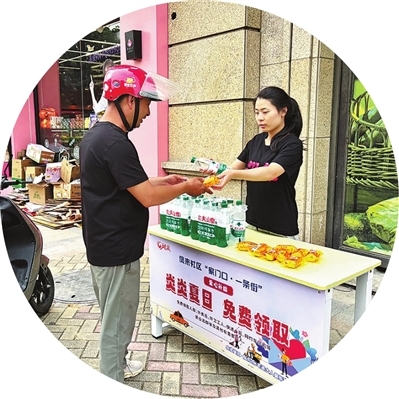
桐庐凤来社区 “家门口·一条街”上的温情守望
Hang Zhou Ri Bao· 2025-06-10 03:03
Core Insights - The "Home Street" project in Fenglai community, initiated on April 26, 2023, aims to enhance community welfare through collaboration among local businesses and residents [3] - The project has successfully conducted six events, benefiting over 3,900 residents through services like free health consultations and haircuts [3] - A points system incentivizes community engagement, allowing residents to earn points for volunteering, which can be redeemed for services from participating businesses [4] Group 1 - The "Home Street" initiative involves seven local businesses providing essential services tailored to community needs, such as health consultations and energy snacks [3] - The project has fostered a reciprocal relationship between businesses and residents, enhancing community ties and support [3] - The community has seen a 34% reduction in conflict resolution issues, indicating improved social cohesion [5] Group 2 - The points system has issued 720 points, promoting volunteerism and community involvement among residents [4] - The initiative has transformed the community from a resource-scarce area into a comprehensive service platform, addressing various local needs [5] - Future plans include connecting with external sources for fresh produce delivery, further enhancing community services [5]