
物流最后一公里

Search documents
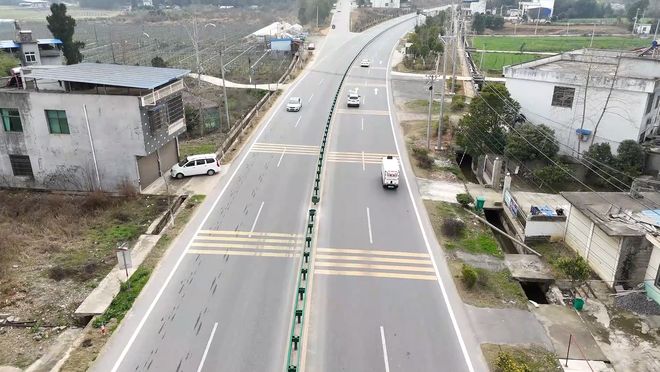
无人快递车助力“双十一” 打通山乡物流“最后一公里”
Xin Hua She· 2025-11-12 08:04
Core Viewpoint - The introduction of 11 unmanned delivery vehicles during this year's "Double Eleven" shopping festival significantly improved logistics efficiency in the mountainous region of Chongyang, Hubei, addressing previous challenges of low timeliness and high costs in local logistics [2][4]. Group 1 - The geographical location of Chongyang, situated at the intersection of Hunan, Hubei, and Jiangxi provinces, has historically posed logistical challenges due to inconvenient mountain roads [2]. - The deployment of unmanned delivery vehicles has become the main force in overcoming the "last mile" logistics issues in the area [4].

中企助力里约社区物流配送
Jing Ji Ri Bao· 2025-08-16 00:59
Core Insights - The article highlights the establishment of a new delivery point by Chinese logistics company Anjun Logistics in the impoverished community of Mangueira, Rio de Janeiro, which marks a significant step in addressing the logistical challenges faced by residents in accessing delivery services [1][2]. Group 1: Market Context - Brazil has become the largest source of imports from China for several consecutive years, with imports reaching $24 billion in the first four months of this year, reflecting a 28% year-on-year increase, the highest among Brazil's major trading partners [1]. - There are 12,348 impoverished communities in Brazil, housing over 16 million people, which accounts for 8.1% of the national population. These areas are often viewed as "inaccessible" by most delivery companies due to complex geography and high safety risks [2]. Group 2: Company Initiatives - Anjun Logistics is pioneering the extension of its delivery network into impoverished communities, planning to establish 20 delivery and transfer points in major poor areas of Rio de Janeiro, thereby creating a more reliable logistics service for residents [2]. - The company has initiated a pilot program in Mangueira, recruiting local youth as partners and transforming a corner of a local shop into a pickup point, aiming to create job opportunities and provide logistics skills and safety training to integrate more individuals into the urban development system [2]. Group 3: Broader Impact - Anjun Logistics aims to replicate its successful model in other impoverished communities, viewing logistics as a bridge connecting economic activity and people's livelihoods, with a focus on enhancing community business rather than just expanding market size [3].
通讯|中企助力打通里约贫民社区物流“最后一公里”
Xin Hua Wang· 2025-08-13 08:40
Core Viewpoint - Chinese logistics company Anjun Logistics is addressing the challenge of delivering goods to impoverished communities in Rio de Janeiro, Brazil, by establishing a new delivery network that enhances accessibility for local residents [1][2]. Group 1: Market Context - Brazil has over 12,348 impoverished communities with a population exceeding 16 million, representing 8.1% of the national population, which are often considered "no-go zones" by most delivery companies due to complex geography and high safety risks [2]. - In the first four months of this year, Brazil's imports from China reached $24 billion, marking a 28% year-on-year increase, the highest growth among Brazil's major trading partners [1]. Group 2: Company Initiatives - Anjun Logistics is pioneering the extension of its delivery network into the impoverished community of Mangueira, aiming to establish 20 delivery and transfer points in major impoverished areas of Rio de Janeiro [2]. - The company has initiated a pilot program by recruiting local youth as partners and converting a corner of a local store into a pickup point, which will create job opportunities and provide logistics skills and safety training to residents [2]. Group 3: Broader Impact - Anjun Logistics views logistics as a bridge connecting economic activity and community welfare, aiming to enhance market presence while also improving community services [3]. - The company seeks to replicate its successful model in other impoverished communities, emphasizing the importance of making logistics services accessible and beneficial for local populations [3].