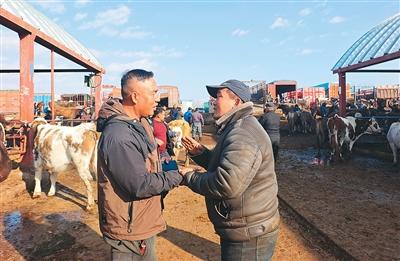
牲畜经纪人

Search documents
在新疆巴扎,看他们“拍手议价”
Xin Lang Cai Jing· 2026-02-08 09:18
Core Viewpoint - The Xinjiang Chuangjin Huanggong Agricultural Products Trading Market, known as the largest livestock bazaar in Yining County, plays a crucial role in connecting farmers and buyers, with the profession of livestock brokers gaining formal recognition in 2025 [1][3]. Group 1: Livestock Brokers - The bazaar is home to over 3,000 livestock brokers, who have transitioned from being referred to as "livestock traders" to "brokers," reflecting a more professional image [3]. - Brokers like Ma Jun utilize various skills to assess livestock quality, negotiate prices, and facilitate transactions, often handling over 100 cattle in a single day, generating nearly 1 million yuan in transaction volume [5][7]. - The role of livestock brokers is essential in bridging the gap between farmers seeking to sell their livestock at favorable prices and buyers looking for quality products, thus enhancing market efficiency [7]. Group 2: Market Dynamics - The bazaar spans over 600 acres and can accommodate approximately 25,000 livestock, with transaction days increasing from one to three per week since 2020, resulting in a weekly transaction volume of around 200 million yuan [7]. - The bazaar's livestock products are exported to regions as far as Guangdong and Zhejiang, with an estimated 20% of weekly sales being outside Xinjiang, highlighting its competitive pricing and quality [7]. - Recent improvements in management services, including automated disinfection channels and an information-based trading platform, have enhanced operational efficiency and market integration [9].

牛羊买卖的“牵线人”(新职·新知㉜)
Ren Min Ri Bao Hai Wai Ban· 2025-11-23 23:27
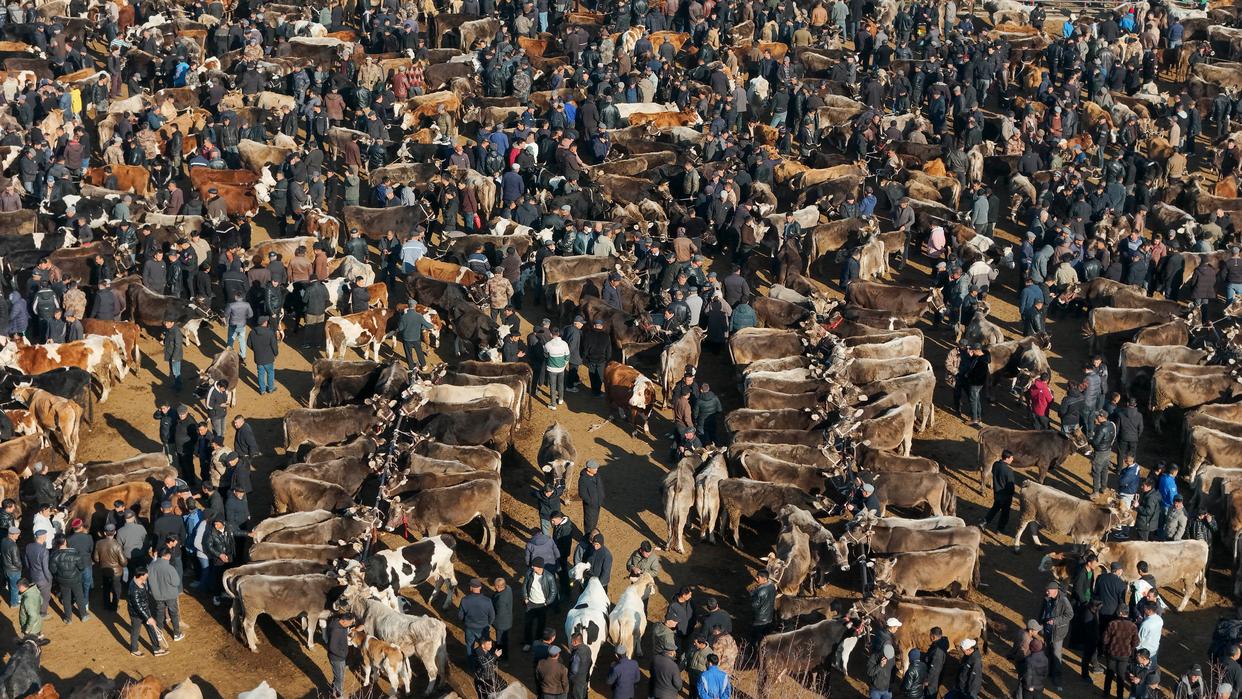
Core Insights - The article highlights the emergence of "livestock brokers" as a recognized profession in China, particularly in the Xinjiang region, where the Huanggong Bazaar serves as the largest livestock trading market with a history of over a century [1][9]. Group 1: Market Overview - Huanggong Bazaar can handle a daily trading volume of up to 15,000 livestock, making it a central hub for livestock transactions in Xinjiang [1]. - The market has a weekly trading schedule, with peak activity on Wednesdays, attracting up to 30,000 visitors [4]. - The annual trading volume at Huanggong Bazaar exceeds 1 million livestock, with an annual transaction value surpassing 6 billion yuan [9]. Group 2: Role of Livestock Brokers - Livestock brokers like Ma Jun facilitate transactions, handling around 7,000 livestock annually and generating monthly transaction values exceeding 3 million yuan during peak seasons [2][4]. - Brokers have adapted to modern demands by utilizing social media platforms to promote livestock, significantly increasing their client base and transaction speed [4][5]. - Trust and credibility are essential for brokers, as they often need to compensate clients for unsatisfactory livestock quality, which helps build long-term relationships [6]. Group 3: Technological Integration - The market is moving towards digital management, allowing for online transactions and data integration, which enhances transaction security and efficiency [9]. - The introduction of features like video calls for livestock viewing reflects a shift from traditional negotiation methods to more transparent and efficient practices [8]. Group 4: Market Structure and Functionality - Huanggong Bazaar spans 630 acres and includes various functional areas such as inspection zones and financial services, facilitating a comprehensive trading environment [8]. - The market's organization into specific trading zones for different livestock types streamlines the buying process for customers [7].